
Close Menu
    Facebook X (Twitter) Instagram
    SciTechDaily
    • Biology
    • Chemistry
    • Earth
    • Health
    • Physics
    • Science
    • Space
    • Technology
    Facebook X (Twitter) Pinterest YouTube RSS
    SciTechDaily
    Home»Science»This Fossil Upends a Decades-Old Debate About Snake Evolution
    Science

    This Fossil Upends a Decades-Old Debate About Snake Evolution

    By University of HelsinkiAugust 10, 2026No Comments3 Mins Read
    Facebook Twitter Pinterest Telegram LinkedIn WhatsApp Email Reddit
    Share
    Facebook Twitter LinkedIn Pinterest Telegram Email Reddit
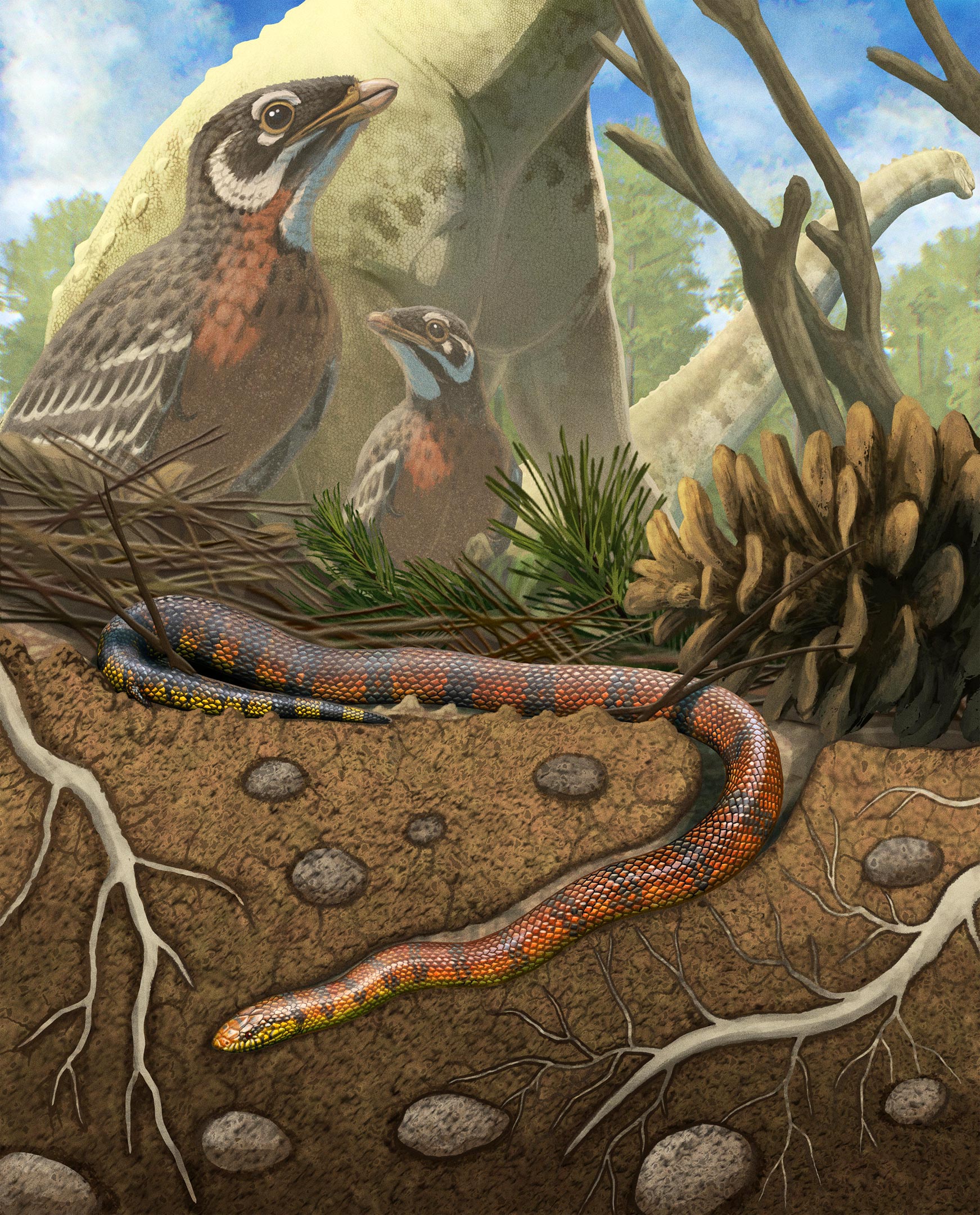
    Early Snake Tametara mirim
    Life reconstruction of the burrowing stem snake Tametara mirim against a background of sauropod dinosaurs and the enantiornithean bird Navaornis from the same locality in the Adamantina Formation, Late Cretaceous of Brazil. Credit: Gabriel Ugueto

    Exceptionally preserved Brazilian fossil reveals early snakes explored several habitats.

    More than 4,000 snake species live today, yet the evolutionary path that produced their elongated, limbless bodies remains difficult to reconstruct. Snakes are highly modified lizards, but their limited fossil record has left one of evolutionary biology’s central questions unresolved.

    Scientists have long debated whether the earliest snake bodies evolved for burrowing underground or moving through water. Research published in Nature challenges this either-or explanation, indicating that early snakes occupied several environments and developed different sensory adaptations.

    “Our findings show that early snakes had already achieved remarkable ecological and morphological diversity by the Late Cretaceous, around 80 million years ago,” says lead author Tiago Simões, Assistant Professor at Princeton University.

    Fossil preserves an early snake brain

    At the center of the investigation is Tametara mirim, a newly described snake species from Late Cretaceous deposits in southeastern Brazil dating to around 80 million years ago. Its skeleton ranks among the most completely preserved fossil snakes found anywhere.

    Researchers used computed tomography and cinematic 3D rendering to digitally reconstruct the specimen. The resulting model exposed fine details of its skull, vertebrae, and brain endocast, an impression of the space once occupied by the brain.
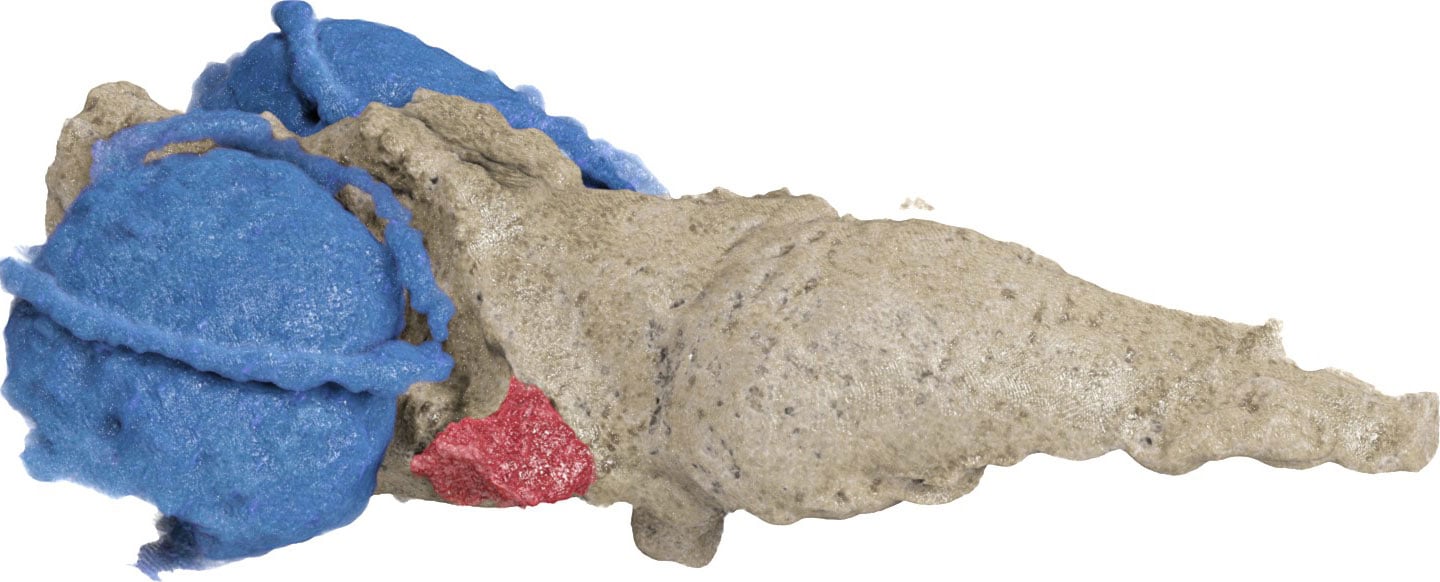
    Reconstruction of the Brain of Tametara Mirim
    Researchers at the University of Helsinki reconstructed the snake fossil using computed tomography and cinematic 3D rendering, revealing details of the skull, vertebrae, and brain endocast. Credit: Simone Macrì

    Simone Macrì, a postdoctoral researcher, and Nicolas Di-Poï, Research Director, both at the University of Helsinki’s HiLIFE Helsinki Institute of Life Science, led the digital reconstruction and comparative study of the brain. Their analysis connected the snake’s early neuroanatomy with its sensory abilities, habitat, and ecological history.

    Early snakes explored multiple habitats

    To determine how Tametara lived, the researchers compared it with Dinilysia patagonica, another fossil snake discovered in Argentina.

    “The two had strikingly different brain shapes, both from each other and from most other snakes studied. Brain shape and bone microstructure pointed to the same conclusion: Tametara was adapted to burrowing, Dinilysia to life on the ground. Together with evidence from marine sediments, the findings reveal several shifts between burrowing, terrestrial and marine lifestyles in early snake evolution. Different lineages explored different habitats much earlier than previously thought,” concludes Research Director Nicolas Di-Poï.

    “The brain tells a much richer story than the skeleton alone. By combining computed tomography-based brain reconstructions with data from living snakes, we could show that early snakes were not simply progressing toward one modern condition but experimenting with different sensory and ecological strategies. This means that early snakes did not follow a single evolutionary pathway,” says researcher Simone Macrì.

    Reference: “Exceptional brain and ecological diversity in the earliest snakes” by Tiago R. Simões, Gabriela Sobral, Simone Macrì, Roy Ebel, Thiago S. Fachini, Agustín G. Martinelli, William R. Nava, Giovanna M. X. Paixão, Luis M. Chiappe, Nicolas Di-Poï and Annie S. Hsiou, 22 July 2026, Nature.
    DOI: 10.1038/s41586-026-10809-9

    Never miss a breakthrough: Join the SciTechDaily newsletter.
    Follow us on Google and Google News.

    Evolution Fossils Paleontology Popular Snake University of Helsinki
    Share. Facebook Twitter Pinterest LinkedIn Email Reddit

    Related Articles

    Primordial “Hyper-Eye” Discovered: Astonishing 390 Million-Year-Old Hyper-Compound Eye With 200 Lenses

    New Species of Tardigrade (Water Bear) Discovered in 16 Million-Year-Old Dominican Amber

    All Living Snakes Evolved From a Few Survivors of Asteroid That Killed the Dinosaurs

    400-Million-Year-Old Fossils Reveal How the First Roots Evolved

    Enormous Ancient Fish Discovered by Accident – Bizarre-Looking and “Absolutely Massive!”

    Incredible 635 Million-Year-Old Fungi-Like Microfossil That Bailed Our Planet Out of an Ice Age

    Giant Ambush-Predator Worms May Have Colonized the Seafloor Around 20 Million Years Ago

    MIT’s New Evidence on Dinosaur Evolution

    New Fossils of Ancient Snake With Hind Legs Reveals Tantalizing Details of Evolution

    Leave A Reply Cancel Reply

    • Facebook
    • Twitter
    • Pinterest
    • YouTube

    Don't Miss a Discovery

    Subscribe for the Latest in Science & Tech!

    Trending News

    NASA Finds Earth Microbes Could Hide in the Moon’s Deep Shadows

    New Study: Intermittent Fasting Lowers Blood Sugar in Type 1 Diabetes

    Alzheimer’s Brain Changes May Begin 7 Years Earlier Than Scientists Thought

    This New Molecule Could Transform How We Recover Gold From Electronic Waste

    A Billion Years Before the Grand Canyon, a Giant Cliff May Have Stretched Across America

    The Immune Systems of 110-Year-Olds Are Hiding a Remarkable Secret

    Common Osteoarthritis Treatment Fails a Major Test

    Dark Stars May Have Left a Gravitational-Wave Signal We Can Detect Today

    Follow SciTechDaily
    • Facebook
    • Twitter
    • YouTube
    • Pinterest
    • Newsletter
    • RSS
    SciTech News
    • Biology News
    • Chemistry News
    • Earth News
    • Health News
    • Physics News
    • Science News
    • Space News
    • Technology News
    Recent Posts
    • Brain Cells Once Thought Protective May Actually Drive Cognitive Decline With Age
    • Magnetic Bacterium Extends Lifespan by 43% in Surprising Anti-Aging Study
    • 80,000-Year-Old Arrowheads Could Rewrite the Story of How Humans Reached Europe
    • Archaeologists Discover Evidence of “Brands” 3,200 Years Before Modern Capitalism
    • “Zombie” Cells Reveal a Surprising New Driver of Chronic Inflammation
    Copyright © 1998 - 2026 SciTechDaily. All Rights Reserved.
    • Science News
    • About
    • Contact
    • Editorial Board
    • Privacy Policy
    • Terms of Use

    Type above and press Enter to search. Press Esc to cancel.