
Close Menu
    Facebook X (Twitter) Instagram
    SciTechDaily
    • Biology
    • Chemistry
    • Earth
    • Health
    • Physics
    • Science
    • Space
    • Technology
    Facebook X (Twitter) Pinterest YouTube RSS
    SciTechDaily
    Home»Science»34-Million-Year-Old Snake Found in Wyoming Rewrites Our Understanding of Evolution
    Science

    34-Million-Year-Old Snake Found in Wyoming Rewrites Our Understanding of Evolution

    By SciTechDaily.comApril 13, 20263 Comments4 Mins Read
    Facebook Twitter Pinterest Telegram LinkedIn WhatsApp Email Reddit
    Share
    Facebook Twitter LinkedIn Pinterest Telegram Email Reddit
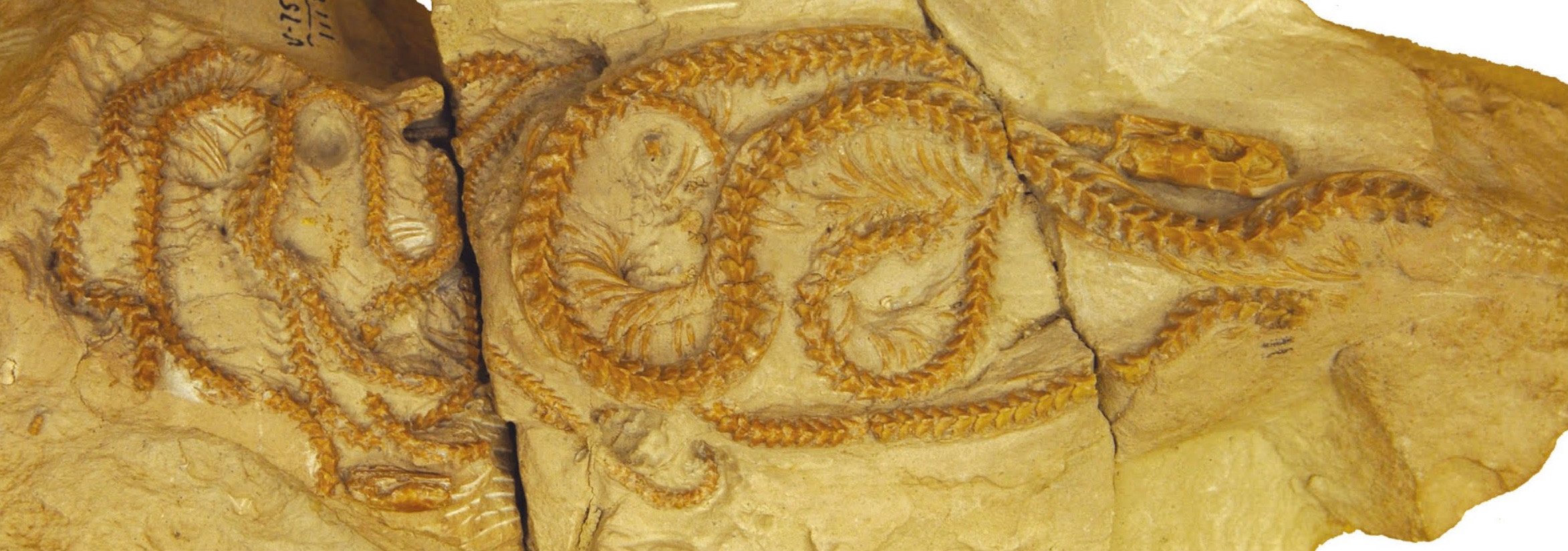
    Hibernophis breithaupti Fossil
    The fossilized skeleton of the newly discovered snake species Hibernophis breithaupti, which lived 38 million years ago in what is now western Wyoming, reveals insights into the evolution and social behavior of its modern descendants. Credit: Jasmine Croghan

    A small fossil snake may hold outsized clues about snake evolution, behavior, and an ancient ecosystem that looked nothing like today’s.

    A newly identified fossil snake from Wyoming is rewriting scientists’ understanding of snake evolution. The species, named Hibernophis breithaupti, lived about 34 million years ago and may represent an early branch of Booidea, the broader group that includes modern boas and pythons.

    This discovery is notable not only for the snake itself, but also for the unexpected way it was uncovered. Researchers studied four fossils from the White River Formation in Converse County, Wyoming. Three came from a single rock block, and two of those were visible on the surface. A third was hidden inside the rock and only detected later through CT scanning. A fourth specimen came from a nearby site in the same formation.

    Rare Fossils Reveal a More Complete Snake

    Fossil snakes are usually known from isolated vertebrae, which can tell researchers only so much. Here, the team could examine skulls, jaws, vertebrae, and other parts of the skeleton in remarkable detail. That allowed them to identify a new genus and species rather than trying to force the fossils into older, poorly defined categories based mostly on loose vertebrae.

    The new snake was small, likely burrowing, and appears to have been part of an ancient North American snake fauna that looked very different from today’s. Before more modern snake groups rose to dominance, constricting snakes were a major part of North America’s ecosystems. Hibernophis helps fill in that earlier world and suggests the continent may have played a bigger role in the early evolution of boa-like snakes than scientists once thought.

    An intriguing behavioral possibility

    The snakes were preserved curled together in what appears to have been a burrow, which could make this the oldest known evidence of snakes hibernating in groups. If confirmed, this would push back the evolutionary origins of complex social or survival behaviors in snakes by tens of millions of years. That idea cannot be proven with complete certainty, but it fits the arrangement of the specimens and echoes a behavior still seen in living snakes.
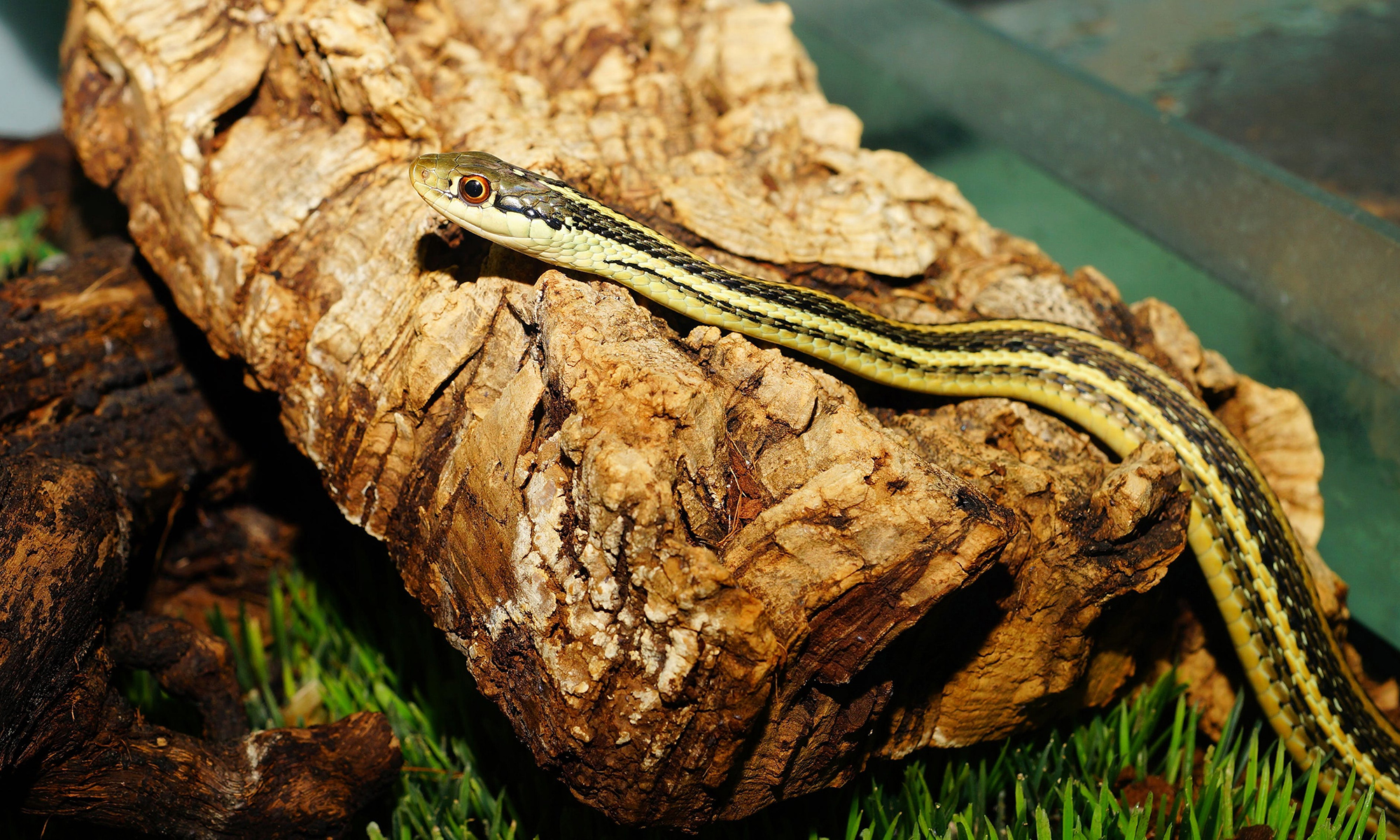
    Garter Snake
    Snakes do not undergo true hibernation like mammals but instead enter a similar physiological state known as brumation. As ectothermic animals, their body temperature and metabolism depend on environmental conditions. When temperatures drop, snakes become inactive, stop feeding, and retreat to protected shelters such as burrows or rock crevices to conserve energy. In some species, multiple individuals gather in the same location, which may help reduce heat loss. Credit: Stock

    “Modern garter snakes are famous for gathering by the thousands to hibernate together in dens and burrows,” says Michael Caldwell, a U of A paleontologist who co-led the research along with his former graduate student Jasmine Croghan, and collaborators from Australia and Brazil. “They do this to conserve heat through the effect created by the ball of hibernating animals. It’s fascinating to see possible evidence of such social behavior or hibernation dating back 34 million years.”

    The anatomy tells a more complex story. Hibernophis shows traits of early booid snakes, along with features seen in Charinaidae, suggesting it may lie near a key evolutionary split. Its uncertain placement makes it especially valuable, capturing an early stage in the evolution of boa-like snakes.

    Rather than fitting neatly into existing categories, it reveals that snake evolution was likely more gradual and branching than previously thought. Together, these fossils provide important new insight into how modern boa-like snakes first emerged and diversified.

    Reference: “Morphology and systematics of a new fossil snake from the early Rupelian (Oligocene) White River Formation, Wyoming” by Jasmine A Croghan, Alessandro Palci, Silvio Onary, Michael S Y Lee and Michael W Caldwell, 19 June 2024, Zoological Journal of the Linnean Society.
    DOI: 10.1093/zoolinnean/zlae073

    Never miss a breakthrough: Join the SciTechDaily newsletter.
    Follow us on Google and Google News.

    Evolution Fossils Paleontology Snake
    Share. Facebook Twitter Pinterest LinkedIn Email Reddit

    Related Articles

    Giant Anacondas Hit Maximum Size 12 Million Years Ago and Never Changed

    All Living Snakes Evolved From a Few Survivors of Asteroid That Killed the Dinosaurs

    Genetic Evidence From Fossilized Remains Show Climate Change Drove Mastodons Vast Distances Across North America

    New Fossil Ape Discovered in India Fills Major Gaps in the Primate Fossil Record

    MIT’s New Evidence on Dinosaur Evolution

    Remarkable Discovery of 1 Billion-Year-Old Green Seaweed Micro-Fossils in China

    New Fossils of Ancient Snake With Hind Legs Reveals Tantalizing Details of Evolution

    What Came First, the Animal or the Embryo? New Research Has Answer

    Scientists Discover Four-Legged Snake Fossil

    3 Comments

    1. Tarseem Mosley on April 17, 2026 1:05 pm

      I think that is an interesting thing about a snake having 4 legs

      Reply
      • Tarseem Mosley on April 17, 2026 1:08 pm

        I am a big fan of SciTechDaily in their research on life and earth.

        Reply
    2. Tarseem Mosley on April 17, 2026 1:13 pm

      I am a big fan of SciTechDaily in their research on life and earth

      Reply
    Leave A Reply Cancel Reply

    • Facebook
    • Twitter
    • Pinterest
    • YouTube

    Don't Miss a Discovery

    Subscribe for the Latest in Science & Tech!

    Trending News

    Scientists Discover Game-Changing New Way To Treat High Cholesterol

    This Small Change to Your Exercise Routine Could Be the Secret to Living Longer

    Scientists Discover 430,000-Year-Old Wooden Tools, Rewriting Human History

    AI Could Detect Early Signs of Alzheimer’s in Under a Minute – Far Before Traditional Tests

    What if Dark Matter Has Two Forms? Bold New Hypothesis Could Explain a Cosmic Mystery

    This Metal Melts in Your Hand – and Scientists Just Discovered Something Strange

    Beef vs. Chicken: Surprising Results From New Prediabetes Study

    Alzheimer’s Breakthrough: Scientists Discover Key Protein May Prevent Toxic Protein Clumps in the Brain

    Follow SciTechDaily
    • Facebook
    • Twitter
    • YouTube
    • Pinterest
    • Newsletter
    • RSS
    SciTech News
    • Biology News
    • Chemistry News
    • Earth News
    • Health News
    • Physics News
    • Science News
    • Space News
    • Technology News
    Recent Posts
    • Jellyfish Caught Feasting on Exploding Sea Worms for the First Time
    • Ancient “Spaghetti” in Dogs’ Hearts Reveals Heartworm’s Shocking Origins
    • Milk Nanoparticles Could Revolutionize Treatment for Deadly Bile Duct Cancer
    • Largest-Ever Study Finds Medicinal Cannabis Ineffective for Anxiety, Depression, PTSD
    • Scientists Reveal Why a Common Drug Causes Birth Defects and Autism
    Copyright © 1998 - 2026 SciTechDaily. All Rights Reserved.
    • Science News
    • About
    • Contact
    • Editorial Board
    • Privacy Policy
    • Terms of Use

    Type above and press Enter to search. Press Esc to cancel.