
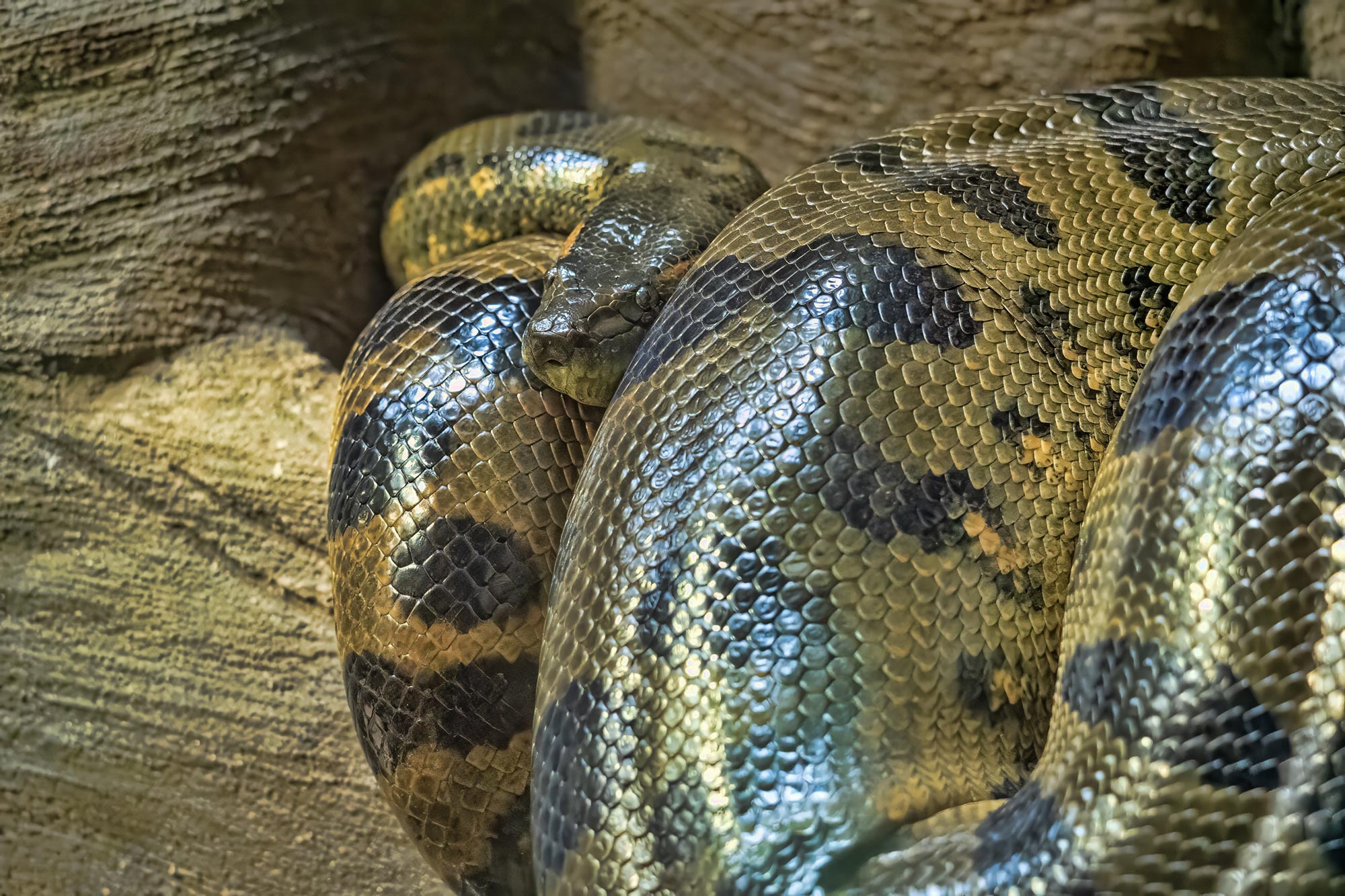
Fossil evidence from Venezuela shows that anacondas reached their giant size more than 12 million years ago and have stayed remarkably consistent ever since.
Ancient Origins of Anaconda Gigantism
A research group led by the University of Cambridge examined giant anaconda fossils from South America and determined that these snakes reached their full body size about 12.4 million years ago. Their findings indicate that anacondas have maintained this large size throughout their entire evolutionary history.
During the period between 12.4 and 5.3 million years ago, known as the ‘Middle to Upper Miocene’, many animals grew far larger than their modern counterparts. Warmer global temperatures, widespread wetlands and plentiful food helped support this trend.
Although other oversized reptiles from the Miocene – including the 12-meter caiman (Purussaurus) and the 3.2-metre giant freshwater turtle (Stupendemys) – eventually disappeared, anacondas (Eunectes) continued to survive at a giant size rather than shrinking or dying out.
Measuring Fossils to Compare Ancient and Modern Snakes
Today, anacondas are among the world’s largest snakes. They typically reach four to five meters in length, with rare individuals growing as long as seven meters.
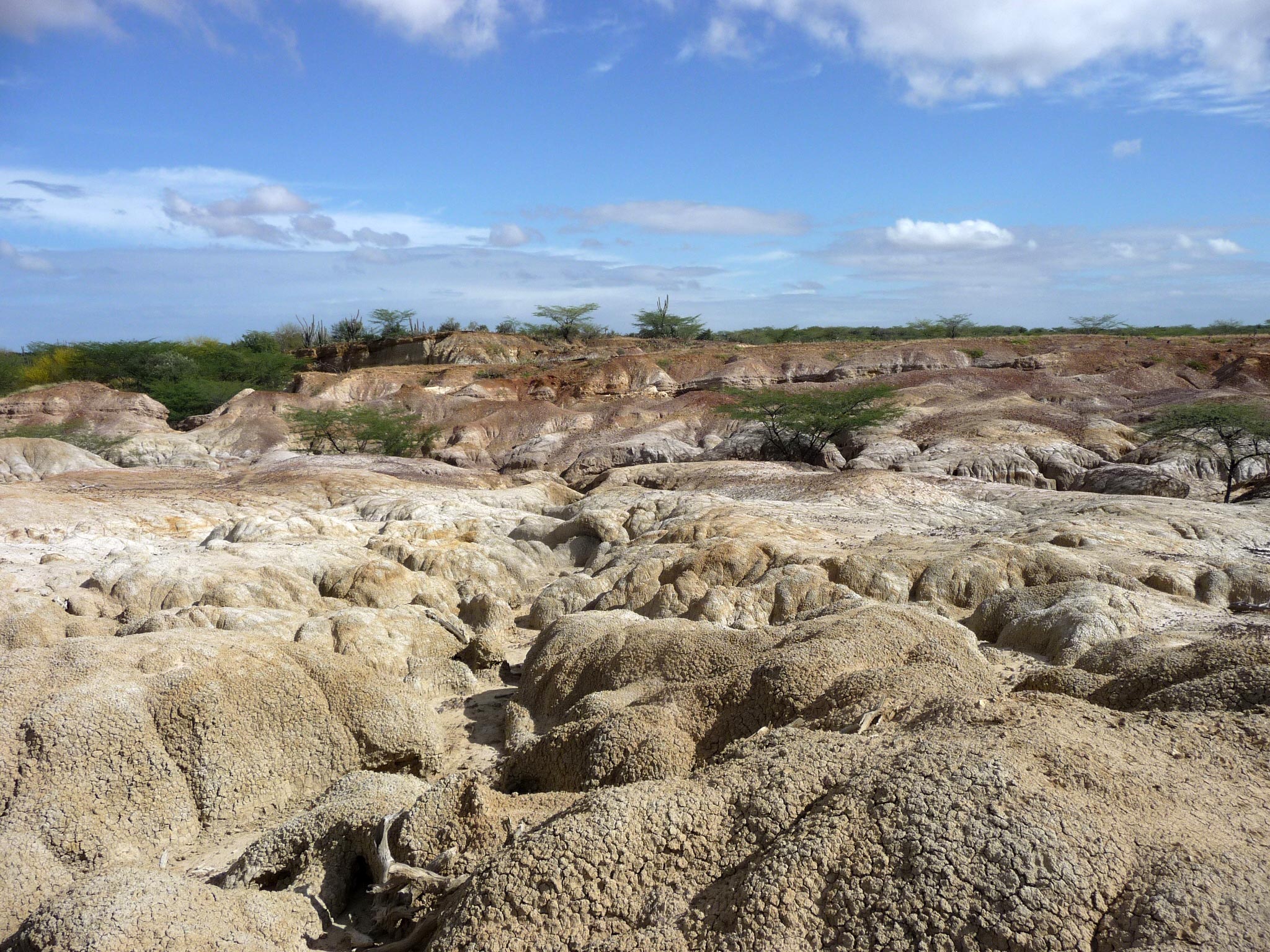
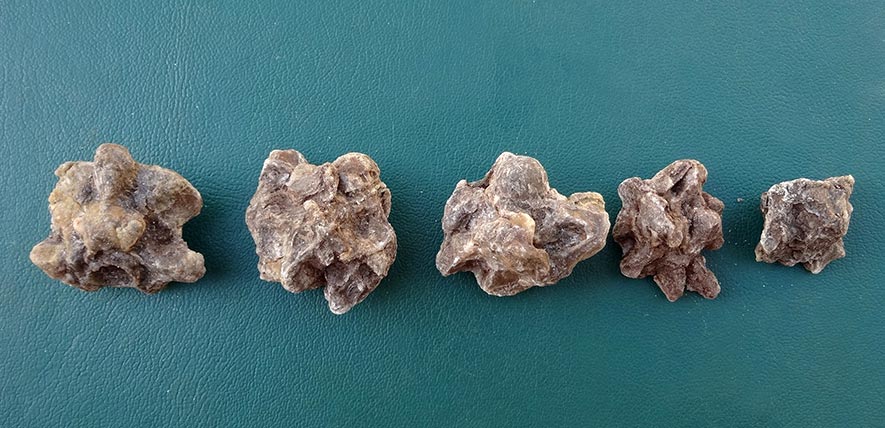
To understand how ancient anacondas compared, the scientists analyzed 183 fossilized vertebrae belonging to at least 32 individuals recovered in Falcón State in Venezuela. When these measurements were combined with fossil records from additional South American sites, the team concluded that ancient anacondas measured roughly four to five meters, similar to those alive today.
The research was published on December 1 in the Journal of Vertebrate Paleontology.
Why Anacondas Survived While Other Giants Vanished
“Other species like giant crocodiles and giant turtles have gone extinct since the Miocene, probably due to cooling global temperatures and shrinking habitats, but the giant anacondas have survived – they are super-resilient,” said Andrés Alfonso-Rojas, a PhD student and Gates Cambridge Scholar in the Department of Zoology at the University of Cambridge, lead author of the research.
He added: “By measuring the fossils we found that anacondas evolved a large body size shortly after they appeared in tropical South America around 12.4 million years ago, and their size hasn’t changed since,” said Alfonso-Rojas.
Using Evolutionary Tools to Verify Body Size
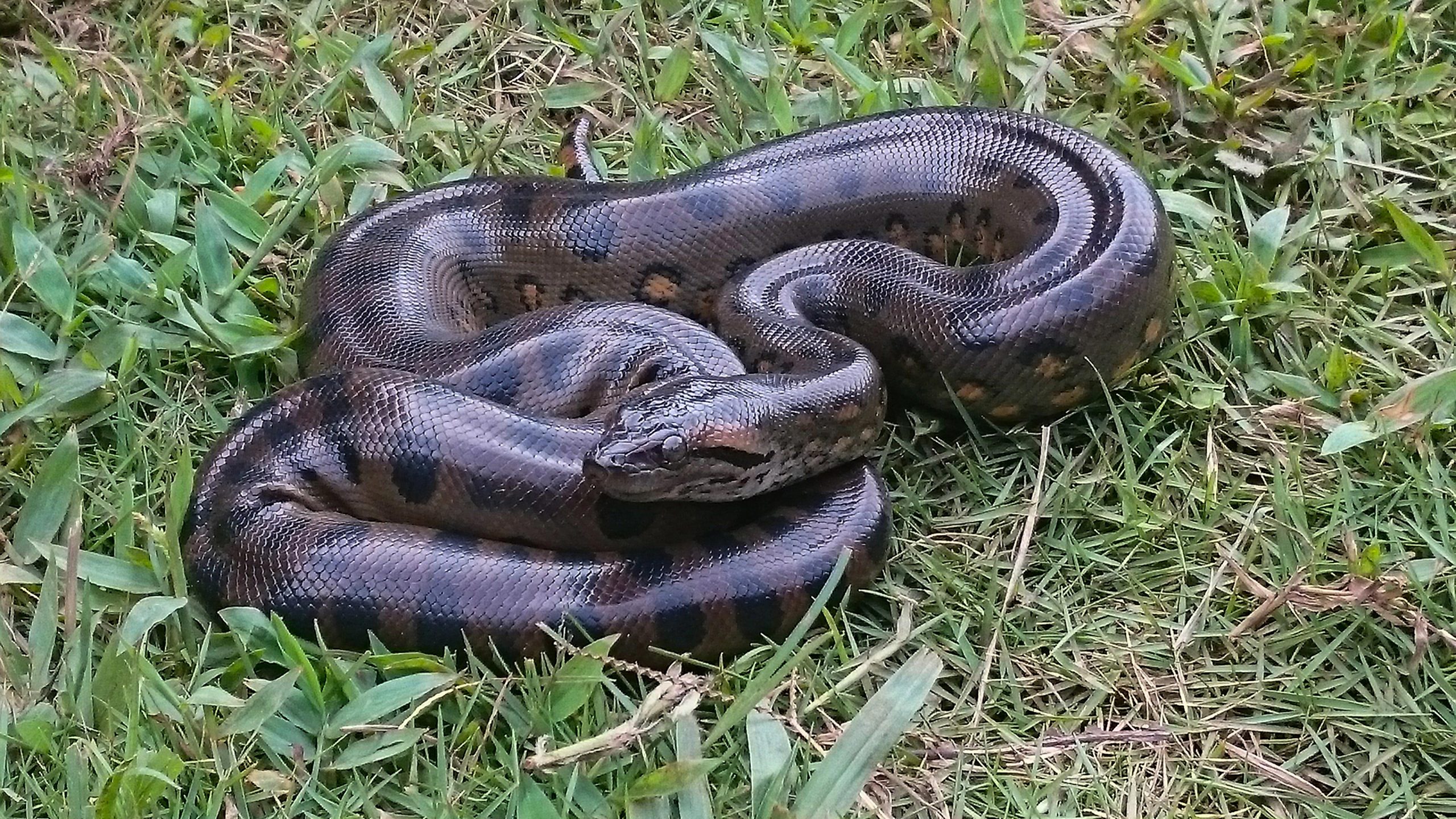
To confirm his results, Alfonso-Rojas used a second approach called ‘ancestral state reconstruction’. This technique relies on a family tree of related snake species to estimate the body lengths of ancient anacondas and modern relatives such as tree boas and rainbow boas. The analysis showed that the earliest anacondas were already four to five meters long when they first appeared during the Miocene.
Anacondas today live in marshes, swamps, and large river systems like the Amazon. During the Miocene, northern South America looked much like the modern Amazon Basin, which allowed anacondas to occupy a far wider range. Even though their distribution has since narrowed, there is still enough suitable habitat and prey, including fish and capybaras, to support their continued large size.
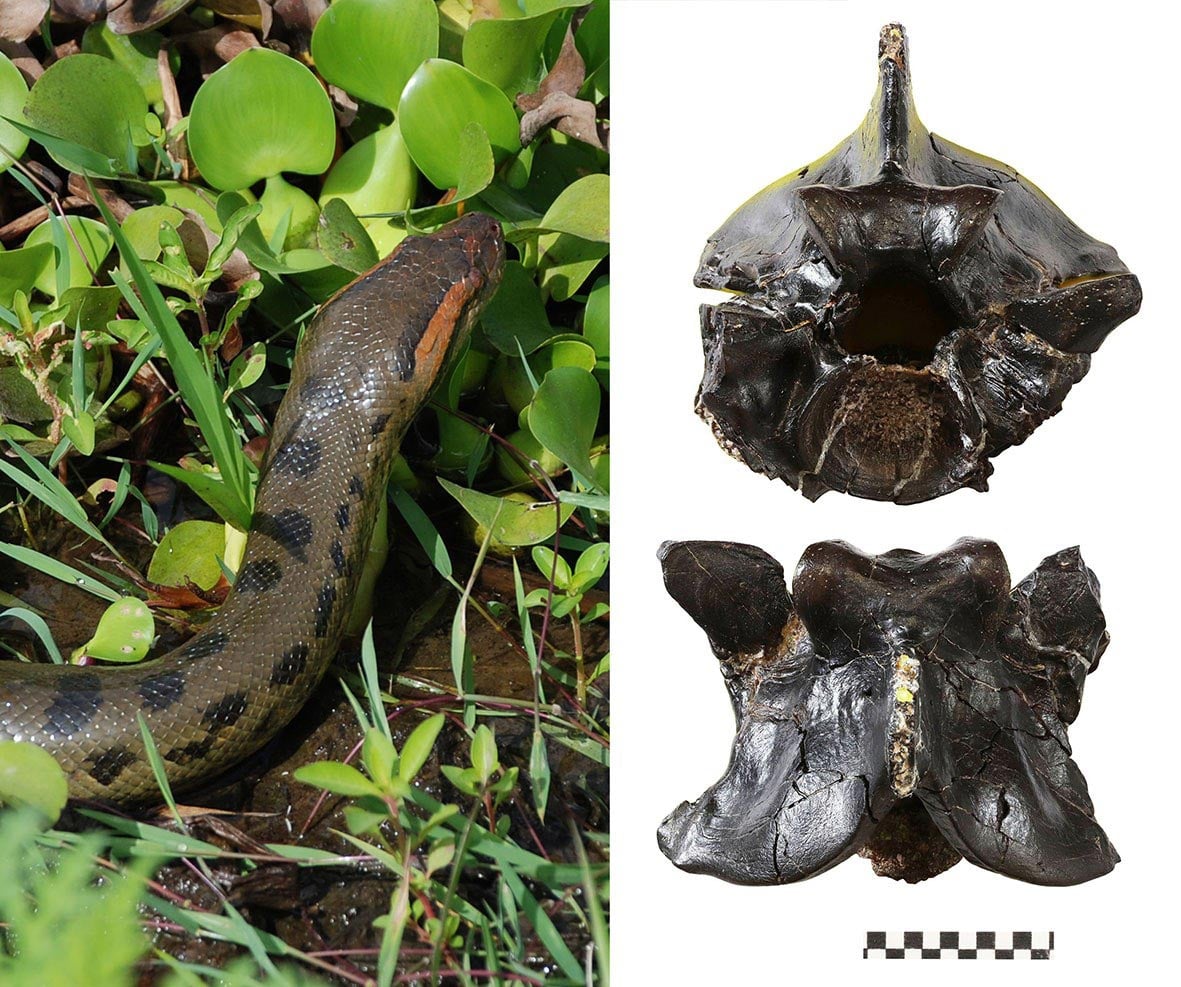
A Surprising Finding About Ancient Snake Size
Scientists once assumed that ancient anacondas must have grown even larger than today’s snakes because the Miocene climate was warmer and snakes are sensitive to temperature changes. Alfonso-Rojas addressed this expectation directly: “This is a surprising result because we expected to find the ancient anacondas were seven or eight metres long. But we don’t have any evidence of a larger snake from the Miocene when global temperatures were warmer.”

Fossil Clues Reveal When Gigantism Began
Before this research, scientists lacked enough fossil material to determine when anacondas first became giants. Because these snakes have more than 300 vertebrae, even individual fossilized backbones provide reliable clues about overall length.
The fossils used in the study were collected over several field seasons by collaborators from the University of Zurich and the Museo Paleontológico de Urumaco in Venezuela.
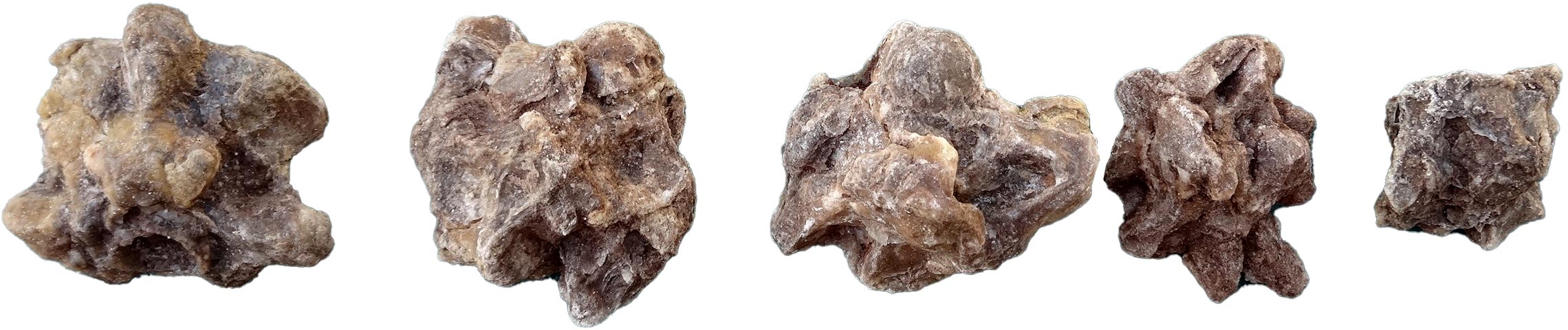
Reference: “An early origin of gigantism in anacondas (Serpentes: Eunectes) revealed by the fossil record” by Andrés F. Alfonso-Rojas, Jorge D. Carrillo-Briceño, Rodolfo Sánchez, Marcelo R. Sánchez-Villagra and Jason J. Head, 1 December 2025, Journal of Vertebrate Paleontology.
DOI: 10.1080/02724634.2025.2572967
Never miss a breakthrough: Join the SciTechDaily newsletter.
Follow us on Google and Google News.