
Close Menu
    Facebook X (Twitter) Instagram
    SciTechDaily
    • Biology
    • Chemistry
    • Earth
    • Health
    • Physics
    • Science
    • Space
    • Technology
    Facebook X (Twitter) Pinterest YouTube RSS
    SciTechDaily
    Home»Science»What Came First, the Animal or the Embryo? New Research Has Answer
    Science

    What Came First, the Animal or the Embryo? New Research Has Answer

    By University of BristolNovember 30, 20191 Comment4 Mins Read
    Facebook Twitter Pinterest Telegram LinkedIn WhatsApp Email Reddit
    Share
    Facebook Twitter LinkedIn Pinterest Telegram Email Reddit
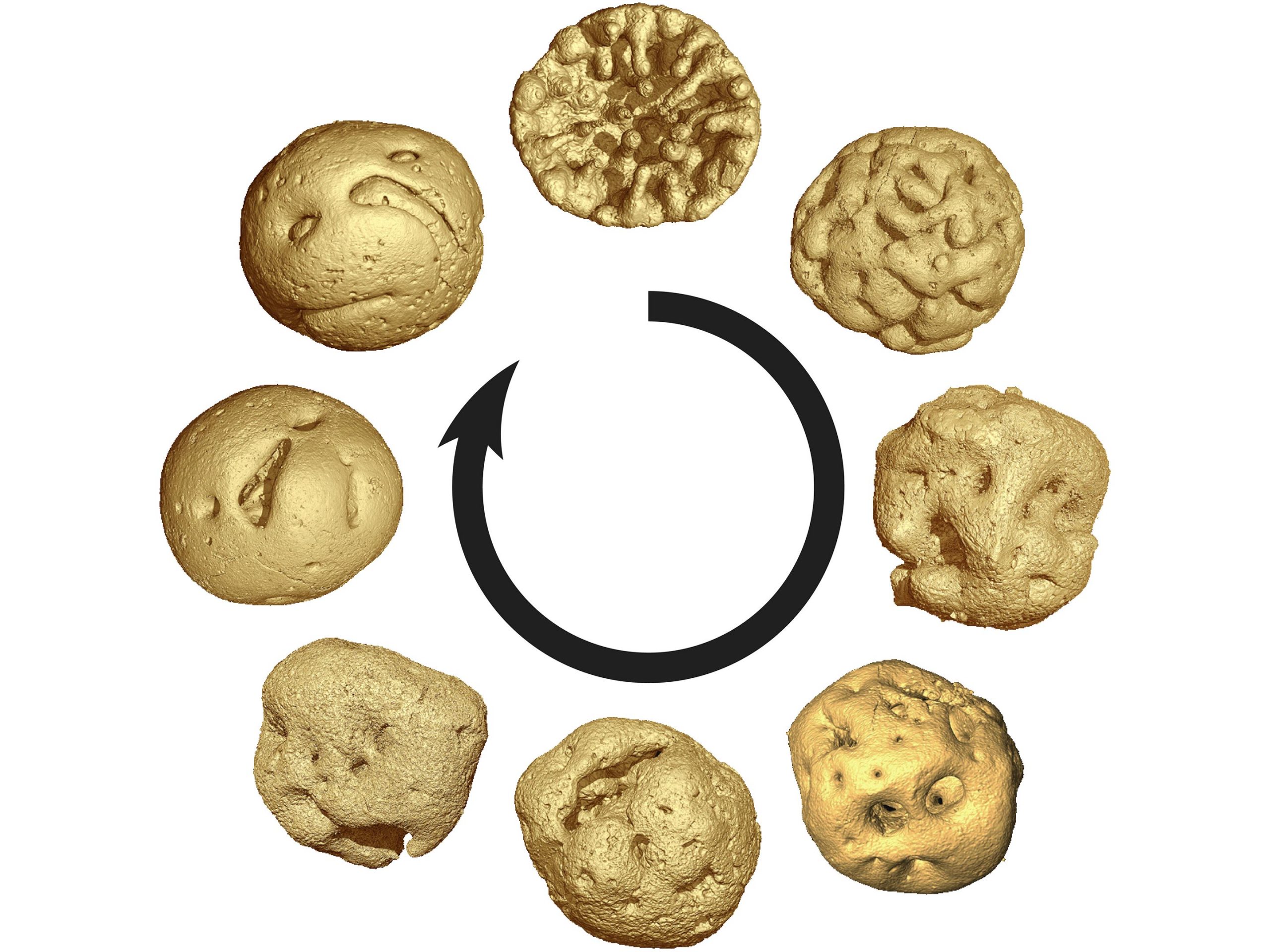
    Embryology of 609 Million-Year-Old Caveasphaera
    These are computer models based on X-ray tomographic microscopy of the fossils, showing the successive stages of development. Credit: Philip Donoghue and Zongjun Yin

    Animal embryos evolved before animals.

    Animals evolved from single-celled ancestors, before diversifying into 30 or 40 distinct anatomical designs. When and how animal ancestors made the transition from single-celled microbes to complex multicellular organisms has been the focus of intense debate.

    Until now, this question could only be addressed by studying living animals and their relatives, but now the research team has found evidence that a key step in this major evolutionary transition occurred long before complex animals appear in the fossil record, in the fossilized embryos that resemble multicellular stages in the life cycle of single-celled relatives of animals.

    The team discovered the fossils named Caveasphaera in 609 million-year-old rocks in the Guizhou Province of South China. Individual Caveasphaera fossils are only about half a millimeter in diameter, but X-ray microscopy revealed that they were preserved all the way down to their component cells.
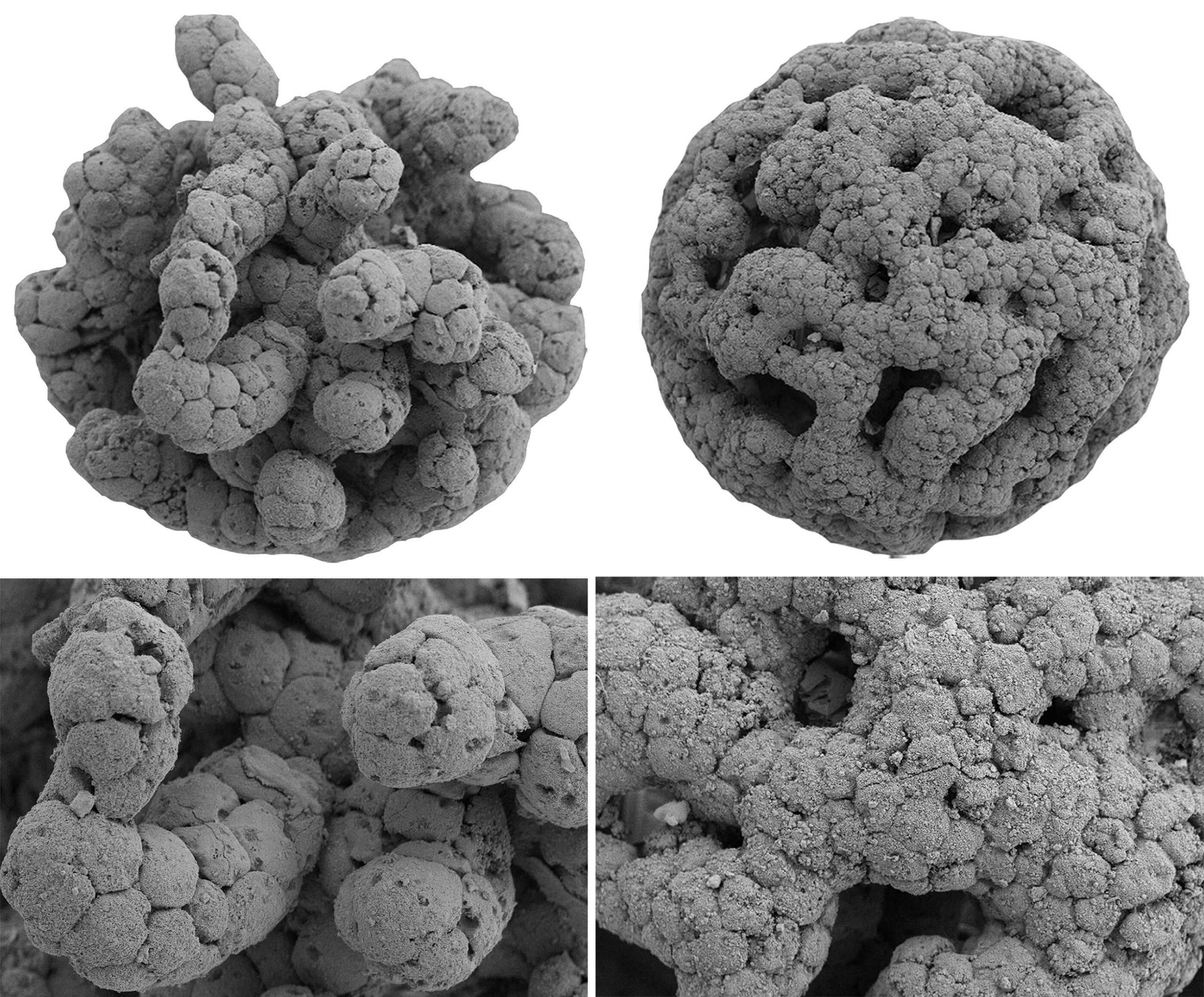
    Embryo of Caveasphaera
    An embryo of Caveasphaera showing its cellular structure and the growing tips where cells are increasing in number through division. This image was obtained using Scanning Electron Microscopy. The fossil specimen is less than half a millimeter in diameter. Credit: Philip Donoghue and Zongjun Yin

    Kelly Vargas, from the University of Bristol’s School of Earth Sciences, said: “X-Ray tomographic microscopy works like a medical CT scanner, but allows us to see features that are less than a thousandth of a millimeter in size. We were able to sort the fossils into growth stages, reconstructing the embryology of Caveasphaera.”

    Co-author Zongjun Yin, from Nanjing Institute of Geology and Palaeontology in China, added: “Our results show that Caveasphaera sorted its cells during embryo development, in just the same way as living animals, including humans, but we have no evidence that these embryos developed into more complex organisms.”

    Co-author Dr. John Cunningham, also from University of Bristol, said: “Caveasphaera had a life cycle like the close living relatives of animals, which alternate between single-celled and multicellular stages. However, Caveasphaera goes one step further, reorganizing those cells during embryology.”

    Co-author Stefan Bengtson, from the Swedish Museum of Natural History, said: “Caveasphaera is the earliest evidence of this most important step in the evolution of animals, which allowed them to develop distinct tissue layers and organs.”

    Co-author Maoyan Zhu, also from Nanjing Institute of Geology and Palaeontology, said he is not totally convinced that Caveasphaera is an animal. He added: “Caveasphaera looks a lot like the embryos of some starfish and corals — we don’t find the adult stages simply because they are harder to fossilize.

    Co-author Dr. Federica Marone from the Paul Scherrer Institute in Switzerland said: “This study shows the amazing detail that can be preserved in the fossil record but also the power of X-ray microscopes in uncovering secrets preserved in stone without destroying the fossils.”

    Co-author Professor Philip Donoghue, also from the University of Bristol’s School of Earth Sciences, said “Caveasphaera shows features that look both like microbial relatives of animals and early embryo stages of primitive animals. We’re still searching for more fossils that may help us to decide.

    “Either way, fossils of Caveasphaera tell us that animal-like embryonic development evolved long before the oldest definitive animals appear in the fossil record.”

    Reference: “The Early Ediacaran Caveasphaera Foreshadows the Evolutionary Origin of Animal-like Embryology” by Zongjun Yin, Kelly Vargas, John Cunningham, Stefan Bengtson, Maoyan Zhu, Federica Marone and Philip Donoghue, 27 November 2019, Current Biology.
    DOI: 10.1016/j.cub.2019.10.057

    This research was funded through the Biosphere Evolution, Transitions and Resilience (BETR) program, which is co-funded by the Natural Environment Research Council (NERC) and the Natural Science Foundation of China (NSFC).

    Never miss a breakthrough: Join the SciTechDaily newsletter.
    Follow us on Google and Google News.

    Evolution Fossils Paleontology University of Bristol
    Share. Facebook Twitter Pinterest LinkedIn Email Reddit

    Related Articles

    Dawn of the Apex Predator: How Ancient Carnivores Evolved To Dominate Land

    Genetic Evidence From Fossilized Remains Show Climate Change Drove Mastodons Vast Distances Across North America

    New Fossil Ape Discovered in India Fills Major Gaps in the Primate Fossil Record

    Finally Revealed: Gargantuan True Size of Legendary Prehistoric Mega-Shark Megalodon

    MIT’s New Evidence on Dinosaur Evolution

    An Eye for a Tooth: Bizarre Saber-Tooth Predator From South America Was No Saber-Tooth Cat

    Giant Armored Fish Fed Similar to Basking Sharks 380-Million-Years Ago

    Remarkable Discovery of 1 Billion-Year-Old Green Seaweed Micro-Fossils in China

    It Seems There Were Too Many Meat-Eating Dinosaurs – This May Be the Explanation

    1 Comment

    1. Church on December 24, 2019 3:33 am

      Here’s what SMU’s plan to bolt from Methodist control
      could mean for Dallas churches angry about LGBTQ policies.
      … https://goodsamaritanchurchdallas.org/

      Reply
    Leave A Reply Cancel Reply

    • Facebook
    • Twitter
    • Pinterest
    • YouTube

    Don't Miss a Discovery

    Subscribe for the Latest in Science & Tech!

    Trending News

    First-of-Its-Kind Discovery: Homer’s Iliad Found Embedded in a 1,600-Year-Old Egyptian Mummy

    Beyond Inflammation: Scientists Uncover New Cause of Persistent Rheumatoid Arthritis

    A Simple Molecule Could Unlock Safer, Easier Weight Loss

    Scientists Just Built a Quantum Battery That Charges Almost Instantly

    Researchers Unveil Groundbreaking Sustainable Solution to Vitamin B12 Deficiency

    Millions of People Have Osteopenia Without Realizing It – Here’s What You Need To Know

    Researchers Discover Boosting a Single Protein Helps the Brain Fight Alzheimer’s

    World-First Study Reveals Human Hearts Can Regenerate After a Heart Attack

    Follow SciTechDaily
    • Facebook
    • Twitter
    • YouTube
    • Pinterest
    • Newsletter
    • RSS
    SciTech News
    • Biology News
    • Chemistry News
    • Earth News
    • Health News
    • Physics News
    • Science News
    • Space News
    • Technology News
    Recent Posts
    • After Decades, MIT Researchers Capture the First 3D Atomic View of a Mysterious Material
    • Your Favorite Fishing Spot Is Turning Brown – and the Fish Are Changing
    • 380-Million-Year-Old Fish Fossil Reveals Secrets of Life’s First Steps Onto Land
    • Mezcal “Worm” in a Bottle Mystery: DNA Testing Reveals a Surprise
    • Scientists Turn Red Lettuce Green, Unlocking Hidden Nutrients
    Copyright © 1998 - 2026 SciTechDaily. All Rights Reserved.
    • Science News
    • About
    • Contact
    • Editorial Board
    • Privacy Policy
    • Terms of Use

    Type above and press Enter to search. Press Esc to cancel.