
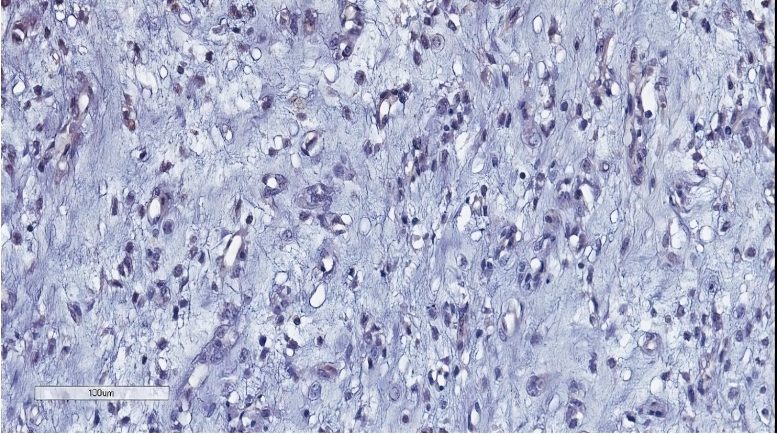
Australian scientists have created the first genetic map that pinpoints key genes responsible for sarcoma, one of the most common cancers in children.
The first comprehensive genetic map of sarcomas, produced by research led by Omico, the Garvan Institute of Medical Research, and UNSW Sydney, has identified several sarcoma-causing genes. The study holds significant implications for individuals and families affected by sarcoma, enabling earlier detection and potentially improving survival rates for patients.
Sarcomas are rare cancers that originate in bones, muscles, fat, or cartilage. Primarily affecting children and young adults, these cancers account for approximately 20% of all cancer diagnoses in individuals under 20 years old.
To date, there has been little research into the genetic basis of sarcomas.
The new study, published in the journal Science, has generated a comprehensive map of how the inheritance of genes may impact families affected by sarcoma.
Heritable Causes of Sarcoma
The researchers found that one in 14 individuals diagnosed with sarcoma carries a clinically important gene that explains why the cancer arose. In addition, the research team identified a previously unrecognized genetic pathway specific to sarcomas.
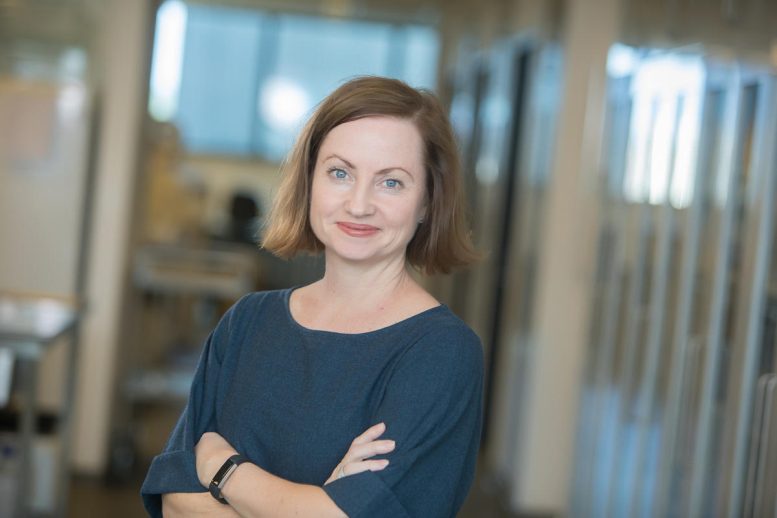
“The findings uncovered by this research are so important because by understanding how individuals develop sarcomas, we move closer to earlier detection and better treatments,” said lead author of the paper, Dr. Mandy Ballinger, Group Leader of the Genetic Cancer Risk Group at Garvan.
Jonathan Granek, who was diagnosed with sarcoma at 26 years of age, said that these new findings are important to sarcoma patients.
“Receiving a sarcoma diagnosis can be devastating,” Jonathan said. “This research offers hope to sarcoma patients because it increases the chance of a diagnosis at an early and curable stage.”
The study was co-led by Professor David Thomas, Head of the Genomic Cancer Medicine Laboratory at Garvan and CEO of Omico, a non-profit nationwide network of genomic cancer research and treatment centers.
“Cancer is fundamentally a genetic disease, and genomics is the key to unlocking its secrets. This international collaboration has developed new methods for mapping the genetic basis for cancer and identified new heritable pathways that increase cancer risk. These findings fill important gaps in the missing heritability of cancer,” Professor Thomas said.
The research paves the way for people with a family history of sarcoma to test for their genetic risk of developing the disease.
Reference: “Heritable defects in telomere and mitotic function selectively predispose to sarcomas” by Mandy L. Ballinger, Swetansu Pattnaik, Piyushkumar A. Mundra, Milita Zaheed, Emma Rath, Peter Priestley, Jonathan Baber, Isabelle Ray-Coquard, Nicholas Isambert, Sylvain Causeret, Winette T. A. van der Graaf, Ajay Puri, Florence Duffaud, Axel Le Cesne, Beatrice Seddon, Coonoor Chandrasekar, Joshua D. Schiffman, Andrew S. Brohl, Paul A. James, Jean-Emmanuel Kurtz, Nicolas Penel, Ola Myklebost, Leonardo A. Meza-Zepeda, Hilda Pickett, Maya Kansara, Nicola Waddell, Olga Kondrashova, John V. Pearson, Andrew P. Barbour, Shuai Li, Tuong L. Nguyen, Diane Fatkin, Robert M. Graham, Eleni Giannoulatou, Melissa J. Green, Warren Kaplan, Shyamsundar Ravishankar, Joseph Copty, Joseph E. Powell, Edwin Cuppen, Kristel van Eijk, Jan Veldink, Jin-Hee Ahn, Jeong Eun Kim, R. Lor Randall, Kathy Tucker, Ian Judson, Rajiv Sarin, Thomas Ludwig, Emmanuelle Genin, Jean-Francois Deleuze, the French Exome Project Consortium, Michelle Haber, Glenn Marshall, Murray J. Cairns, Jean-Yves Blay, the International Sarcoma Kindred Study and David M. Thoma, 19 January 2023, Science.
DOI: 10.1126/science.abj4784
The researchers used data collected from the International Sarcoma Kindred Study (ISKS) and the Genetic Cancer Risk in the Young (RisC) studies. The ISKS, established in Australia in 2008, is the largest sarcoma genetic study in the world, including more than 3,500 families recruited from 23 cancer centers in seven countries.
The study was funded by Omico, NSW Office of Medical Research, National Health & Medical Research Council, Cancer Institute NSW, Cancer Australia, the Australian and New Zealand Sarcoma Alliance, the Liddy Shriver Sarcoma Initiative, and the Rainbows for Kate Foundation.
Dr. Mandy Ballinger is a Conjoint Senior Lecturer at St Vincent’s Clinical School, UNSW Medicine & Health. Professor David Thomas is a Conjoint Professor at St Vincent’s Clinical School, UNSW Medicine & Health, and CEO of Omico.
Never miss a breakthrough: Join the SciTechDaily newsletter.
Follow us on Google and Google News.
1 Comment
I guess because the author does not have access that the relevant genetic markers were not mentioned. A shame