
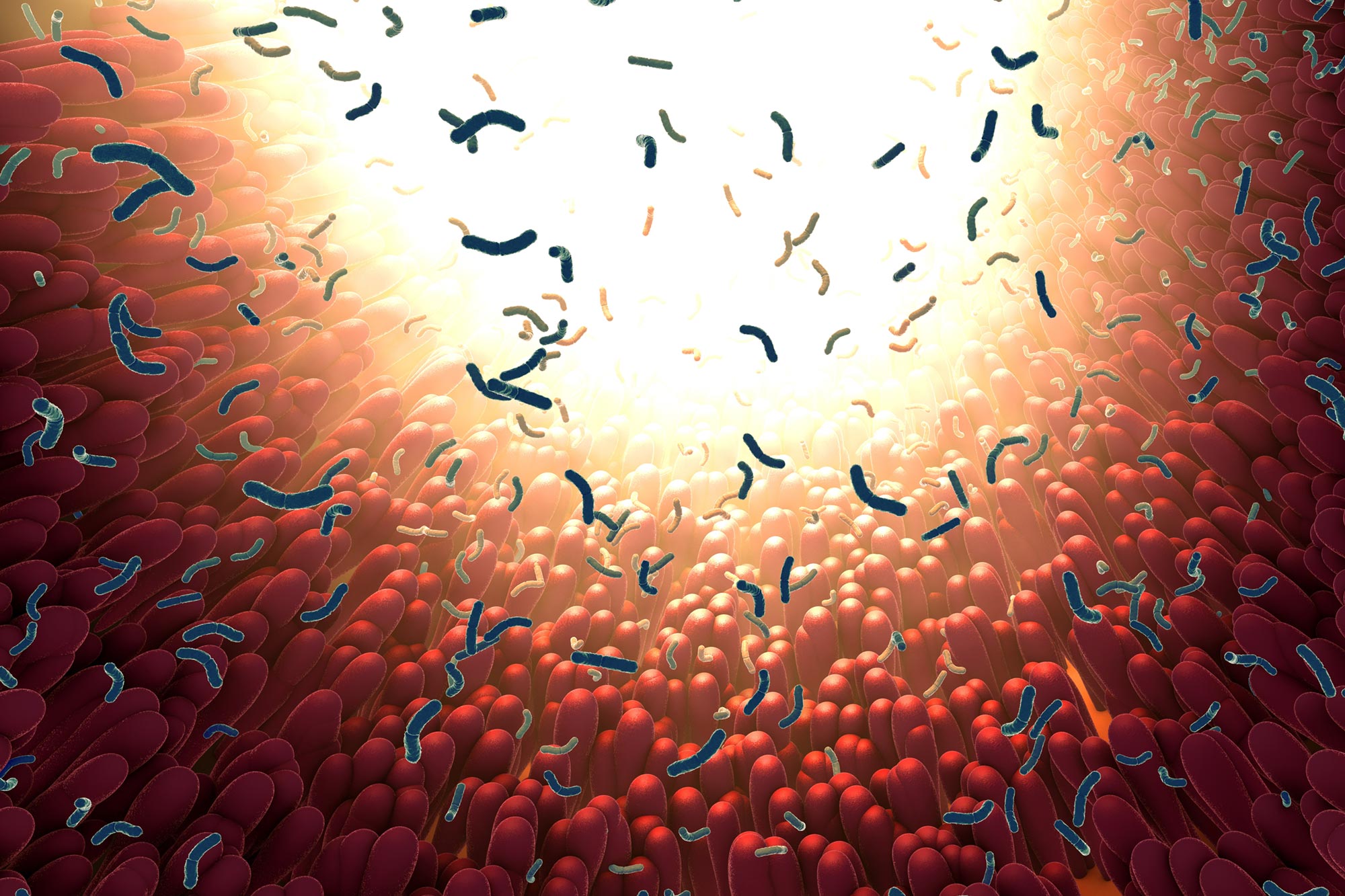
Gut bacteria may turn dietary nitrate and iron into molecules that support cardiovascular and metabolic health.
Vegetables such as beets and leafy greens provide nitrate and iron, but part of their biological effect may depend on what happens after those nutrients reach the gut. Researchers at Karolinska Institutet have found that gut bacteria can transform dietary nitrate and iron into biologically active molecules that may help protect against cardiovascular and metabolic disease. The findings were published in Cell.
Nitrate is naturally abundant in vegetables, particularly beets and leafy greens such as spinach, arugula, and lettuce. Plant foods including beans, whole grains, and green vegetables also contain nonheme iron. The researchers found that gut microbes can combine nitrate and nonheme iron from the diet to form molecules called dinitrosyl iron complexes (DNICs). These compounds are then absorbed and carried to tissues throughout the body, with particularly high levels reaching the liver and kidneys.
Gut bacteria are essential for DNIC formation
To trace where these molecules came from, the researchers conducted experiments using mice, cells, bacteria, and human samples. Advanced analytical techniques detected DNICs in multiple tissues, but the compounds were completely absent in germ-free mice. That difference indicated that the gut microbiota plays an essential role in producing them.

“Our results show that gut bacteria can convert components in food into biologically active molecules that influence important bodily functions,” says Andrei L. Kleschyov, Senior Researcher at the Department of Physiology and Pharmacology, Karolinska Institutet, the study’s first and co-corresponding author.
Higher DNIC levels improved health markers
The researchers then raised DNIC levels in an animal model of cardiovascular and metabolic disease, either by providing dietary supplements containing nitrate and iron or by administering synthetically produced DNICs. Both approaches were associated with improvements across several measures of cardiovascular and metabolic health.
“Among other things, we observed lower blood pressure and improved vascular function, better blood sugar control and reduced fat accumulation in the liver. The results help to explain why a diet rich in vegetables, which contain both nitrate and iron, is linked to a lower risk of several diseases,” says Mattias Carlström, Professor of Cardiorenal Physiology at the Department of Physiology and Pharmacology, Karolinska Institutet, one of the study’s shared last authors together with Professor Jon Lundberg at the same department, and co-corresponding author.

Human effects still need testing
According to the researchers, the findings reveal a previously unknown way that diet and particular gut microbes can interact to produce molecules with potentially beneficial effects. However, much of the evidence comes from experimental models, so further studies are needed to determine how important the pathway is in people.
The next challenge is developing reliable ways to measure DNICs in humans and tracking how they are produced, move through the body, and influence different physiological processes. Researchers also want to determine whether diet or changes to the gut microbiota can alter DNIC levels in ways that might eventually help prevent disease.
Reference: “Gut microbiota generate dinitrosyl iron complexes with cardiometabolic benefits” by Andrei L. Kleschyov, Miho Shimari, Ariela Maína Boeder, Tomas A. Schiffer, Sander van Riet, Gianluigi Pironti, Nadja I. Bork, Alexander Rotmann, Zhengbing Zhuge, Drielle D. Guimarães, Gaia Picozzi, Chiara H. Moretti, Lucas R.R.A. Carvalho, Carina Nihlén, Ellen I. Closs, Viacheslav O. Nikolaev, Magnus Ingelman-Sundberg, Eddie Weitzberg, Jon O. Lundberg and Mattias Carlström, 19 August 2026, Cell.
DOI: 10.1016/j.cell.2026.07.055
The research was funded by, amongst others, the Swedish Research Council, the Swedish Heart-Lung Foundation, the Novo Nordisk Foundation, the European Research Council (ERC), the Knut and Alice Wallenberg Foundation, Diabetes Wellness Sweden and the Karolinska Institute.
Never miss a breakthrough: Join the SciTechDaily newsletter.
Follow us on Google and Google News.