
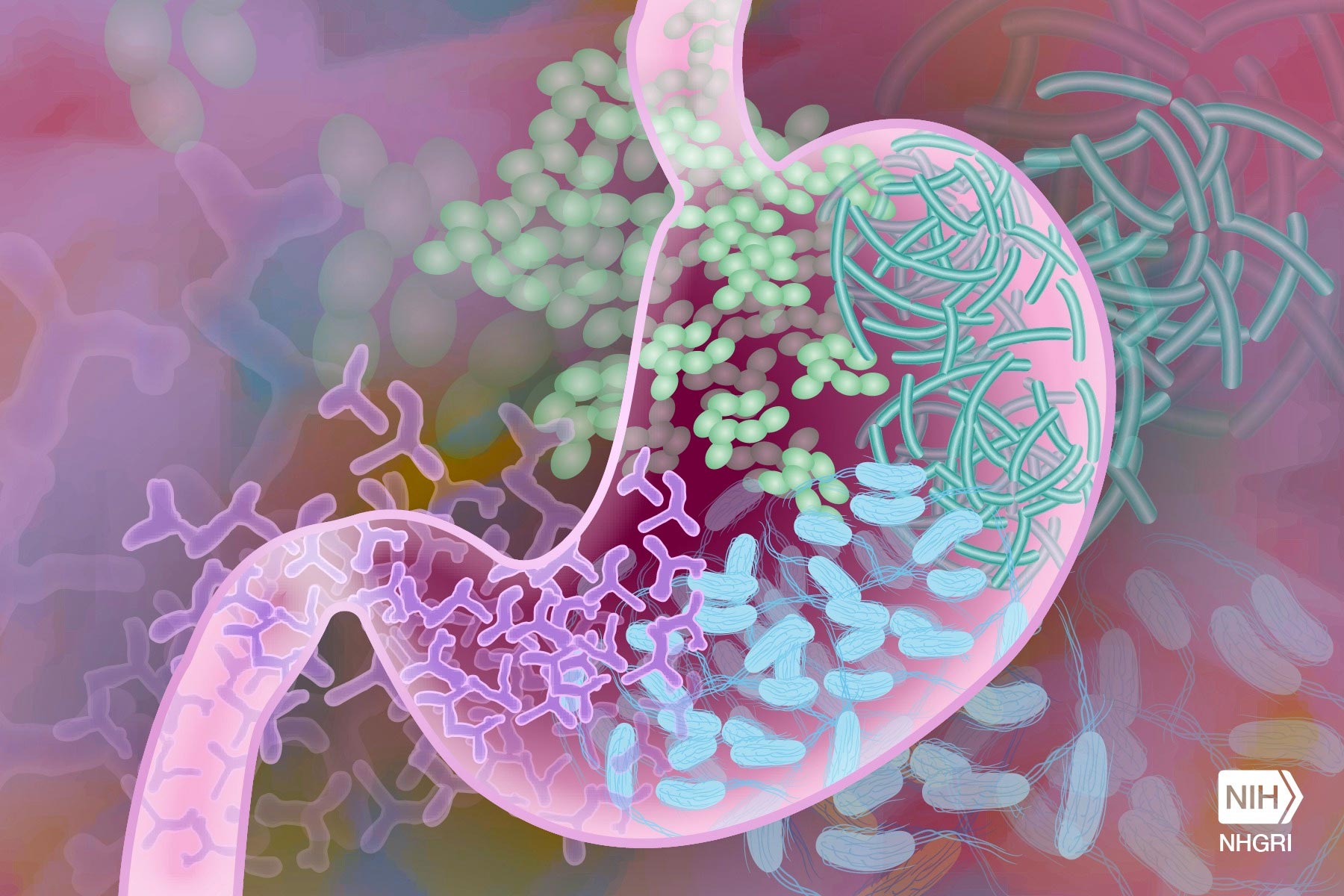
Fasting shields mice from gut infections by depriving pathogens of nutrients through microbiome changes.
Fasting before and during exposure to Salmonella enterica bacteria protects mice from developing a full-blown infection, in part due to changes in the animals’ gut microbiomes, according to new research published in PLOS Pathogens by Bruce Vallance and colleagues at University of British Columbia, Canada.
When people or animals develop an infection, they often lose their appetite. However it remains controversial whether fasting protects a host from infection, or increases their susceptibility. In the new study, mice were fasted for 48 hours before and during oral infection with the bacteria Salmonella enterica serovar Typhimurium, a common cause of foodborne illness in people.
Fasting decreased the signs of bacterial infection compared to fed mice, including nearly eliminating all intestinal tissue damage and inflammation. When fasted animals were re-fed for a day after their fast, there was a dramatic increase in Salmonella numbers and invasion into the intestinal walls, although the associated inflammation was still attenuated compared to normal. The results did not hold true when mice were exposed to Salmonella intravenously instead of orally, and analyses of the microbiomes of mice showed significant changes associated with fasting and protection against infection. Moreover, fasting did not fully protect germ-free mice—bred to lack a normal microbiome—from Salmonella, suggesting that some of the protection was due to fasting’s effect on the microbiome. Experiments using the bacteria Campylobacter jejuni confirmed that the effect of fasting was not limited to Salmonella, with similar results seen.
Potential for Fasting as a Therapeutic Strategy
“These data suggest that therapeutic fasting or calorie restriction has the potential to beneficially modulate infectious and potentially non-infectious gastrointestinal diseases,” the researchers conclude.
The researchers add, “Our research highlights the important role that food plays in regulating interactions between the host, enteric pathogens and the gut microbiome. When food is limited, the microbiome appears to sequester the nutrients that remain, preventing pathogens from acquiring the energy they need to infect the host. While more research is needed, fasting or otherwise adjusting food intake could be exploited therapeutically to modulate infectious diseases in the future.”
Reference: “Fasting increases microbiome-based colonization resistance and reduces host inflammatory responses during an enteric bacterial infection” by Franziska A. Graef, Larissa S. Celiberto, Joannie M. Allaire, Mimi T. Y. Kuan, Else S. Bosman, Shauna M. Crowley, Hyungjun Yang, Justin H. Chan, Martin Stahl, Hongbing Yu, Candice Quin, Deanna L. Gibson, Elena F. Verdu, Kevan Jacobson and Bruce A. Vallance, 5 August 2021, PLOS Pathogens.
DOI: 10.1371/journal.ppat.1009719
Funding: This work was funded by project grants from the Canadian Institutes of Health Research (PJT-148846 and PJT-159528) to BAV and (PJT-425747) to EFV. KJ, EFV & BAV were funded by grants in aid from Crohn’s and Colitis Canada. JMA was supported by fellowships from the Canadian Institutes of Health Research and the Michael Smith Foundation for Health Research. FAG was supported by a University of British Columbia 4 Year Fellowship while ESB was supported by a BC Children’s Hospital Research (BCCHR) Institute Graduate Studentship. EFV was funded by a Canada Research Chair, Tier 2. KJ was funded by a Senior Clinician Scientist Award from BCCHR and the Children with Intestinal and Liver Disorders (CHILD) Foundation. BAV is the CHILD Foundation Chair in Pediatric Gastroenterology. The funders had no role in study design, data collection and analysis, decision to publish, or preparation of the manuscript.
Never miss a breakthrough: Join the SciTechDaily newsletter.
Follow us on Google and Google News.