
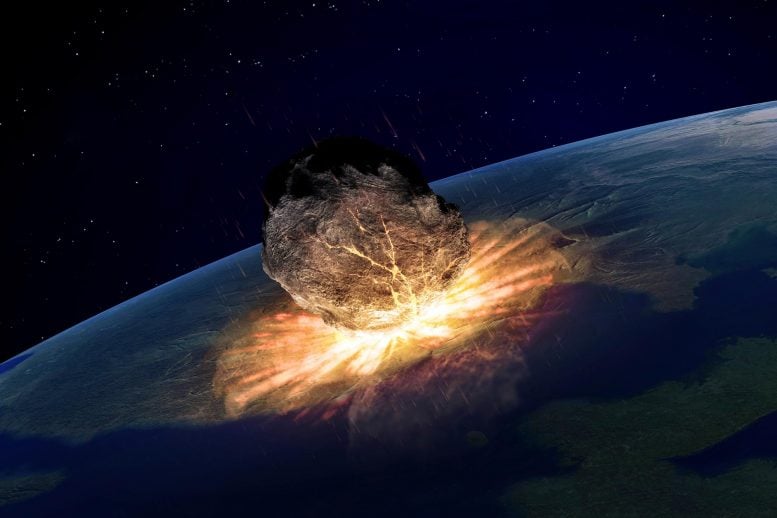
Ancient asteroid impact dramatically reshaped tropical forests, setting the stage for today’s biodiversity-rich rainforests.
In an analysis of thousands of fossil pollen and leaves spanning the Cretaceous-Paleogene (K/Pg) boundary, researchers found that the cataclysmic asteroid impact that resulted in the destruction of nearly 75% of all terrestrial life on Earth drastically restructured tropical forests, setting the stage for the evolution of what has become one of the planet’s most diverse ecosystems — the neotropical rainforest.
While the end-Cretaceous impact nearly 66 million years ago was catastrophic for terrestrial ecosystems worldwide, its long-term effects on tropical forests have remained a mystery. This is largely due to the lack of paleobotanical exploration in the region, which has only just begun to provide the data needed to evaluate these questions.
Colombian Fossils Reveal Massive Forest Shift
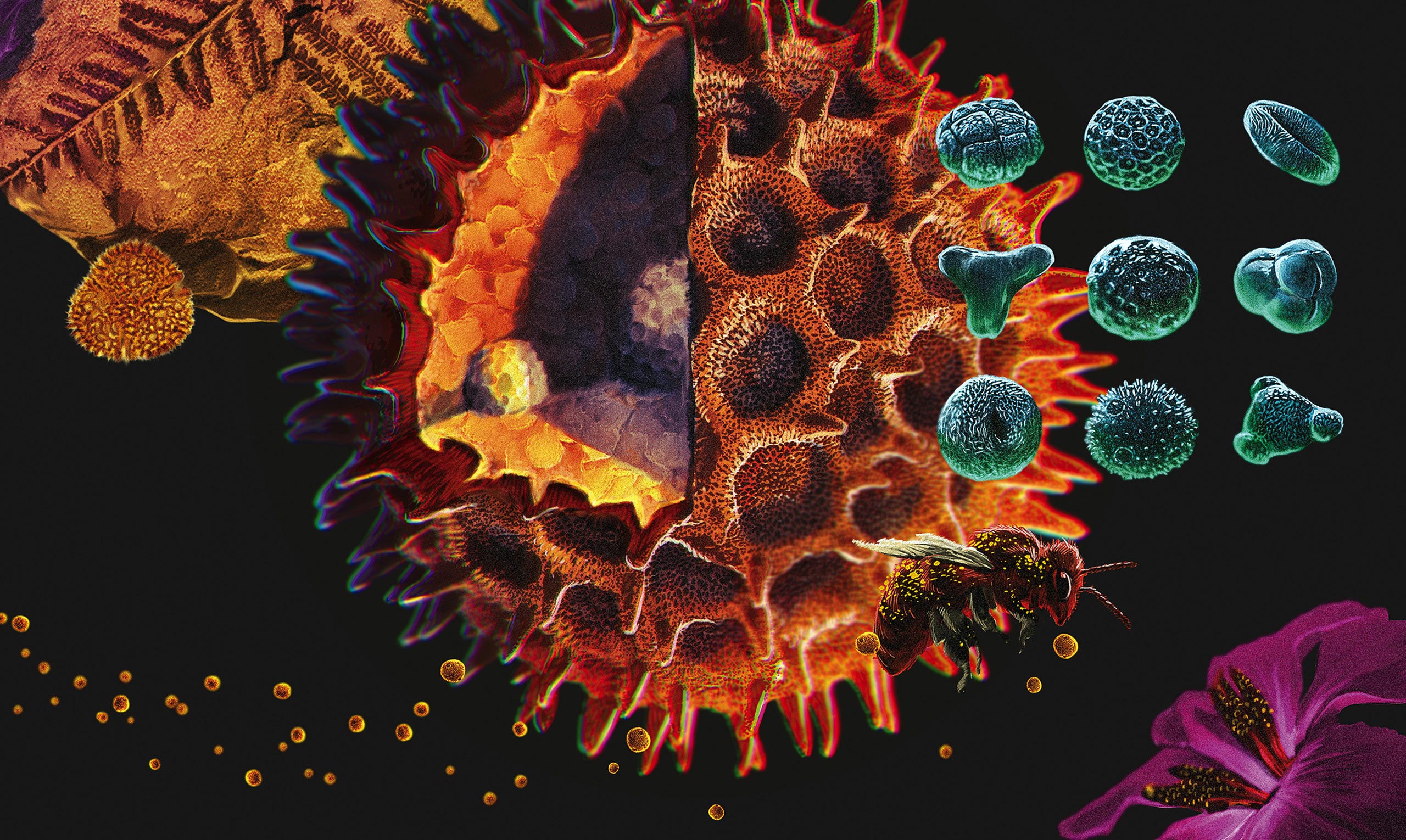
Mónica Carvalho and colleagues used fossil pollen and leaves recovered from Colombia to characterize how the impact changed South American tropical forests, finding large-scale changes in species composition and forest structure. According to the findings, late Cretaceous rainforests were characterized by an open canopy environment. However, plant diversity declined by roughly 45% at the K/Pg boundary and extinctions were widespread, particularly among seed-bearing plants.
Rise of Flowering Plants and Dense Canopies
While the forests recovered over the subsequent six million years, angiosperms, or flowering plants, came to dominate the forests. This transition led to the closed canopy structure and the layered, vertical distribution of plant biodiversity that defines modern tropical rainforests.
In an accompanying Perspective, Bonne Jacobs and Ellen Currano discuss how the findings from this study and others demonstrate that the recovery and lasting effects of the K/Pg impact and extinction event were variable and depended largely on proximity to the crater and local conditions such as climate.
“Today, the world is experiencing a sixth mass extinction event, but this time, there is no place on Earth far from the ultimate cause — humans,” write Jacobs and Currano. “It seems that proximate perturbations are and will be substantial everywhere, even if they vary.”
For more on this research, read How the Giant Asteroid That Wiped Out the Dinosaurs Gave Rise to Modern Rainforests.
Reference: “Extinction at the end-Cretaceous and the origin of modern Neotropical rainforests” by Mónica R. Carvalho, Carlos Jaramillo, Felipe de la Parra, Dayenari Caballero-Rodríguez, Fabiany Herrera, Scott Wing, Benjamin L. Turner, Carlos D’Apolito, Millerlandy Romero-Báez, Paula Narváez, Camila Martínez, Mauricio Gutierrez, Conrad Labandeira, German Bayona, Milton Rueda, Manuel Paez-Reyes, Dairon Cárdenas, Álvaro Duque, James L. Crowley, Carlos Santos and Daniele Silvestro, 2 April 2021, Science.
DOI: 10.1126/science.abf1969
Never miss a breakthrough: Join the SciTechDaily newsletter.
Follow us on Google and Google News.
2 Comments
I love reading your articles about life science.
Thank you for your concern, to keep us on alert.
“Today, the world is experiencing a sixth mass extinction event, but this time, there is no place on Earth far from the ultimate cause — humans,”
As is all too common, an assertion is made without supporting evidence. Today, we are seeing local extirpations, which were thought to be extinctions. Then somebody finds a living ‘survivor’ that hadn’t been seen in decades. Yes, there were some extinctions, such as Pleistocene megafauna, and the Dodo Bird. However, what we don’t see are instantaneous extinctions across a broad range such as the end of the Cretaceous. Nor do we see even a significant reduction in total number of species such as occurred at the end of the Permian. There is instead, a shift in the composition, with some winners such as coyotes, wild boar, and North American turkeys. Eastern White Tail deer have made an unprecedented recovery. Over a long enough period of time, specialists such as the pika — adapted to alpine cold — would find that erosion has reduced the elevation of their habitat and either adapt or become extinct. It they adapt, they may well evolve into a different specie. That is the story of evolution. As orogenies elevate mountain ranges and create new climate regimes, life evolves to take advantage of the new habitats; similarly, as the mountains are removed by erosion, the alpine ecosystems disappear, which means all the life adapted to them.
It would help if those concerned about a so-called ‘Sixth Mass Extinction’ were to carefully define what they mean and allow a distinction between extinctions and extirpations and shifting compositions. Are humans affecting the environment and the flora and fauna? Yes. However, so are beavers and termites. A little less hysterical hand waving and a more objective analysis of what is happening on Earth would be appropriate. The only thing that is constant is change.