
Close Menu
    Facebook X (Twitter) Instagram
    SciTechDaily
    • Biology
    • Chemistry
    • Earth
    • Health
    • Physics
    • Science
    • Space
    • Technology
    Facebook X (Twitter) Pinterest YouTube RSS
    SciTechDaily
    Home»Science»Scientists Discover a New Kind of Extinct Flying Reptile
    Science

    Scientists Discover a New Kind of Extinct Flying Reptile

    By University of SouthamptonFebruary 4, 2013No Comments3 Mins Read
    Facebook Twitter Pinterest Telegram LinkedIn WhatsApp Email Reddit
    Share
    Facebook Twitter LinkedIn Pinterest Telegram Email Reddit
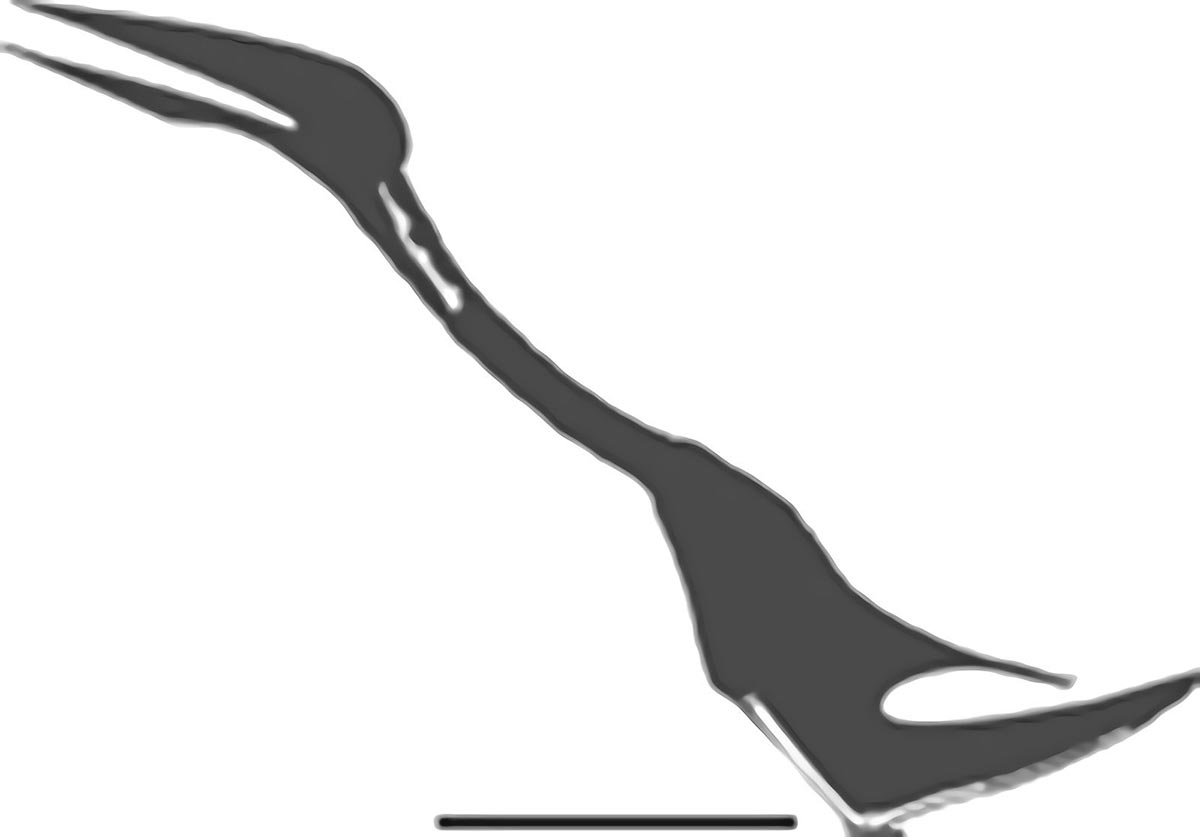
    Eurazhdarcho langendorfensis Reconstruction
    Full body reconstruction of Eurazhdarcho langendorfensis. Preserved skeletal elements are in white. Scale bar is 500 mm. Credit: Image courtesy of Mark Witton

    Paleontologists have discovered the fossilized bones of a 68 million year old flying reptile, Eurazhdarcho langendorfensis, in the Transylvanian Basin of Romania.

    A new kind of pterosaur, a flying reptile from the time of the dinosaurs, has been identified by scientists from the Transylvanian Museum Society in Romania, the University of Southampton in the UK and the Museau Nacional in Rio de Janiero, Brazil.

    The fossilized bones come from the Late Cretaceous rocks of Sebeş-Glod in the Transylvanian Basin, Romania, which are approximately 68 million years old. The Transylvanian Basin is world-famous for its many Late Cretaceous fossils, including dinosaurs of many kinds, as well as fossilized mammals, turtles, lizards, and ancient relatives of crocodiles.

    A paper on the new species, named Eurazhdarcho langendorfensis has been published in the international science journal PLoS One. Dr. Darren Naish, from the University of Southampton’s Vertebrate Palaeontology Research Group, who helped identify the new species, says:

    “Eurazhdarcho belong to a group of pterosaurs called the azhdarchids. These were long-necked, long-beaked pterosaurs whose wings were strongly adapted for a soaring lifestyle. Several features of their wing and hind limb bones show that they could fold their wings up and walk on all fours when needed.

    “With a three-meter wingspan, Eurazhdarcho would have been large, but not gigantic. This is true of many of the animals so far discovered in Romania; they were often unusually small compared to their relatives elsewhere.”

    The discovery is the most complete example of an azhdarchid found in Europe so far and its discovery supports a long-argued theory about the behavior of these types of creatures.
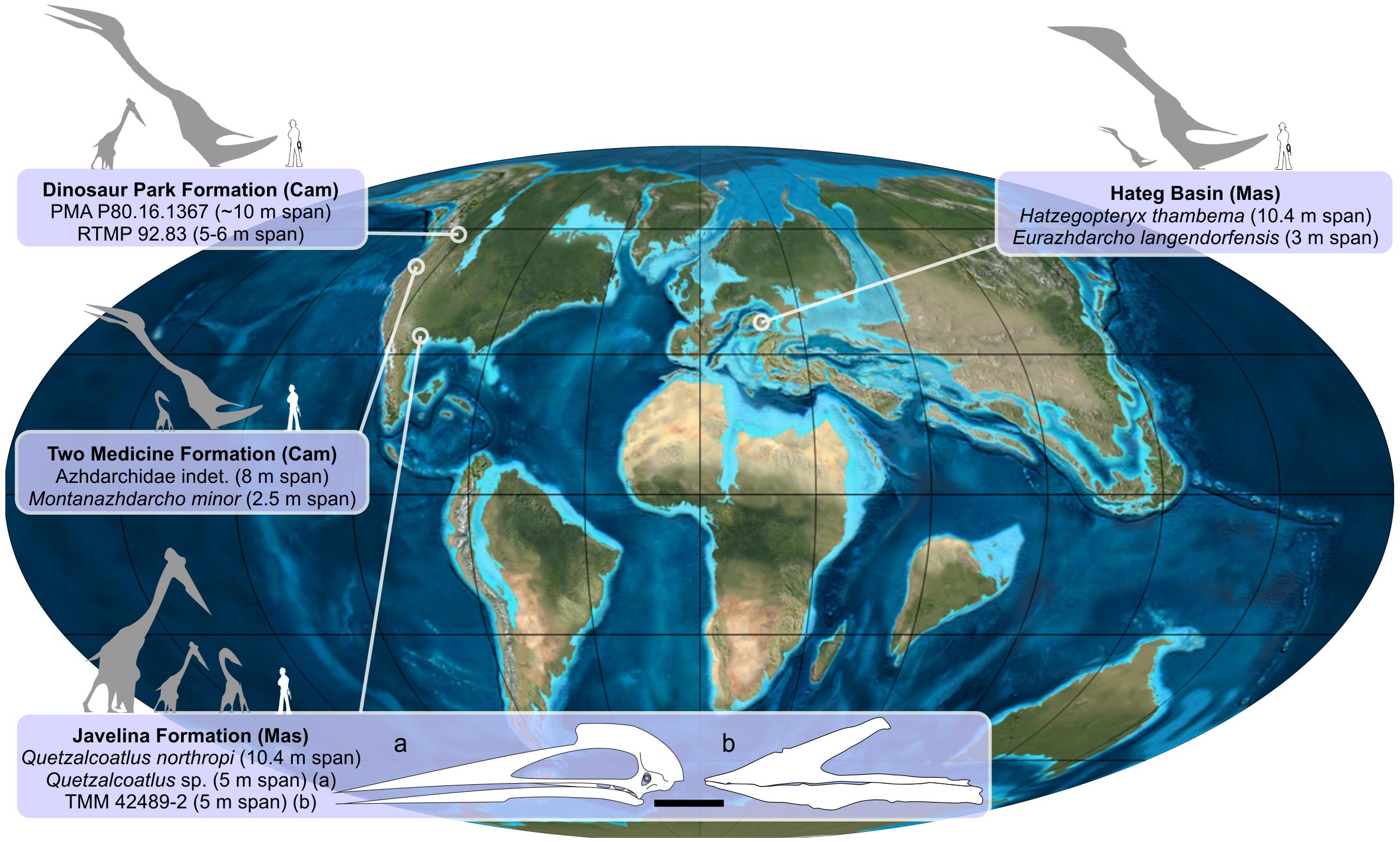
    Azhdarchids Distribution Map
    Map to show the global distribution of faunas containing small-medium and giant-sized azhdarchids, evidence for niche partitioning. Credit: Image rendering courtesy of Mark Witton; map imagery by kind permission of Ron Blakey, Colorado Plateau Geosystems, Inc.

    Dr. Gareth Dyke, Senior Lecturer in Vertebrate Palaeontology, based at the National Oceanography Center Southampton says:

    “Experts have argued for years over the lifestyle and behavior of azhdarchids. It has been suggested that they grabbed prey from the water while in flight, that they patrolled wetlands and hunted in a heron or stork-like fashion, or that they were like gigantic sandpipers, hunting by pushing their long bills into mud.

    “One of the newest ideas is that azhdarchids walked through forests, plains, and other places in search of small animal prey. Eurazhdarcho supports this view of azhdarchids, since these fossils come from an inland, continental environment where there were forests and plains as well as large, meandering rivers and swampy regions.”

    Fossils from the region show that there were several places where both giant azhdarchids and small azhdarchids lived side by side. Eurazhdarcho’s discovery indicates that there were many different animals hunting different prey in the region at the same time, demonstrating a much more complicated picture of the Late Cretaceous world than first thought.

    Reference: “A New Azhdarchid Pterosaur from the Late Cretaceous of the Transylvanian Basin, Romania: Implications for Azhdarchid Diversity and Distribution” by Mátyás Vremir, Alexander W. A. Kellner, Darren Naish, Gareth J. Dyke, 30 January 2013, PLoS ONE.
    DOI: 10.1371/journal.pone.0054268

    Never miss a breakthrough: Join the SciTechDaily newsletter.
    Follow us on Google and Google News.

    Fossils Paleontology Popular Pterosaur University of Southampton
    Share. Facebook Twitter Pinterest LinkedIn Email Reddit

    Related Articles

    Scientists Solve 150-Million-Year-Old Mystery of Solnhofen’s Baby Pterosaurs

    Buried for 209 Million Years, This Tiny Winged Reptile Just Changed History

    They Walked? 160-Million-Year-Old Footprints Rewrite Pterosaur History

    76-Million-Year-Old Mystery: Crocodile-Like Predator Found To Have Feasted on Flying Reptile

    Unusual 200-Million-Year-Old Pterosaur Fossil Unlocks Secrets of Flying Reptile Evolution

    Jurassic Giant Revealed: Massive Pterosaur Fossil Unearthed in Oxfordshire, UK

    Jurassic Breakthrough: New Species of Pterosaur Discovered on the Isle of Skye Rewrites Evolutionary History

    Legendary Flying Reptile: Fleshing Out the Bones of Quetzalcoatlus, Earth’s Largest Flier Ever

    Hundreds of Lost Fossils From the Darwin Collection Rediscovered by the British Geological Survey

    Leave A Reply Cancel Reply

    • Facebook
    • Twitter
    • Pinterest
    • YouTube

    Don't Miss a Discovery

    Subscribe for the Latest in Science & Tech!

    Trending News

    Scientists May Have Found the Key to Jupiter and Saturn’s Moon Mystery

    Scientists Uncover Brain Changes That Link Pain to Depression

    Saunas May Do More Than Raise Body Temperature – They Activate Your Immune System

    Exercise in a Pill? Metformin Shows Surprising Effects in Cancer Patients

    Hidden Oceans of Magma Could Be Protecting Alien Life

    New Study Challenges Alzheimer’s Theories: It’s Not Just About Plaques

    Artificial Sweeteners May Harm Future Generations, Study Suggests

    Splashdown! NASA Artemis II Returns From Record-Breaking Moon Mission

    Follow SciTechDaily
    • Facebook
    • Twitter
    • YouTube
    • Pinterest
    • Newsletter
    • RSS
    SciTech News
    • Biology News
    • Chemistry News
    • Earth News
    • Health News
    • Physics News
    • Science News
    • Space News
    • Technology News
    Recent Posts
    • Humans Owe Their Eyes to a Tiny One-Eyed “Cyclops”
    • Researchers Capture Quantum Interference in One of Nature’s Rarest Atoms
    • Ancient DNA Reveals Irish Goats Have a 3,000-Year-Old Lineage Still Alive Today
    • Historians Reveal Secrets of the Strange Hat Wars That Shook Early Modern England
    • “A Plague Is Upon Us”: The Mass Death That Changed an Ancient City Forever
    Copyright © 1998 - 2026 SciTechDaily. All Rights Reserved.
    • Science News
    • About
    • Contact
    • Editorial Board
    • Privacy Policy
    • Terms of Use

    Type above and press Enter to search. Press Esc to cancel.