

In the sunbaked badlands of Arizona’s Petrified Forest, scientists uncovered a tiny jawbone that turned out to be North America’s oldest known pterosaur—a flying reptile that soared the skies over 209 million years ago.
This rare fossil, along with hundreds of others including one of the earliest armored turtles, reveals a thriving and diverse Triassic ecosystem just before a mass extinction reshaped life on Earth. The discovery fills a critical gap in the fossil record and paints a vivid picture of a prehistoric world on the brink of transformation.
Discovery of North America’s Oldest Pterosaur
A team of scientists led by the Smithsonian has uncovered the oldest known pterosaur fossil in North America. This remarkable flying reptile lived over 209 million years ago, during the late Triassic period. Pterosaurs were the first vertebrates to take to the skies with powered flight, and they shared the world with early dinosaurs.
The newly described fossil is a fossilized jawbone from a sea gull-sized pterosaur, discovered in a remote part of Petrified Forest National Park in Arizona. The site also revealed hundreds of other fossils, including one of the oldest turtles ever found, offering a rare look at an ancient and evolving ecosystem. The findings were published on July 7 in the Proceedings of the National Academy of Sciences by lead author Ben Kligman, a postdoctoral fellow at the Smithsonian’s National Museum of Natural History.
A Triassic Time Capsule
These fossils come from a time when strange prehistoric creatures ruled the land, including giant amphibians, armored reptiles, and early relatives of frogs and turtles. It was a period of transition, when older animal groups began to disappear, and newer lineages that would dominate the age of dinosaurs were just beginning to emerge.
“The site captures the transition to more modern terrestrial vertebrate communities where we start seeing groups that thrive later in the Mesozoic living alongside these older animals that don’t make it past the Triassic,” Kligman said. “Fossil beds like these enable us to establish that all of these animals actually lived together.”
Filling Gaps Before the Mass Extinction
The new site helps fill in a gap in the fossil record that predates the end-Triassic extinction (ETE). Around 201.5 million years ago, volcanic eruptions associated with the break-up of the supercontinent Pangaea dramatically altered global climates and wiped out roughly 75% of the species on Earth. This cleared the way for newer groups, like dinosaurs, to diversify and dominate ecosystems worldwide.
Direct evidence of this transition on land is difficult to find due to a lack of terrestrial fossil outcrops from right before the ETE. However, there are few better places to look than Petrified Forest National Park, which is famed for its Triassic fossil beds and colorful deposits of petrified wood.
The Untapped Riches of Owl Rock
One of the park’s geologic outcrops, the Owl Rock Member, is rich in volcanic ash. Minerals within the ash have allowed researchers to date the Owl Rock layer to around 209 million years old, making them among the park’s youngest rocks.
These rocks are also among the park’s least studied, according to William Parker, a paleontologist at Petrified Forest National Park and co-author of the new study. The exposures of the Owl Rock Member at the park are found in very remote areas and therefore have not received the same attention as other geological members in the park.
Expedition into the Badlands
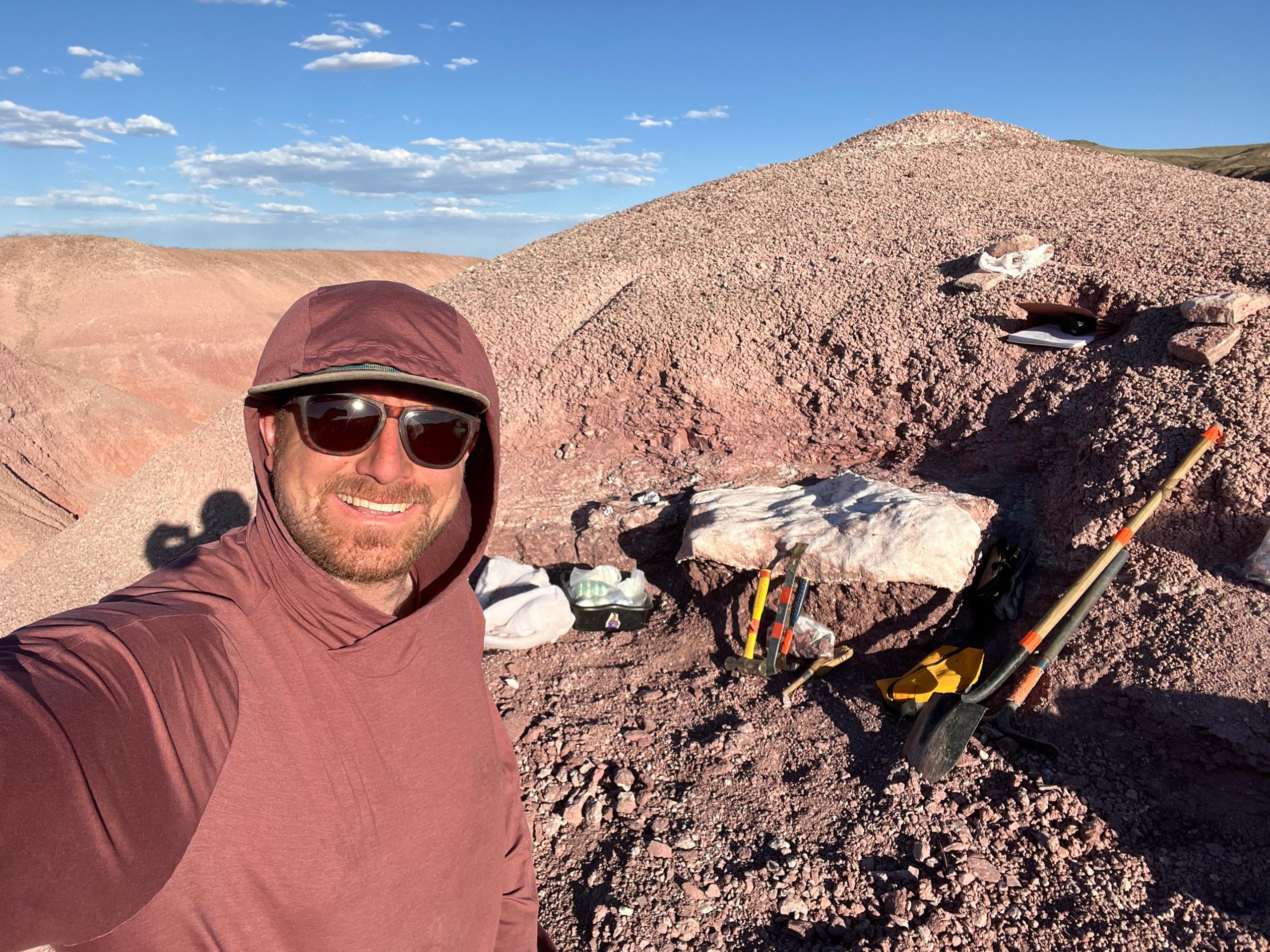
In 2011, a team co-led by research geologist Kay Behrensmeyer, the National Museum of Natural History’s curator of vertebrate paleontology, braved the area’s rugged badlands, which are home to rattlesnakes and wild horses. They were searching for fossils of prehistoric precursors to mammals and ended up discovering a bonebed containing an entire Triassic ecosystem.
“That’s the fun thing about paleontology: you go looking for one thing, and then you find something else that’s incredible that you weren’t expecting,” said Kligman, who began working on this site as part of his doctorate in 2018.
River Floods and Fossil Beds
This part of northeastern Arizona was positioned in the middle of Pangaea and sat just above the equator 209 million years ago. The area’s semi-arid environment was crisscrossed by small river channels and likely prone to seasonal floods. These floods washed sediment and volcanic ash into the channels.
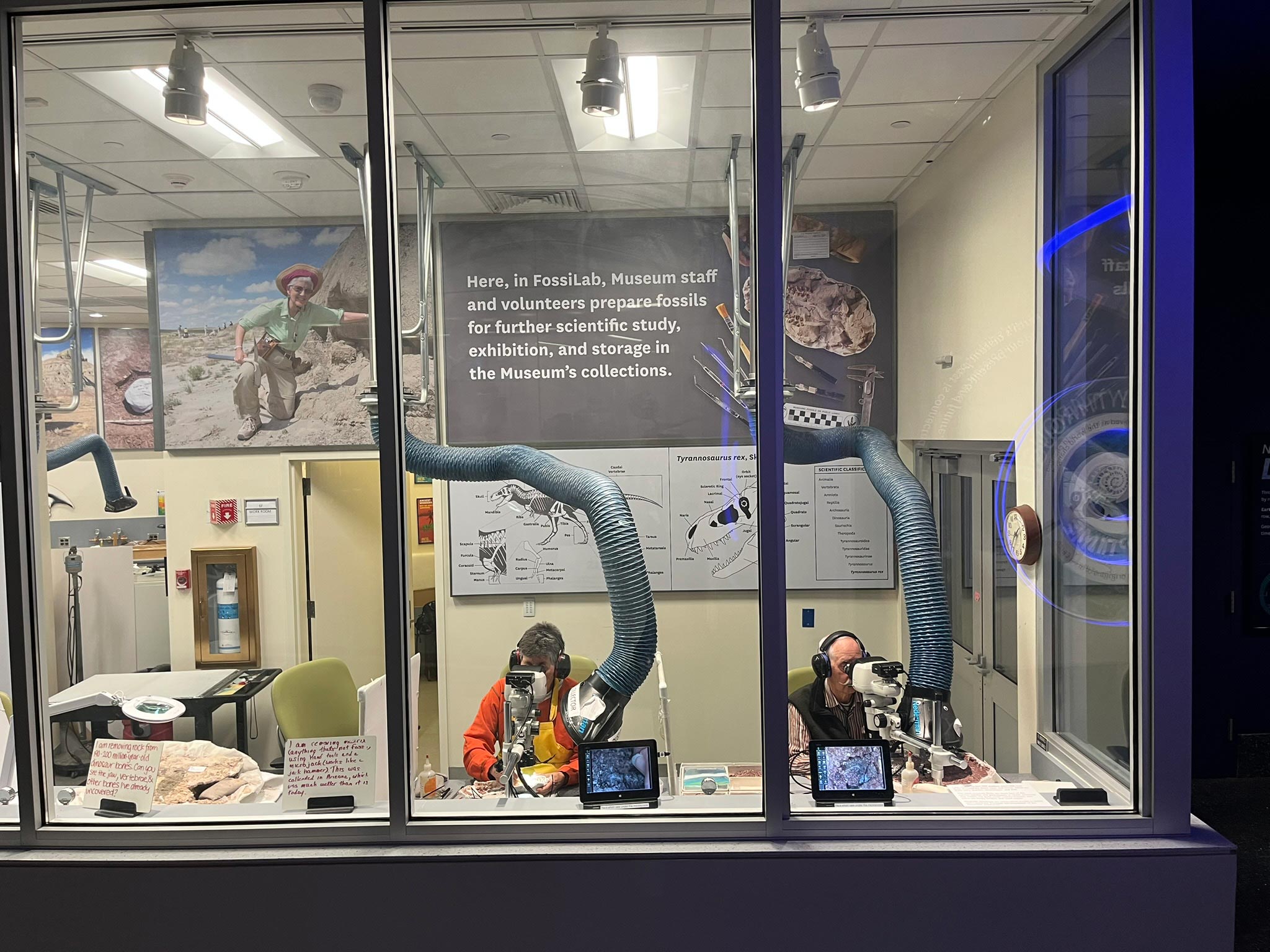
One of these floods likely buried the creatures preserved in the bonebed. The site is so rich in small fossils that excavating them all in the field was impossible. So the team encased large pieces of the surrounding sediment in plaster and brought them back to prepare in the lab. Many of these sediment blocks ended up at the museum’s FossiLab, where a team of volunteers spent thousands of hours, often in view of curious museum visitors, carefully chiseling rock away from bones under the microscope.
A Menagerie of Ancient Life
In total, the team has uncovered more than 1,200 individual fossils, including bones, teeth, fish scales and coprolites, or fossilized poop. This assemblage contains 16 different groups of vertebrate animals that once inhabited a diverse ecosystem. The region’s braided rivers were filled with fish, like freshwater sharks and coelacanths, as well as ancient amphibians, some of which grew up to 6 feet long. The surrounding environment was home to fearsome reptiles that evolved earlier in the Triassic, including armored herbivores and toothy predators that resembled giant crocodiles.
Living alongside these strange creatures were a variety of more familiar critters, including relatives of tuataras and early frogs. The researchers also described the fossils of an ancient turtle with spike-like armor and a shell that could fit inside a shoebox. This tortoise-like animal lived around the same time as the oldest known turtle, whose fossils were previously uncovered in Germany.
“This suggests that turtles rapidly dispersed across Pangaea, which is surprising for an animal that is not very large and is likely walking at a slow pace,” Kligman said.
A Tiny Pterosaur Takes Flight
The turtle was not the only evolutionary newcomer at this site. The new species of pterosaur the team discovered is one of the oldest species of pterosaur found outside of Europe. The winged reptile would have been small enough to comfortably perch on a person’s shoulder.
The remarkable fossil was unearthed by preparator Suzanne McIntire, who volunteered in the museum’s FossiLab for 18 years.
“What was exciting about uncovering this specimen was that the teeth were still in the bone, so I knew the animal would be much easier to identify,” McIntire said.
The tooth-studded jaw revealed crucial clues about how the earliest pterosaurs lived. Because the tips of the teeth were worn down, the team concluded that the pterosaur likely fed on the site’s fish, many of which were encased in armor-like scales.
Naming a Prehistoric Dawn Flier
The team named the new pterosaur species Eotephradactylus mcintireae. The generic name means ‘ash-winged dawn goddess’ and references the site’s volcanic ash and the animals’ position near the base of the pterosaur evolutionary tree. The species name references its discoverer, McIntire, who retired last year.
The bonebed is the latest research collaboration between the National Museum of Natural History and Petrified Forest National Park. Smithsonian scientists have collected petrified wood, fossils and archaeological objects from the region since the turn of the 20th century.
Reference: “Unusual bone bed reveals a vertebrate community with pterosaurs and turtles in equatorial Pangaea before the end-Triassic extinction” by Ben T. Kligman, Robin L. Whatley, Jahandar Ramezani, Adam D. Marsh, Tyler R. Lyson, Adam J. Fitch, William G. Parker and Anna K. Behrensmeyer, 7 July 2025, Proceedings of the National Academy of Sciences.
DOI: 10.1073/pnas.2505513122
In addition to Kligman and Behrensmeyer, the new paper included contributions from Adam Fitch, who is also affiliated with the National Museum of Natural History. The study also includes authors affiliated with Columbia College Chicago, Massachusetts Institute of Technology, Denver Museum of Nature & Science and Petrified Forest National Park.
The research was supported by the Peter Buck Postdoctoral Fellowship Program, the Smithsonian, Petrified Forest Museum Association, the National Park Service, Columbia College Chicago and the U.S. National Science Foundation.
Never miss a breakthrough: Join the SciTechDaily newsletter.
Follow us on Google and Google News.