
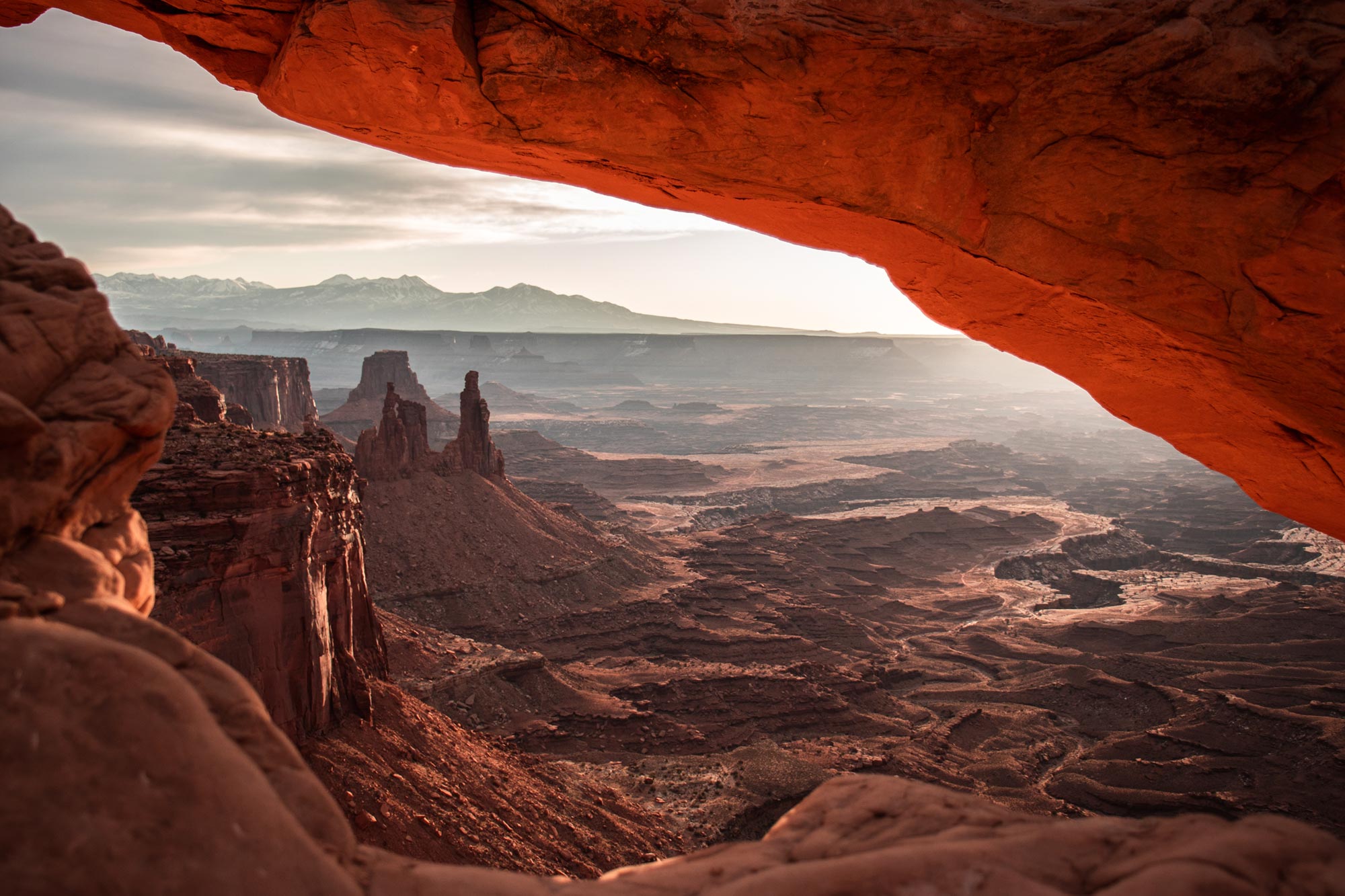
A new study suggests that the Grand Canyon’s oldest and deepest rocks were exposed by a massive ancient cliff that stretched across the United States.
Long before the Colorado River carved the Grand Canyon, an enormous wall of cliffs may have been exposing some of the ancient rocks that now lie at its heart. New evidence suggests this escarpment stretched for thousands of kilometers across North America and began reshaping the landscape nearly a billion years before the modern canyon formed.
Led by the University of Southampton in the UK, the study proposes that a vast “great escarpment” developed as the supercontinent Rodinia began breaking apart around 800 million years ago.
The kilometer-high cliffs may have extended across much of western North America, triggering intense erosion that removed enormous amounts of rock and eventually exposed the ancient crystalline basement visible today in the Grand Canyon of southern Arizona.
Ancient erosion may explain missing rock
Lead author Professor of Earth Science Thomas Gernon, from Southampton, said the Grand Canyon preserves a geological history spanning roughly two billion years, yet more than half of that rock record appears to be absent.
He added: “Our paper suggests the Canyon’s basement rocks were progressively brought to the surface as part of an immense escarpment that developed during the breakup of an ancient supercontinent.
“The findings also shed light on the formation of the Great Unconformity, a mysterious gap in the rock record that spans over a billion years.”
Published in Geology, the study brought together researchers from the University of Southampton, the GFZ Helmholtz Centre for Geosciences and University of Potsdam in Germany, and the University of Illinois Urbana-Champaign in the USA.
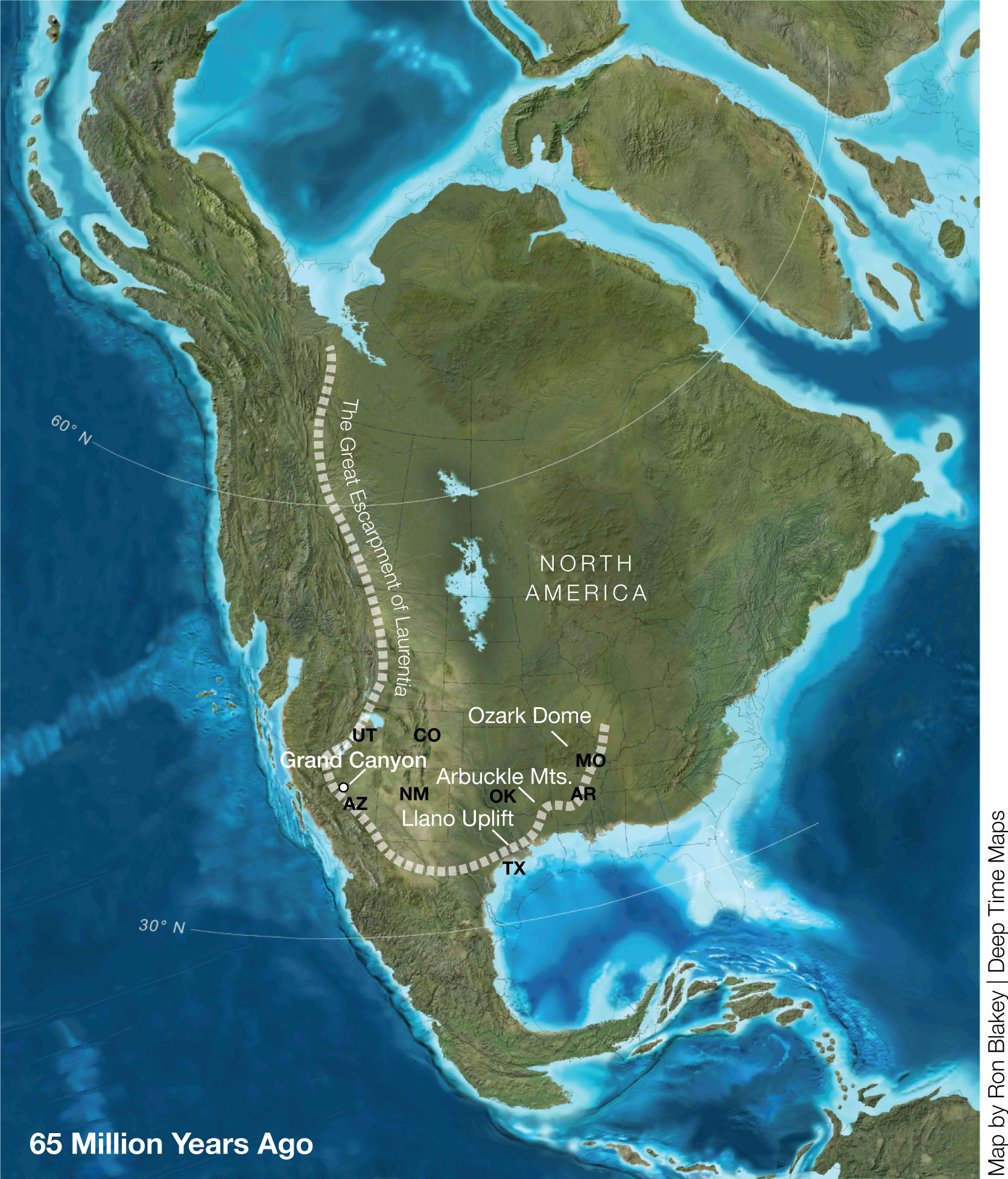
According to the researchers, the ancient escarpment may once have crossed areas that are now Arizona, Utah, Idaho, Wyoming, Colorado, Texas, Oklahoma, Arkansas, Missouri, and Illinois.
Prof Gernon said intense erosion along this vast landscape eventually uncovered some of North America’s oldest rocks, most famously those now exposed in the Grand Canyon.
Models reveal how the cliff retreated
To reconstruct the vanished landscape, the researchers combined plate tectonic reconstructions with data on landscape evolution, allowing them to trace how western North America changed as Rodinia fragmented.
Their analysis placed the future Grand Canyon in roughly the same position relative to the ancient continental margin as major escarpments seen today in South Africa and Brazil.
As this immense cliff system retreated inland over tens of millions of years, the model suggests that erosion removed as much as eight kilometers of rock in some locations.
That estimate agrees with geological evidence indicating that roughly five to ten kilometers of rock were stripped from parts of the region long before the modern Grand Canyon developed.
“This long-lived tectonic landscape provides a missing piece in understanding why erosion associated with the Great Unconformity varies so dramatically across the southwestern US,” said Prof Gernon.
He added: “Our work suggests that tectonic uplift related to continental rifting and breakup created both steep slopes and high ground, providing the mountainous terrain that rivers and glaciers could readily erode.”
The escarpment may have reshaped North America
The proposed escarpment may also have shaped much more than the rocks eventually exposed in the Grand Canyon.
By forming a long-lived mountainous boundary around western Laurentia, the ancient core of North America, it may have influenced the routes of rivers, where sediments accumulated, and when rising seas moved across the continent before the so-called Cambrian explosion, when complex life diversified rapidly.
Prof Gernon added: “Today’s escarpments in Africa, Brazil, India and Antarctica provide windows into the forces that shape continents over hundreds of millions of years.
“By comparing Grand Canyon’s ancient history with active landscapes like the Great Escarpment of South Africa, we’re able to see North America’s most iconic geologic landmark in an entirely new light.
“Our findings could help geologists reinterpret other ancient continental interiors where similarly large gaps occur in records, offering a better understanding of how Earth’s continents have changed over hundreds of millions of years.”
Reference: “Exhumation of Grand Canyon’s basement along the Great Escarpment of Laurentia” by Thomas M. Gernon, Thea K. Hincks, Elias J. Rugen, Sascha Brune, Jean Braun and Stephen Marshak, 17 August 2026, Geology.
DOI: 10.1130/G55133.1
Never miss a breakthrough: Join the SciTechDaily newsletter.
Follow us on Google and Google News.
3 Comments
“[…]the Grand Canyon of southern Arizona.”
Which Grand Canyon would that be?
The one that existed before the last magnetic reversal that swapped poles.
The reader should keep in mind that this isn’t necessarily reality. More formally, it should be seen as a working hypothesis awaiting more evidence before it is widely accepted. That additional evidence or interpretation may or may not actually happen. If new evidence supports this hypothesis, then the probability of it being correct will increase. If evidence demonstrates that for some reason it is impossible, then it will be considered as having been falsified and will join the ranks of many a conjecture that didn’t rise to the level of widespread acceptance.