
New research from HKU geologists suggests that Earth’s first continents were born not from plate tectonics, but from deep mantle plumes rising from within the planet.
Researchers at The University of Hong Kong (HKU) have uncovered new insights into how Earth’s first continents came into existence over 2.5 billion years ago during the Archean era. Their study, published in Science Advances, points to deep-seated geological activity known as mantle plumes as the likely driving force behind the formation of early continental crust, challenging the long-standing view that plate tectonics were responsible.
A New Perspective on Earth’s Early Crust
Earth stands out among the planets in our solar system for having continental crust, expansive landmasses with granitoid compositions that make life possible. Yet, how these continents originally formed has puzzled scientists for decades. The scientific community has been divided over whether early continental crust was created through plate tectonics, involving the movement and collision of massive crustal plates (a process known as subduction), or through entirely different internal processes unrelated to plate motion.
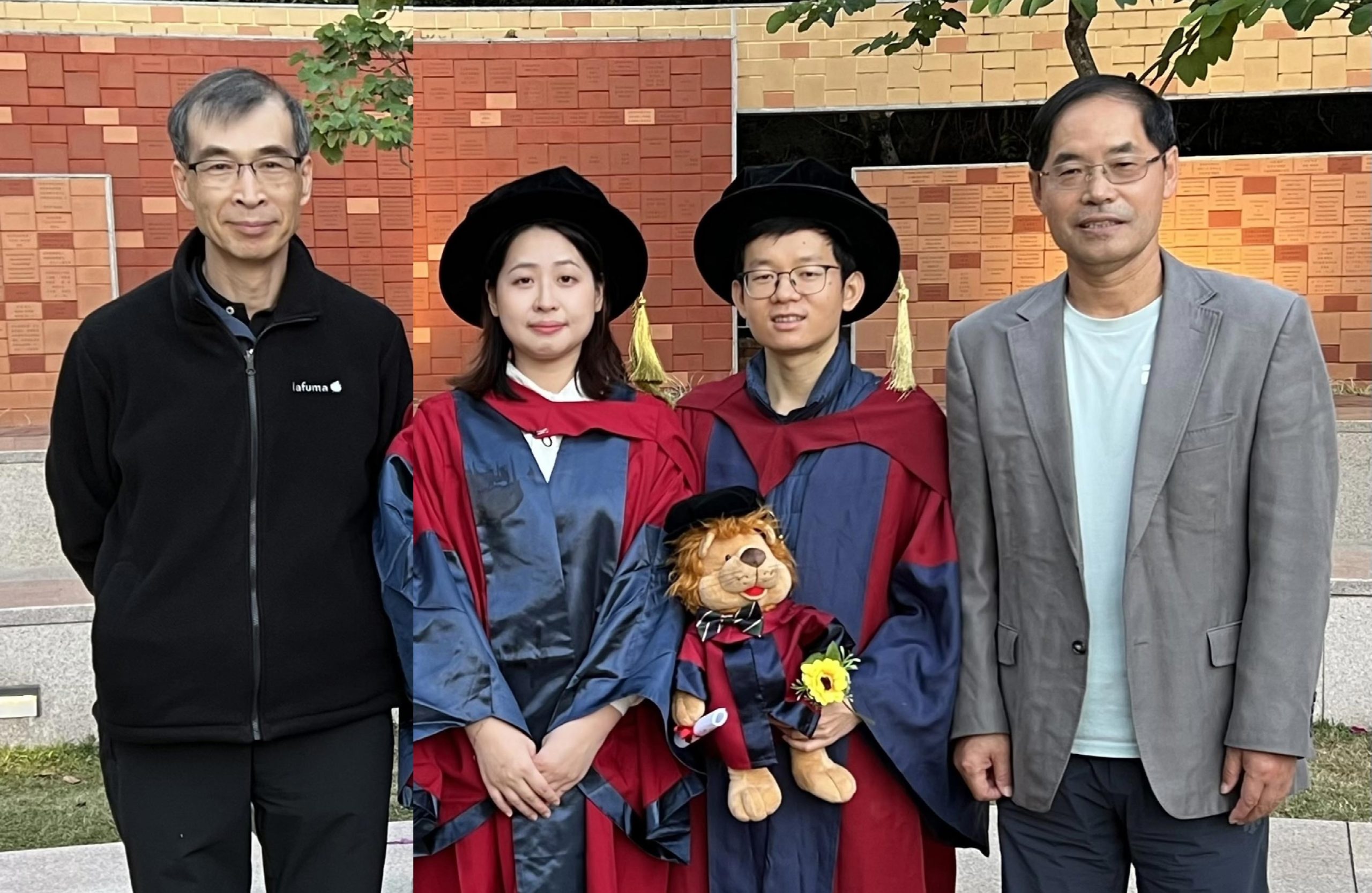
The research, led by Dr. Dingyi Zhao and Dr. Xiangsong Wang from the Early Earth Research Group at The University of Hong Kong’s Department of Earth and Planetary Sciences, in collaboration with scientists from around the world, has revealed compelling evidence that Earth’s early development was shaped by a different type of internal activity than what we observe today. Instead of modern plate tectonics, their findings highlight the role of mantle plumes, which are massive upwellings of hot, molten rock that rise from deep inside the planet.
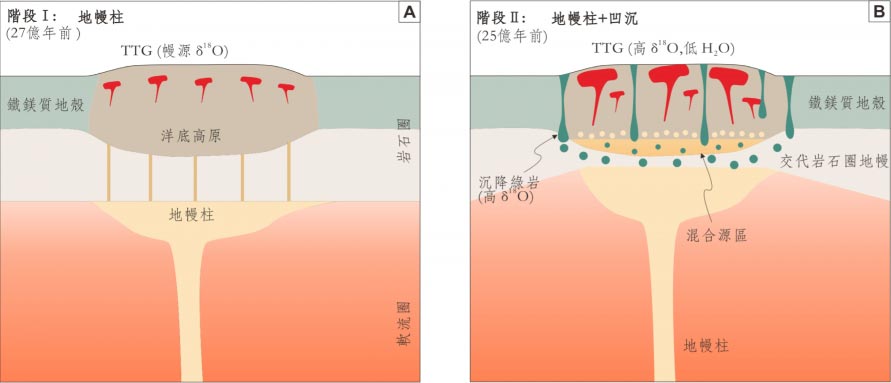
The study also points to a process called sagduction, where heavy surface rocks slowly sink into Earth’s warmer interior layers under their own weight. Together, these discoveries offer fresh perspectives on the powerful forces that influenced the early formation of Earth’s outer shell, known as the lithosphere.
Studying Ancient Rocks to Understand the Deep Past
The team analysed ancient granitoid rocks called TTGs (tonalite–trondhjemite–granodiorite), which make up a large part of the oldest continental crust. These rocks, found in northern China, date back around 2.5 billion years. Using advanced techniques, the researchers studied tiny minerals within the rocks, known as zircons, which preserve chemical signatures from the time the rocks were formed.
By measuring the water content and oxygen isotope composition of these zircons, the team found that the rocks were formed in dry, high-temperature environments, unlike those typically found in zones where tectonic plates collide and one sinks below the other (subduction zones). The oxygen signatures also indicate a mixture of molten oceanic rocks and sediments, consistent with rocks formed above mantle plumes rather than subduction zones.
The researchers proposed a two-stage model to explain their findings:
- Around 2.7 billion years ago, a mantle plume caused thick piles of basalt (Fe- and Mg-rich volcanic rock) to form on the seafloor.
- Then, around 2.5 billion years ago, another mantle plume brought heat that caused the lower parts of these basalts to melt partially. This process produced the lighter TTG rocks that eventually formed continental crust.
Implications for Earth and Planetary Science
“Our results provide strong evidence that Archean continental crust did not have to be formed through subduction,” explained Dr Dingyi Zhao, postdoctoral fellow of the Department of Earth and Planetary Sciences and the first author of the paper. “Instead, a two-stage process involving mantle plume upwelling and gravitational sagduction of greenstones better explains the geochemical and geological features observed in the Eastern Block.”
The study distinguishes between two coeval Archean TTG suites—one plume-related and the other arc-related— by comparing their zircon water contents and oxygen isotopes. Professor Guochun Zhao emphasized, “The TTGs from the Eastern Block contain markedly less water than those formed in a supra-subduction zone in the Trans-North China Orogen, reinforcing the interpretation of a non-subduction origin.”
“This work is a great contribution to the study of early Earth geodynamics,” co-author Professor Fang-Zhen Teng from the University of Washington added. “Our uses of zircon water and oxygen isotopes have provided a powerful new window into the formation and evolution of early continental crust.”
This study not only provides new insights into understanding the formation of Archean continental crust, but also highlights the application of water-based proxies in distinguishing between tectonic environments. It contributes to a growing body of evidence that mantle plumes played a major role in the formation of the early continental crust.
Reference: “A two-stage mantle plume-sagduction origin of Archean continental crust revealed by water and oxygen isotopes of TTGs” by Dingyi Zhao, Peter A. Cawood, Fang-Zhen Teng, Guochun Zhao, Xiao-Ping Xia, Min Sun and Xiangsong Wang, 11 June 2025, Science Advances.
DOI: 10.1126/sciadv.adr9513
Never miss a breakthrough: Join the SciTechDaily newsletter.
Follow us on Google and Google News.
1 Comment
Below the land water air temperature waves current level surrounding oxygen gravity latitude gratitude non gravity sun 🌞 ☀️ 🌤 🌅 moon 🌙 🌚 😀 😄 🌚 stars 🌟 around the 9th 9 planet going up to the sky heaven edges of universe to learn study to make everything it’s possible to make beautiful creatures pretty family great nation fantastic smiles wonderful universe to all people around the world 🌎 universe etc