
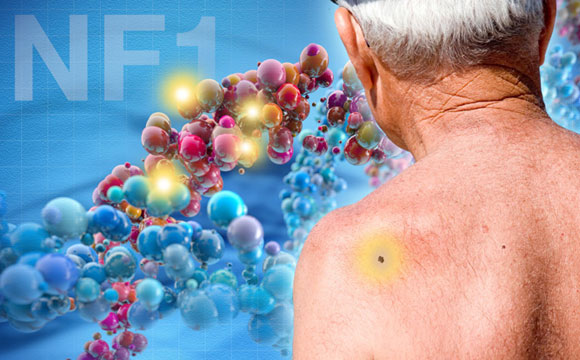
Researchers from Yale University have confirmed that a gene known as NF1 is a “major player” in the development of skin cancer.
A multidisciplinary team at Yale, led by Yale Cancer Center members, has defined a subgroup of genetic mutations that are present in a significant number of melanoma skin cancer cases. Their findings shed light on an important mutation in this deadly disease, and may lead to more targeted anti-cancer therapies.
The study is published in Nature Genetics.
The role of mutations in numerous genes and genomic changes in the development of melanoma — a skin cancer with over 70,000 new cases reported in the United States each year — is well established and continues to be the focus of intense research. Yet in approximately 30% of melanoma cases, the genetic abnormalities are unclear. To deepen understanding of melanoma mutations, the Yale team conducted a comprehensive analysis using whole-exome sequencing of more than 200 melanoma samples from patients with the disease.
The multidisciplinary team — drawing on their expertise in genetics, cancer, computational biology, pharmacology, and other disciplines — also tested the response of tumor cells with specific mutations to anti-cancer drugs.
The researchers confirmed that a gene known as NF1 is a “major player” in the development of skin cancer. “The key finding is that roughly 45% of melanomas that do not harbor the known BRAF or NRAS mutations display loss of NF1 function, which leads to activation of the same cancer-causing pathway,” said Dr. Michael Krauthammer, associate professor of pathology and the study’s corresponding author.
Additionally, researchers observed that melanoma patients with the NF1 mutation were older and had a greater number of mutations in the tumors. These include mutations in the same pathway, collectively known as RASopathy genes.
Yet mutations in NF1 are not sufficient to cause skin cancer, said Ruth Halaban, senior research scientist in dermatology, a member of Yale Cancer Center, and lead author of the study. “Loss of NF1 requires more accompanying changes to make a tumor,” she explained. “Our study identified changes in about 100 genes that are present only in the malignant cells and are likely to be causative. This panel of genes can now be used in precision medicine to diagnose malignant lesions and can be applied to personalized cancer treatment.”
By testing the response of the melanoma samples to two cancer drugs, the researchers also determined that, in addition to the loss of NF1, multiple factors need to be tested to predict the response to the drugs. “It opens the door to more research,” said Halaban, who is also principal investigator at Yale SPORE in Skin Cancer.
Reference: “Exome sequencing identifies recurrent mutations in NF1 and RASopathy genes in sun-exposed melanomas” by Michael Krauthammer, Yong Kong, Antonella Bacchiocchi, Perry Evans, Natapol Pornputtapong, Cen Wu, Jamie P McCusker, Shuangge Ma, Elaine Cheng, Robert Straub, Merdan Serin, Marcus Bosenberg, Stephan Ariyan, Deepak Narayan, Mario Sznol, Harriet M Kluger, Shrikant Mane, Joseph Schlessinger, Richard P Lifton and Ruth Halaban, 27 July 2015, Nature Genetics.
DOI: 10.1038/ng.3361
Other Yale authors include Yong Kong, Antonella Bacchiocchi, Perry Evans, Natapol Pornputtapong, Cen Wu, James P. McCusker, Shuangge Ma, Elaine Cheng, Robert Straub, Merdan Serin, Dr. Marcus W. Bosenberg, Dr. Stephan Ariyan, Dr. Deepak Narayan, Dr. Mario Sznol, Dr. Harriet M. Kluger, Shrikant Mane, Joseph Schlessinger, and Dr. Richard P. Lifton.
The study was supported by the Yale SPORE in Skin Cancer, funded by the National Cancer Institute, U.S. National Institutes of Health, under award number 1 P50 CA121974; the Melanoma Research Alliance; Gilead Sciences, Inc.; the Howard Hughes Medical Institute; the Department of Dermatology; and the Yale Comprehensive Cancer Center.
Never miss a breakthrough: Join the SciTechDaily newsletter.
Follow us on Google and Google News.