
Close Menu
    Facebook X (Twitter) Instagram
    SciTechDaily
    • Biology
    • Chemistry
    • Earth
    • Health
    • Physics
    • Science
    • Space
    • Technology
    Facebook X (Twitter) Pinterest YouTube RSS
    SciTechDaily
    Home»Space»Researchers Simulate the Formation of Massive Stars from Turbulent Molecular Clouds
    Space

    Researchers Simulate the Formation of Massive Stars from Turbulent Molecular Clouds

    By NASANovember 19, 2013No Comments2 Mins Read
    Facebook Twitter Pinterest Telegram LinkedIn WhatsApp Email Reddit
    Share
    Facebook Twitter LinkedIn Pinterest Telegram Email Reddit
    Researchers Simulate the Formation of Massive Stars
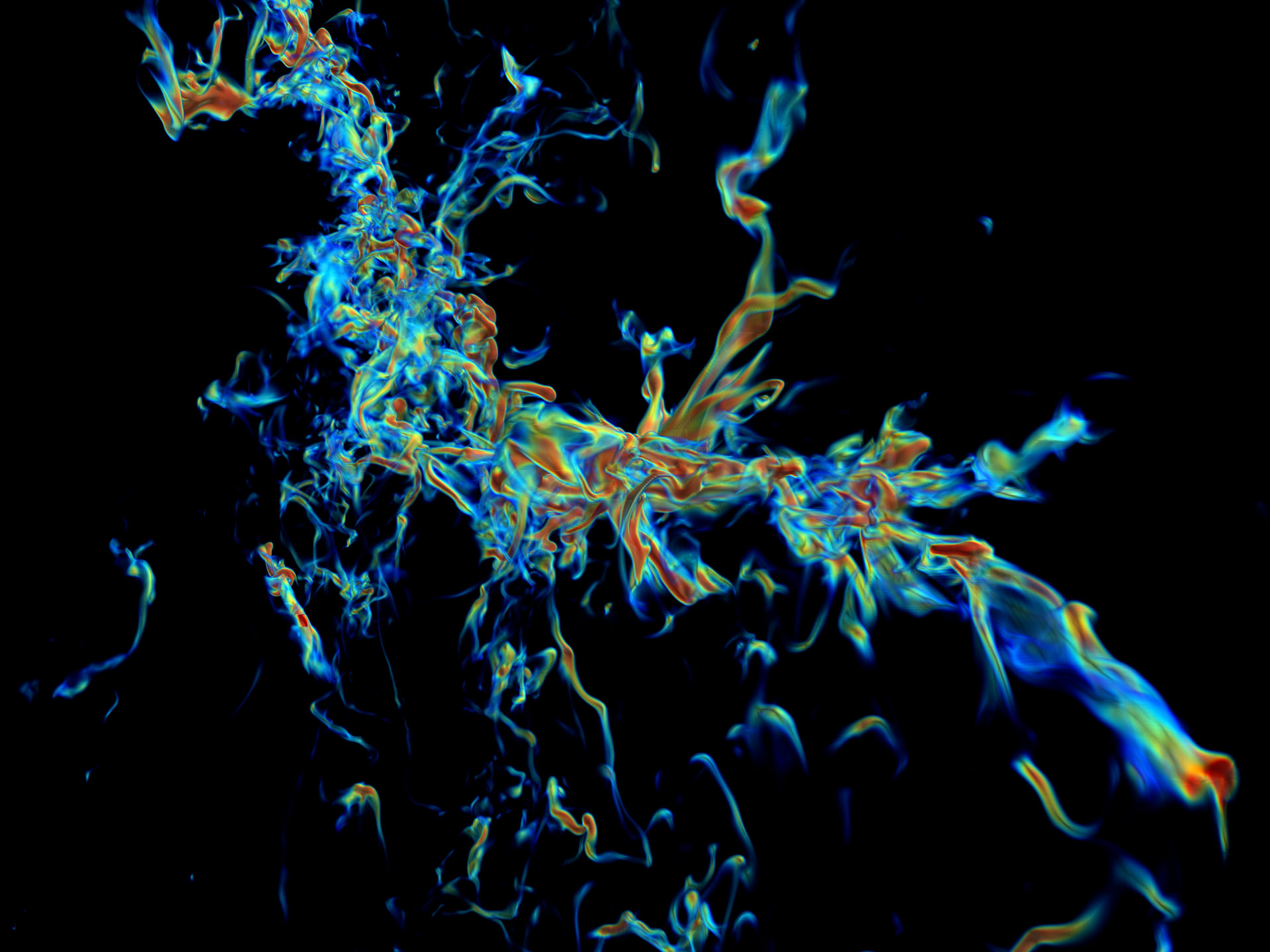
    Researchers conduct extensive supercomputing simulations to model the formation of massive stars arising from the collapse of enormous, turbulent molecular clouds. Credit: Richard Klein, Lawrence Livermore National Laboratory; Pak Shing Li, University of California, Berkeley; Tim Sandstrom, NASA Ames Research Center

    Using the Pleiades supercomputer at the NASA Advanced Supercomputing (NAS) facility, researchers perform large-scale supercomputing simulations of massive stars forming from the collapse of giant, turbulent molecular clouds.

    In their quest to understand the origins of stars and galaxies in our universe, astrophysicists use supercomputers to model extremely complex phenomena on an immense scale. Massive stars 10-100 times more massive than our sun, are central to the key phenomena that shape the universe, but the processes involved in their formation remain elusive. To investigate these processes, University of California-Berkeley researchers perform large-scale supercomputing simulations of massive stars forming from the collapse of giant, turbulent molecular clouds.

    In this image, a simulation shows the gas filaments that formed in an infrared dark cloud 800,000 years after the region began gravitational collapse. The extent of the main filament is about 4.5 parsecs in length. In the highest density fragments in the filament (red), molecular cloud cores are developing and will collapse further until they form stars.

    Each simulation in this project used 1,000 – 4,000 processors on the Pleiades supercomputer at the NASA Advanced Supercomputing (NAS) facility, for a total of 1 million processor-hours over several months of computation.


    Never miss a breakthrough: Join the SciTechDaily newsletter.
    Follow us on Google and Google News.

    Ames Research Center Astronomy Astrophysics NASA Popular Stellar Evolution UC Berkeley
    Share. Facebook Twitter Pinterest LinkedIn Email Reddit

    Related Articles

    The Hunt for Cosmic Dawn: HERA Doubles Sensitivity to Unlock the Secrets of the Early Universe

    Webb Space Telescope Provides New Tools To Search for the Building Blocks of Life on Distant Planets

    Magnetic “Highway” Fuels Massive Ejection of Gas and Dust Out of the Cigar Galaxy

    NASA Planet-Hunter Data Reveals That 50% of Sun-Like Stars Could Host Potentially Habitable Planets

    New Theory Shows How ‘Zombie Vortices’ Play a Role in Star Formation

    New Astronomical Tool Traces the Evolution of Cosmic Carbon

    One of the Most Efficient Star Making Galaxies Ever Observed

    WISE Discovers Mystery Dust Around an Unusual Class of Interacting Binary Stars

    The Bolshoi Simulation: Boxing the Universe

    Leave A Reply Cancel Reply

    • Facebook
    • Twitter
    • Pinterest
    • YouTube

    Don't Miss a Discovery

    Subscribe for the Latest in Science & Tech!

    Trending News

    New Molecule Restores the Brain’s Natural Defenses Against Alzheimer’s

    Could Creatine Boost More Than Muscles? It May Also Help Depression

    Scientists Discover a Natural Molecule That Could Help Prevent Vision Loss

    Scientists Thought Royal Jelly Made Queen Bees. They Were Wrong

    One Tiny Change May Explain How Viruses Jump From Bats to Humans

    The Secret to Healthy Aging May Be More Protein and More Exercise

    These 567-Million-Year-Old Fossils Are Rewriting the Story of Life on Earth

    The Spider-Like Creatures Helping Scientists Decode the Origins of Fatherhood

    Follow SciTechDaily
    • Facebook
    • Twitter
    • YouTube
    • Pinterest
    • Newsletter
    • RSS
    SciTech News
    • Biology News
    • Chemistry News
    • Earth News
    • Health News
    • Physics News
    • Science News
    • Space News
    • Technology News
    Recent Posts
    • Textbooks May Need Rewriting After Researchers Debunk a Core Chemistry Concept
    • Researchers Finally Solve a Decades-Old Mystery About Cellular Aging
    • A Hidden Crisis: Why Millions Are Burning Plastic Just To Survive
    • Breakthrough Brain Cancer Treatment Uses Sugar To Outsmart the Blood-Brain Barrier
    • Alzheimer’s May Start With a Surprising Symptom – Not Memory Loss
    Copyright © 1998 - 2026 SciTechDaily. All Rights Reserved.
    • Science News
    • About
    • Contact
    • Editorial Board
    • Privacy Policy
    • Terms of Use

    Type above and press Enter to search. Press Esc to cancel.