
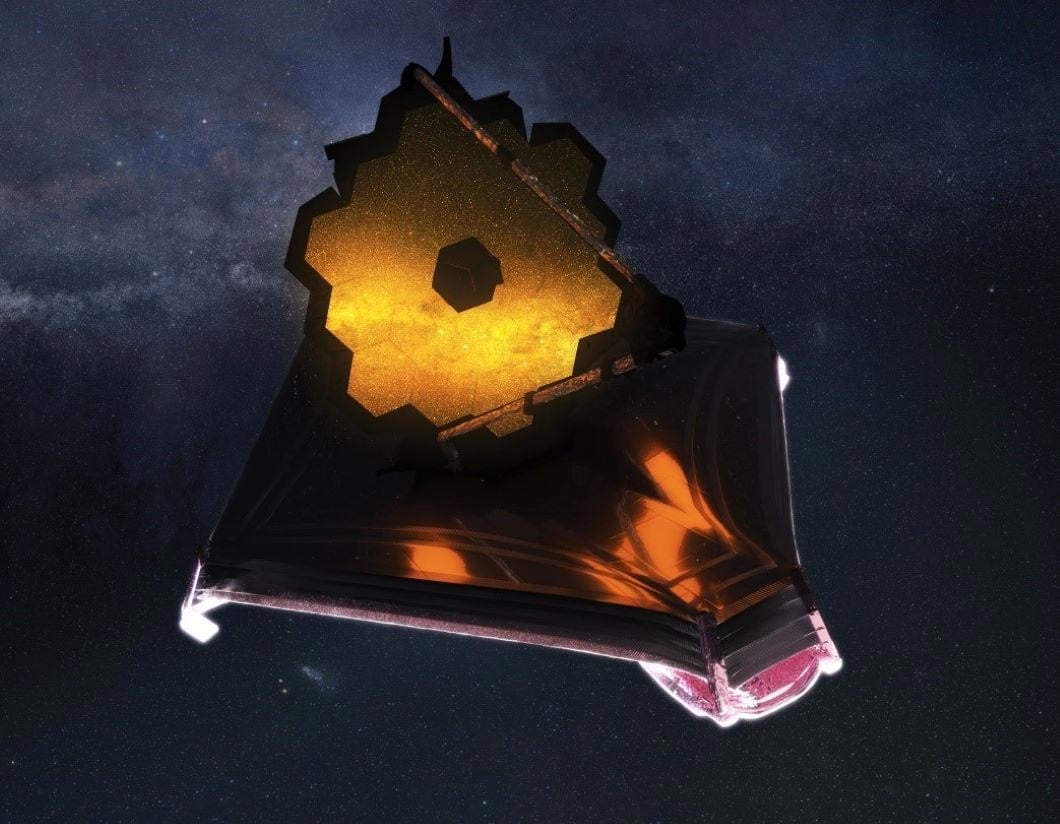
How NASA in Silicon Valley Will Use Webb to Study Distant Worlds
NASA’s James Webb Space Telescope is getting ready to give us the best view yet of worlds beyond our own solar system, commonly known as exoplanets. Scientists at NASA’s Ames Research Center in California’s Silicon Valley will be among the first to observe the cosmos with Webb, and they’re looking for clues about how exoplanets form, what they’re made of, and whether any could be potentially habitable.
On January 24, 2022, the telescope reached its destination, an orbit about one million miles from Earth around a location called Sun-Earth Lagrange point 2, also known as L2. Now, Webb is one step closer to launching its scientific mission to transform our understanding of the universe.
Filling a Planetary Knowledge Gap
When we look for exoplanets, scientists often use the worlds we know best as reference – our own, and our neighbors in the solar system. But most planets out there aren’t quite like any of our neighbors.
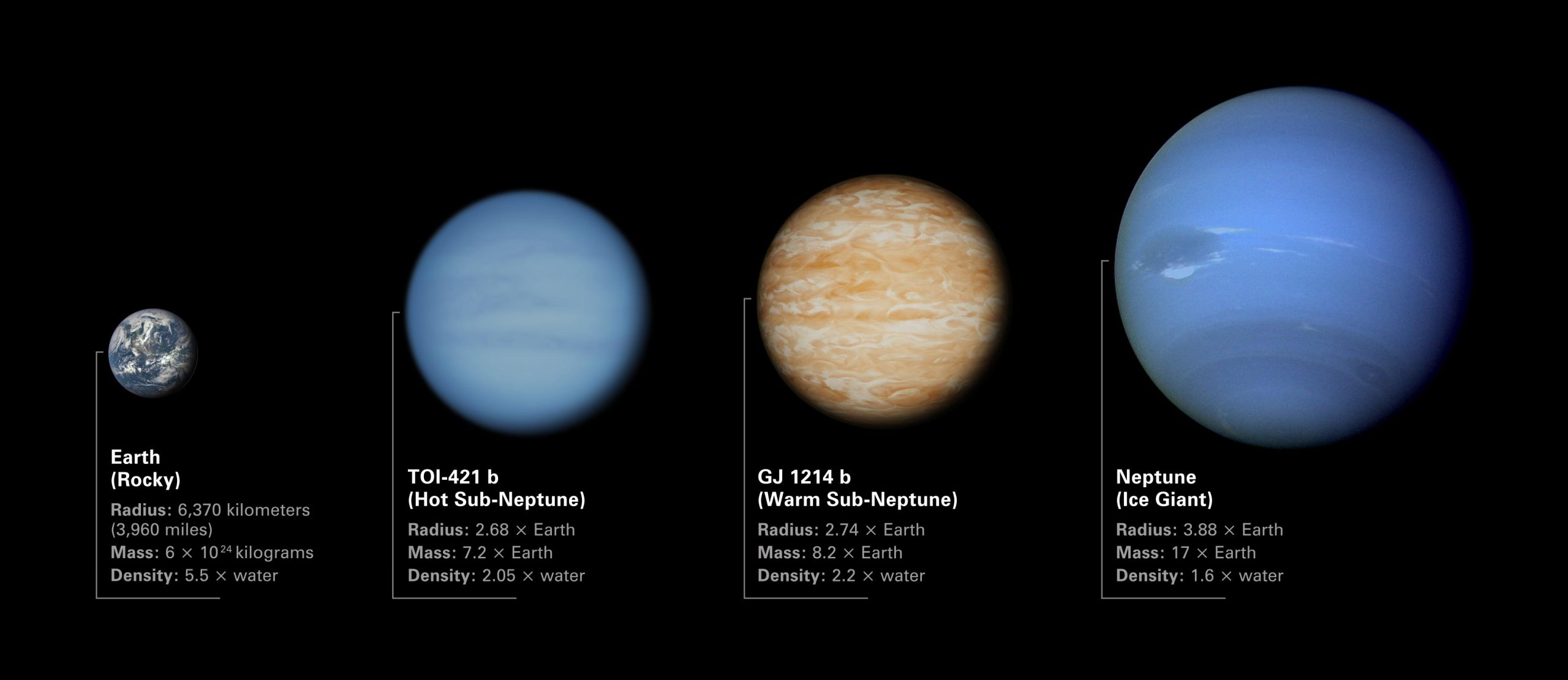
“The diversity of planets we’ve discovered within the galaxy far exceeds the diversity of planets within our own solar system,” said Natasha Batalha, a research scientist at Ames who is a co-investigator on several Webb programs. “In our solar system, we have the inner rocky worlds and outer gas planets – but the most common exoplanets we see are actually in between.”
Batalha’s team will use Webb to study 11 of those “in between” planets, larger than the Earth but smaller than Neptune, to learn more about how they formed and have evolved through time. Getting a basic sense of what this planetary population looks like – are they rocky, or made of gas? – is the start. Much of Ames’ exoplanet research enabled by Webb will be focused on that kind of basic knowledge-building, giving scientists more pieces to puzzle together what the population of planets beyond our solar system looks like and if such worlds could harbor potential life.
Thomas Greene, an astrophysicist at Ames who has contributed to the development of Webb’s instrumentation and analysis techniques for over 20 years, is leading a study on nine planets that are less massive and cooler than many studied by previous telescopes. His study will focus on the chemical makeup of the atmospheres surrounding those worlds, the abundances of heavier elements in their composition compared to their host stars, temperatures across each planet’s surface, and more.
Searching for Atmospheres and Potential Habitability
Another type of planet that is in need of further study are small rocky worlds in orbit around cool dwarf stars. These planets are often very close to their suns, but because their suns are small and cool, they lie within the habitable zone. However, very little is known about these worlds – including whether they are capable of maintaining atmospheres at all, let alone whether they could harbor life.
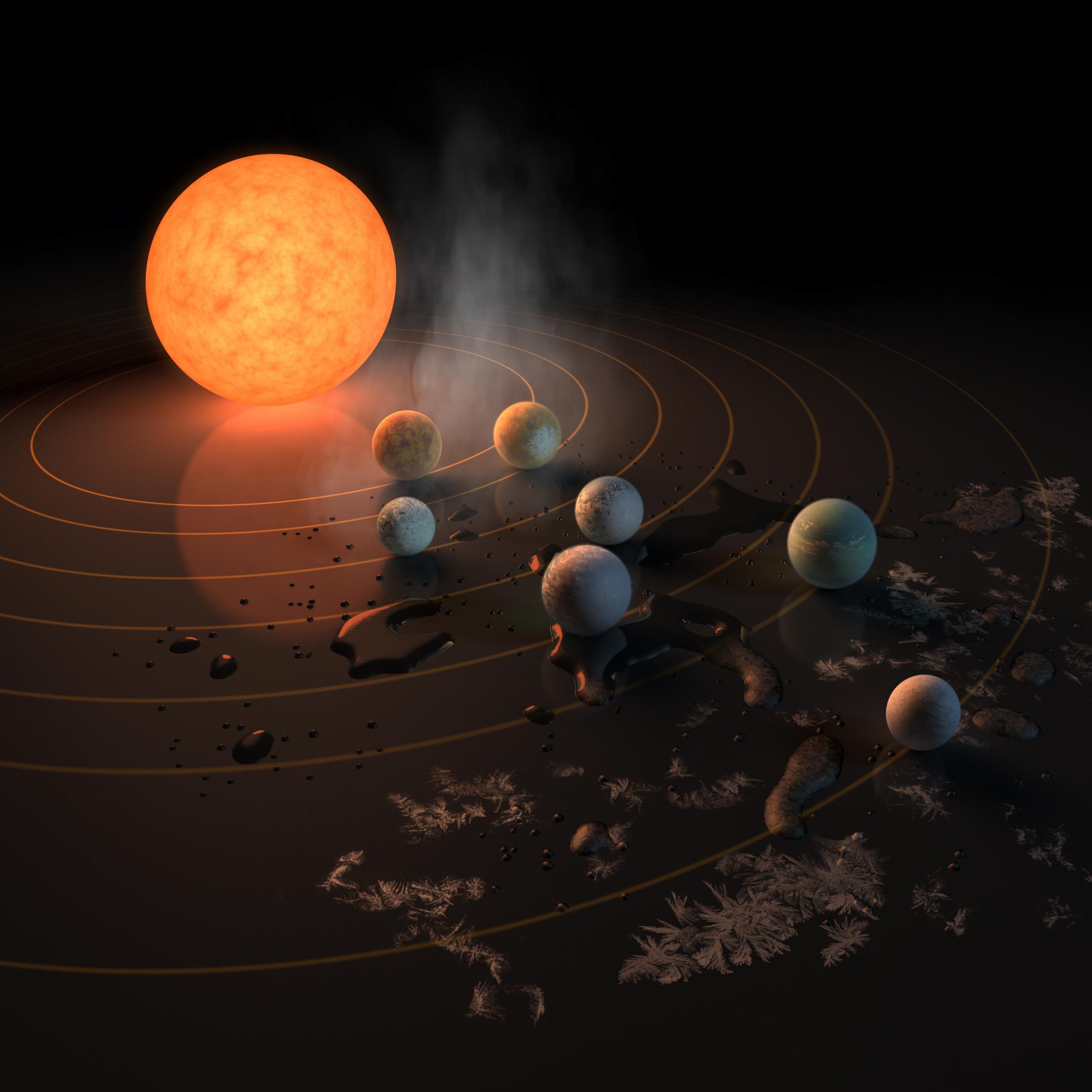
Though most of the worlds in Greene’s study are made of gas, one is rocky – TRAPPIST-1b. It is the innermost planet in the TRAPPIST-1 system, a group of seven rocky, roughly Earth-sized planets that orbit close to a small, cool dwarf star. With so little known about the makeup of the planet, including if it has an atmosphere or not, the data gathered by Webb could reveal it to be a dead and barren world, or even one with the potential for hosting life.
“A planet’s atmosphere is essential for the possibility of life as we know it,” said Greene. “We’ve developed Webb’s instruments to be able to give us the data we need to not only detect atmospheres, but to determine what they are made of.”
Greene’s team will be taking a close look at the spectrum of the planet – to see what kind of light it emits, which gives a view into its chemical composition. The study will focus on the planet’s infrared emissions and search for signs of carbon dioxide. If there are signs an atmosphere is present, and especially carbon dioxide, then TRAPPIST-1b could have formed and evolved like the rocky planets in our own solar system that also have carbon dioxide – Venus, Earth, and Mars.
Batalha is also contributing to two Webb programs focused on characterizing five similar rocky worlds, including two in the same system – TRAPPIST-1h and TRAPPIST-1e, the latter of which is in the habitable zone. Those programs will determine how many of those worlds have atmospheres, and if they do, what they are made of. Many of Webb’s targets are hundreds or even billions of light-years away, but some of the exoplanets closest to us are these same small, rocky worlds. Proxima Centauri, the star closest to us at just over four light-years away, is an M dwarf and potentially home to two such worlds. Learning about distant worlds could help us understand the prospects for habitability closer to home.
The Webb telescope is the largest astrophysical space observatory and the most technically complex science mission NASA has ever built.
“It’s a humbling experience to be part of such a massive endeavor,” said Batalha. “About 10,000 people have contributed to this telescope, and thousands more across over 400 institutions will be analyzing data from its first cycle. It’s an amazing opportunity to get to do science on this scale.”
The James Webb Space Telescope is the world’s largest, most powerful, and most complex space science telescope ever built. Webb will solve mysteries in our solar system, look beyond to distant worlds around other stars, and probe the mysterious structures and origins of our universe and our place in it. Webb is an international program led by NASA with its partners, ESA (European Space Agency) and the Canadian Space Agency.
Never miss a breakthrough: Join the SciTechDaily newsletter.
Follow us on Google and Google News.