
Close Menu
    Facebook X (Twitter) Instagram
    SciTechDaily
    • Biology
    • Chemistry
    • Earth
    • Health
    • Physics
    • Science
    • Space
    • Technology
    Facebook X (Twitter) Pinterest YouTube RSS
    SciTechDaily
    Home»Space»Astronomy & Astrophysics 101: Habitable Zone
    Space

    Astronomy & Astrophysics 101: Habitable Zone

    By ESA/HubbleMay 1, 2022No Comments3 Mins Read
    Facebook Twitter Pinterest Telegram LinkedIn WhatsApp Email Reddit
    Share
    Facebook Twitter LinkedIn Pinterest Telegram Email Reddit
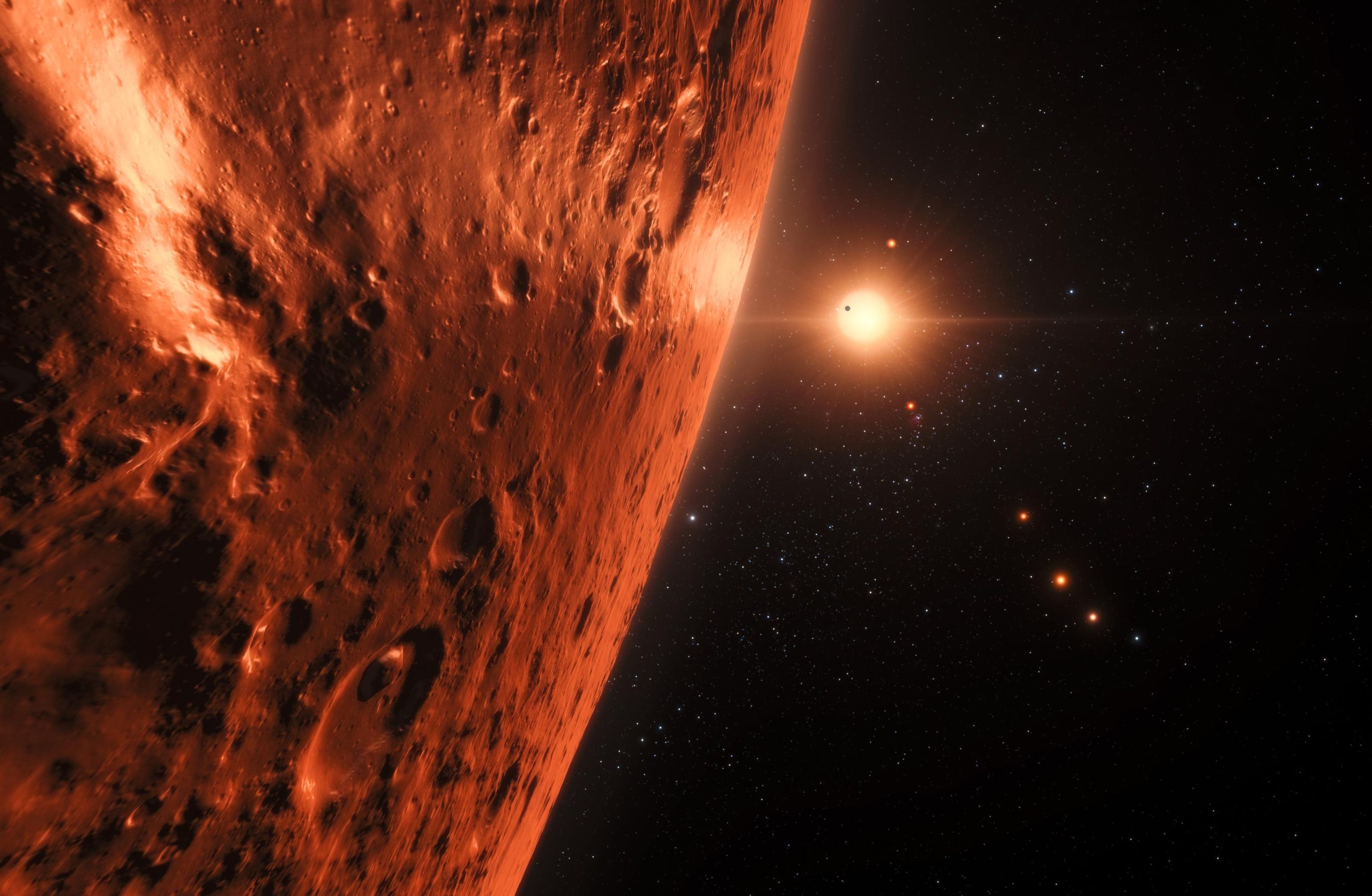
    TRAPPIST-1 Planetary System
    This artist’s impression shows the view from the surface of one of the planets in the TRAPPIST-1 system. At least seven planets orbit this ultracool dwarf star 40 light-years from Earth and they are all roughly the same size as the Earth. Several of the planets are at the right distances from their star for liquid water to exist on the surfaces. This artist’s impression is based on the known physical parameters of the planets and stars seen, and uses a vast database of objects in the Universe. Credit: ESO/N. Bartmann/spaceengine.org

    What Is a Habitable Zone?

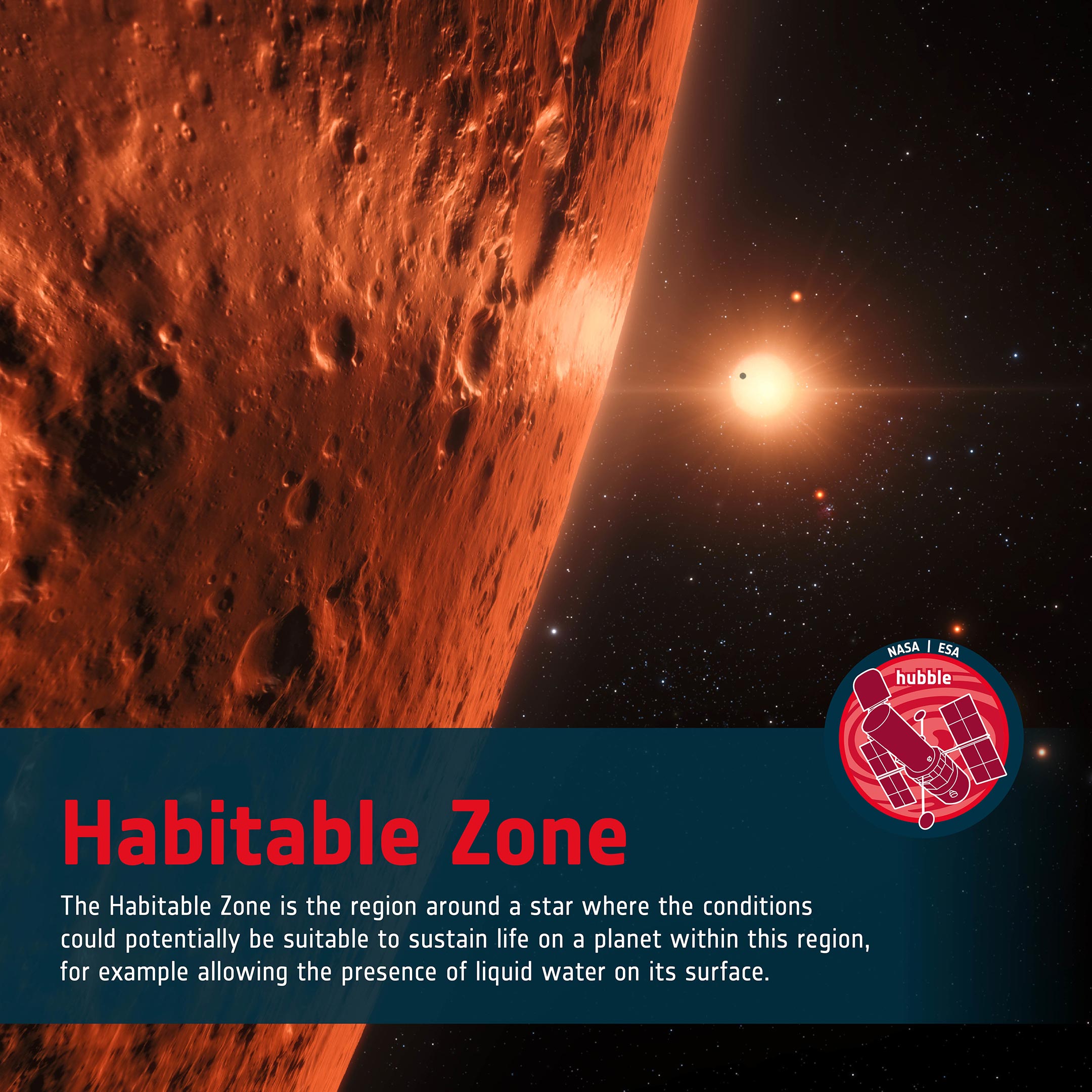
    The Habitable Zone is the region around a star where the conditions could potentially be suitable to sustain life on a planet, for example allowing the presence of liquid water on its surface.

    Often called the ‘Goldilocks Zone’, the Habitable Zone is a hypothetical region around a star where the conditions are just right to be considered potentially habitable for life. In that region, a planet’s surface temperature could be in the range needed to harbor liquid water on its surface. The energy from the star, together with the greenhouse effect generated by the planet’s atmosphere, would produce a surface temperature between 0 and 100ºC (between 32 and 212ºF).


    The Habitable Zone is the region around a star where the conditions could potentially be suitable to sustain life on a planet within this region, for example allowing the presence of liquid water on its surface. Credit: ESA/Hubble, M. Kornmesser

    Hubble’s observations have shown us that planets are being formed around many more stars than previously thought, increasing the possibility that life could exist somewhere out there in the universe, or even in our own galaxy, the Milky Way. In the future, Hubble could possibly find hints of life by studying exoplanet atmospheres. The chemical makeup of a planet’s atmosphere leaves a unique fingerprint on the starlight that passes through it, which Hubble can investigate.

    In 2017, an international team of astronomers used Hubble to look for atmospheres around planets orbiting within or near the habitable zone of the ultracool dwarf star TRAPPIST-1, 40 light-years away. Of the seven Earth-sized planets that orbit TRAPPIST-1, three of them orbit within the system’s habitable zone.
    Word Bank Habitable Zone
    Habitable Zone. Credit: ESO/N. Bartmann/spaceengine.org

    In 2019, in an exciting discovery, Hubble data were used to detect water vapor in the atmosphere of a Super Earth within the habitable zone of its host star. K2-18b is eight times the mass of Earth and at its discovery was the only exoplanet known to have both water and temperatures that could support life.

    Never miss a breakthrough: Join the SciTechDaily newsletter.
    Follow us on Google and Google News.

    Astrobiology Astronomy Astrophysics European Space Agency Exoplanet Hubble Space Telescope
    Share. Facebook Twitter Pinterest LinkedIn Email Reddit

    Related Articles

    Astronomy & Astrophysics 101: Exoplanet

    Hubble Observes Aftermath of Massive Collision – “Blueprint for How Planets Destroy Each Other”

    Hubble Gazes on Ring Galaxy Zw II 28

    WASP-12 b, A Planet Being Consumed By Its Own Sun

    Hubble Views Abell 2261, An Elliptical Galaxy With an Unusually Large Core

    New Study Revives Doubted Exoplanet Fomalhaut b

    NASA Data Reveals Significant Changes in Exoplanet’s Atmosphere

    Hubble Captures Image of Compact Blue Dwarf Galaxy UGC 5497

    Astronomers Obtain Precise Measurements of the Two Kepler-16 Stars

    Leave A Reply Cancel Reply

    • Facebook
    • Twitter
    • Pinterest
    • YouTube

    Don't Miss a Discovery

    Subscribe for the Latest in Science & Tech!

    Trending News

    Scientists May Have Discovered How To Heal Damaged Kidneys

    Interstellar Visitor 3I/ATLAS Is Bursting With an Unexpected Chemical

    Scientists Just Found All 5 Genetic “Letters” of DNA and RNA on an Asteroid

    The 4,000-Year-Old City That Defied History’s Rules on Wealth and Power

    The World’s Biggest Population Fear Has Flipped – and It Could Change Everything

    This “Fake” Pill Improved Memory and Physical Performance in Just 3 Weeks

    Scientists Say Frequent Ejaculation May Improve Sperm Quality and Fertility

    Scientists Have Found “The Heaven Sword” After Years of Looking

    Follow SciTechDaily
    • Facebook
    • Twitter
    • YouTube
    • Pinterest
    • Newsletter
    • RSS
    SciTech News
    • Biology News
    • Chemistry News
    • Earth News
    • Health News
    • Physics News
    • Science News
    • Space News
    • Technology News
    Recent Posts
    • Scientists Discover Hidden Rule That Could Make Fuel Cells Cheaper and More Powerful
    • New Water-Harvesting Jacket Pulls up to 30 Ounces of Drinking Water From the Air Daily
    • Scientists Finally Uncover Why Gold Never Tarnishes
    • Scientists Uncover a Previously Unknown Lineage of Ancient Marsupials
    • Critically Endangered Monkey Defies the Odds With New Baby After Surgery
    Copyright © 1998 - 2026 SciTechDaily. All Rights Reserved.
    • Science News
    • About
    • Contact
    • Editorial Board
    • Privacy Policy
    • Terms of Use

    Type above and press Enter to search. Press Esc to cancel.