
Close Menu
    Facebook X (Twitter) Instagram
    SciTechDaily
    • Biology
    • Chemistry
    • Earth
    • Health
    • Physics
    • Science
    • Space
    • Technology
    Facebook X (Twitter) Pinterest YouTube RSS
    SciTechDaily
    Home»Health»Can Listening to Mozart Help Alleviate Epilepsy?
    Health

    Can Listening to Mozart Help Alleviate Epilepsy?

    By University of ViennaMarch 28, 2023No Comments3 Mins Read
    Facebook Twitter Pinterest Telegram LinkedIn WhatsApp Email Reddit
    Share
    Facebook Twitter LinkedIn Pinterest Telegram Email Reddit
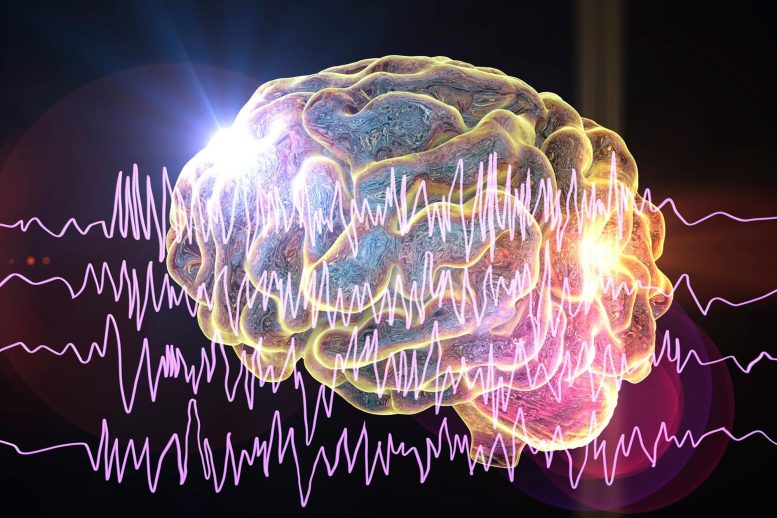
    Brain Waves Activity Signals
    Epilepsy is a neurological condition characterized by recurrent seizures or convulsions. It affects people of all ages and can cause a wide range of symptoms, from mild to severe.

    Recent research conducted by psychologists at the University of Vienna has found that there is no scientific basis for the claimed beneficial impact of Mozart’s Sonata KV448 on epilepsy.

    For the past half a century, there have been remarkable claims about the impact of Wolfgang Amadeus Mozart’s music. The reports of the supposed alleviation of symptoms in epilepsy patients upon listening to Mozart’s Sonata KV448 gained widespread attention. Yet, the credibility of the underlying scientific evidence remained uncertain. In a recent study published in Scientific Reports, psychologists Sandra Oberleiter and Jakob Pietschnig from the University of Vienna have found that there is no credible evidence to support the notion that Mozart’s melody has a positive effect on epilepsy.

    Throughout history, Mozart’s music has been linked to a range of perceived positive effects on humans, animals, and even microorganisms. For example, it has been claimed that listening to his sonatas can enhance the intelligence of adults, children, and even fetuses in the womb. It has also been stated that cows produce more milk and bacteria in sewage treatment plants operate more efficiently when exposed to Mozart’s compositions.

    However, most of these alleged effects have no scientific basis. The origin of these ideas can be traced back to the long-disproven observation of a temporary increase in spatial reasoning test performance among students after listening to the first movement allegro con spirito of Mozart’s sonata KV448 in D major.

    Revisiting the Mozart Effect in Epilepsy

    More recently, the Mozart effect experienced a further variation: Some studies reported symptom relief in epilepsy patients after they had listened to KV448. However, a new comprehensive research synthesis by Sandra Oberleiter and Jakob Pietschnig from the University of Vienna, based on all available scientific literature on this topic, showed that there is no reliable evidence for such a beneficial effect of Mozart’s music on epilepsy.

    They found that this alleged Mozart effect can be mainly attributed to selective reporting, small sample sizes, and inadequate research practices in this corpus of literature. “Mozart’s music is beautiful, but unfortunately, we cannot expect relief from epilepsy symptoms from it” conclude the researchers.

    Reference: “Unfounded authority, underpowered studies, and non-transparent reporting perpetuate the Mozart effect myth: a multiverse meta-analysis” by Sandra Oberleiter and Jakob Pietschnig, 6 March 2023, Scientific Reports.
    DOI: 10.1038/s41598-023-30206-w

    Never miss a breakthrough: Join the SciTechDaily newsletter.
    Follow us on Google and Google News.

    Epilepsy Music Psychology University of Vienna
    Share. Facebook Twitter Pinterest LinkedIn Email Reddit

    Related Articles

    Scientists Discover a Simple, Drug-Free Way To Reduce Anxiety in 24 Minutes

    Music vs. Medication: Surprising Results from Dementia Ward Study

    Melodic Medicine: Scientists Discover Simple Way To Reduce Physical Pain Intensity

    Alone and Exhausted: The Unexpected Energy Toll of Social Isolation

    Psychologists Find That a 3-Minute Online Art Viewing Can Significantly Improve Your Well-Being

    ‘Healthy Neuroticism’ Lowers Risk of Chronic Disease

    Meditation Reduces Loneliness and Expression of Inflammatory Genes

    “Bath Salts” Effects on the Brain Are Comparable to Cocaine

    Listening to Mozart Can Make You Smarter but No More Than Justin Bieber

    Leave A Reply Cancel Reply

    • Facebook
    • Twitter
    • Pinterest
    • YouTube

    Don't Miss a Discovery

    Subscribe for the Latest in Science & Tech!

    Trending News

    Invisible Black Holes Could Be Triggering Supernovae

    Scientists Discover the First Contagious Cancer in a Freshwater Animal

    THC-CBD Treatment Dramatically Reduces Agitation in Dementia Trial

    Scientists Say Love Follows Mathematical Patterns

    “Zombie Cells” Reveal a Hidden Weakness That Could Help Fight Aging

    Alien Signals May Be Hiding in a Radio Band SETI Has Barely Explored

    Earth’s Hidden Thermostat Has Regulated Climate for 60 Million Years

    This 518-Million-Year-Old Creature Reveals How Spiders Got Their Bite

    Follow SciTechDaily
    • Facebook
    • Twitter
    • YouTube
    • Pinterest
    • Newsletter
    • RSS
    SciTech News
    • Biology News
    • Chemistry News
    • Earth News
    • Health News
    • Physics News
    • Science News
    • Space News
    • Technology News
    Recent Posts
    • Chemists Defy Decades-Old Rules With “Free Electron” Breakthrough
    • Quantum Computers Could Freeze Like Ordinary PCs
    • Shape-Shifting Drug Supercharges Cancer Treatment in Mice
    • Skin Damage May Begin Long Before You Can See It
    • Scientists Reversed Autism-Like Symptoms in Adult Mice Within Two Hours
    Copyright © 1998 - 2026 SciTechDaily. All Rights Reserved.
    • Science News
    • About
    • Contact
    • Editorial Board
    • Privacy Policy
    • Terms of Use

    Type above and press Enter to search. Press Esc to cancel.