
Close Menu
    Facebook X (Twitter) Instagram
    SciTechDaily
    • Biology
    • Chemistry
    • Earth
    • Health
    • Physics
    • Science
    • Space
    • Technology
    Facebook X (Twitter) Pinterest YouTube RSS
    SciTechDaily
    Home»Health»The Next Pandemic? New Study Reveals How the Recent Animal-Origin Virus Enters Human Cells
    Health

    The Next Pandemic? New Study Reveals How the Recent Animal-Origin Virus Enters Human Cells

    By University of QueenslandJuly 2, 20231 Comment3 Mins Read
    Facebook Twitter Pinterest Telegram LinkedIn WhatsApp Email Reddit
    Share
    Facebook Twitter LinkedIn Pinterest Telegram Email Reddit
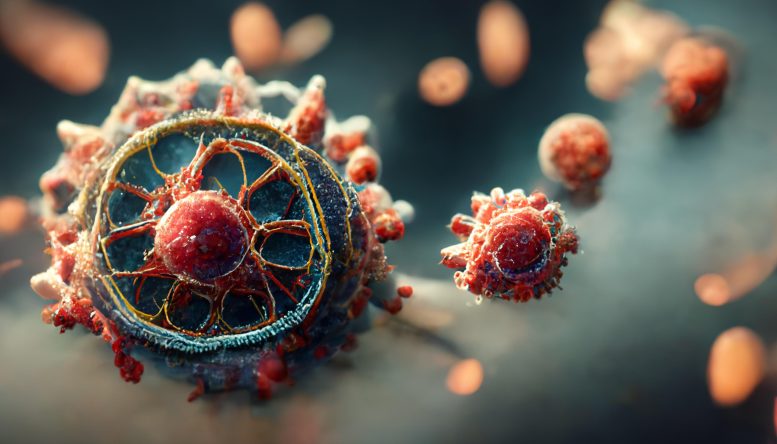
    Langya Virus Illustration
    Researchers have revealed the structure of the fusion protein of the Langya virus, an infectious disease that jumped from animals to humans, using advanced microscopy techniques. Their findings highlight the virus’s similarities to other deadly viruses, emphasizing the urgency for developing broad-spectrum vaccines and treatments for this class of viruses. Credit: Catalin

    Scientists reveal how the Langya virus infects human cells, paving the way for future vaccines against emerging Henipaviruses.

    Scientists have illuminated the process by which a highly infectious virus, recently transmitted from animals to humans, gains entry into human cells.

    Dr. Ariel Isaacs and Dr. Yu Shang Low, from The University of Queensland, have successfully revealed the structure of the fusion protein of the Langya virus. This virus was first identified in humans in Eastern China in August 2022.

    Dr. Isaacs said the virus caused fever and severe respiratory symptoms and was from the same class of viruses as the deadly Nipah and Hendra viruses.

    The Importance of Studying Emerging Viruses

    “We’re at an important juncture with viruses from the Henipavirus genus, as we can expect more spillover events from animals to people,” Dr. Isaacs said.

    “It’s important we understand the inner workings of these emerging viruses, which is where our work comes in.”
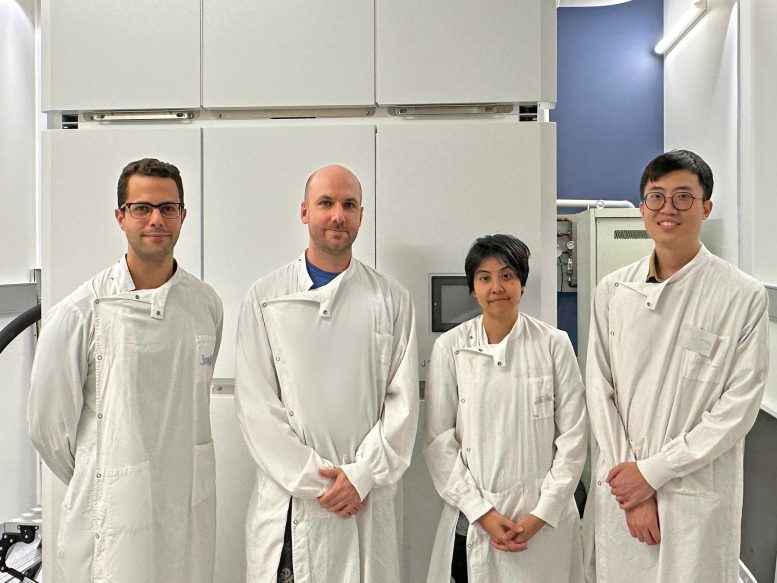
    Langya Virus Research Team
    The research team in front of UQ’s cryogenic electron microscope, L-R Dr. Ariel Isaacs, Associate Professor Daniel Watterson, Dr. Naphak Modhiran, and Dr. Yu Shang Low. Credit: The University of Queensland

    The team used UQ’s molecular clamp technology to hold the fusion protein of the Langya virus in place to uncover the atomic structure using cryogenic electron microscopy at UQ’s Centre for Microscopy & Microanalysis.

    “Understanding the structure and how it enters cells is a critical step towards developing vaccines and treatments to combat Henipavirus infections,” Dr. Isaacs said.

    “There are currently no treatments or vaccines for them, and they have the potential to cause a widespread outbreak.”

    Associate Professor Daniel Watterson, a senior researcher on the project, said they also saw that the Langya virus fusion protein structure is similar to the deadly Hendra virus, which first emerged in southeast Queensland in 1994.

    Learning from the COVID-19 Pandemic: Preparing for Future Outbreaks

    “These are viruses that can cause severe disease and have the potential to get out of control if we’re not properly prepared,” Dr Watterson said.

    “We saw with COVID-19 how unprepared the world was for a widespread viral outbreak and we want to be better equipped for the next outbreak.”

    The researchers will now work to develop broad-spectrum human vaccines and treatments for Henipaviruses, such as Langya, Nipah, and Hendra.

    Reference: “Structure and antigenicity of divergent Henipavirus fusion glycoproteins” by Ariel Isaacs, Yu Shang Low, Kyle L. Macauslane, Joy Seitanidou, Cassandra L. Pegg, Stacey T. M. Cheung, Benjamin Liang, Connor A. P. Scott, Michael J. Landsberg, Benjamin L. Schulz, Keith J. Chappell, Naphak Modhiran and Daniel Watterson, 16 June 2023, Nature Communications.
    DOI: 10.1038/s41467-023-39278-8

    UQ acknowledges the support of the Coalition for Epidemic Preparedness Innovations, the Queensland and Australian governments and philanthropic partners.

    Never miss a breakthrough: Join the SciTechDaily newsletter.
    Follow us on Google and Google News.

    CryoEM Microscopy Pandemic University of Queensland Virus
    Share. Facebook Twitter Pinterest LinkedIn Email Reddit

    Related Articles

    Scientists Discover First Henipavirus in North America, Raising Pandemic Fears

    Beyond Paxlovid: Scientists Unveil Game-Changing Antiviral That Could Combat COVID, Ebola, and More

    Which Virus Will Cause the Next Global Pandemic? Scientists Discover New Disease X Clues

    New COVID Variant “Eris” on the Rise

    Alarming Discovery: Mutating Bird Flu in China Raises Pandemic Fears

    Pandemic Puzzles: Gastrointestinal Viruses’ Sudden Silence and Resurgence

    New Coronavirus Could Infect Millions During Hajj in Saudi Arabia

    West Nile Virus Might Be Linked to Kidney Problems

    CDC Reports that Superbug NDM-1 Spread within a US-Based Hospital

    1 Comment

    1. Vois Akawshin on July 2, 2023 8:23 am

      Potentially it’s the next pandemic. Just a reminder, we have pandemics every year, and it’s viruses that have crossed species. H1N1, H5N1, H3N2, hundreds mostly from birds or other mammals. COVID-19 was an abberation, projected to have a very high death rate like the 1918 Spanish Flu, and it wasn’t, but we didn’t know. The research is good, but if you’re reading this and afraid, thinking about social distancing and lockdowns, be reassured there’s no need.

      Reply
    Leave A Reply Cancel Reply

    • Facebook
    • Twitter
    • Pinterest
    • YouTube

    Don't Miss a Discovery

    Subscribe for the Latest in Science & Tech!

    Trending News

    Massive Study Warns Marijuana Use in Teens Is Linked to Serious Mental Illness

    Scientists Discover a Completely Unexpected Way T Cells Kill Cancer

    Scientists Just Found the Solar System’s Original “Planet Factory”

    Study Warns Widely Used Food Preservatives Linked to High Blood Pressure and Heart Disease

    New Treatment Could Reverse Osteoarthritis Within Weeks

    Physicists Have Measured “Negative Time” in Bizarre Quantum Experiment

    The Deadly Tapeworm Spreading Across America Has Reached the Pacific Northwest

    Could Low Vitamin D Be Making Your Pain Worse?

    Follow SciTechDaily
    • Facebook
    • Twitter
    • YouTube
    • Pinterest
    • Newsletter
    • RSS
    SciTech News
    • Biology News
    • Chemistry News
    • Earth News
    • Health News
    • Physics News
    • Science News
    • Space News
    • Technology News
    Recent Posts
    • Scientists Find a Smarter Way To Measure the Universe Using Exploding Stars
    • Earth May Be Seeding Venus With Life, According to New Research
    • Streetlights Are Trapping Thousands of Isopods in Mysterious “Death Spirals”
    • Scientists Have Discovered These Deadly Parasites Are Secretly Swapping DNA
    • What Scientists Found Inside a 117-Year-Old Woman Reveals New Clues to Long Life
    Copyright © 1998 - 2026 SciTechDaily. All Rights Reserved.
    • Science News
    • About
    • Contact
    • Editorial Board
    • Privacy Policy
    • Terms of Use

    Type above and press Enter to search. Press Esc to cancel.