
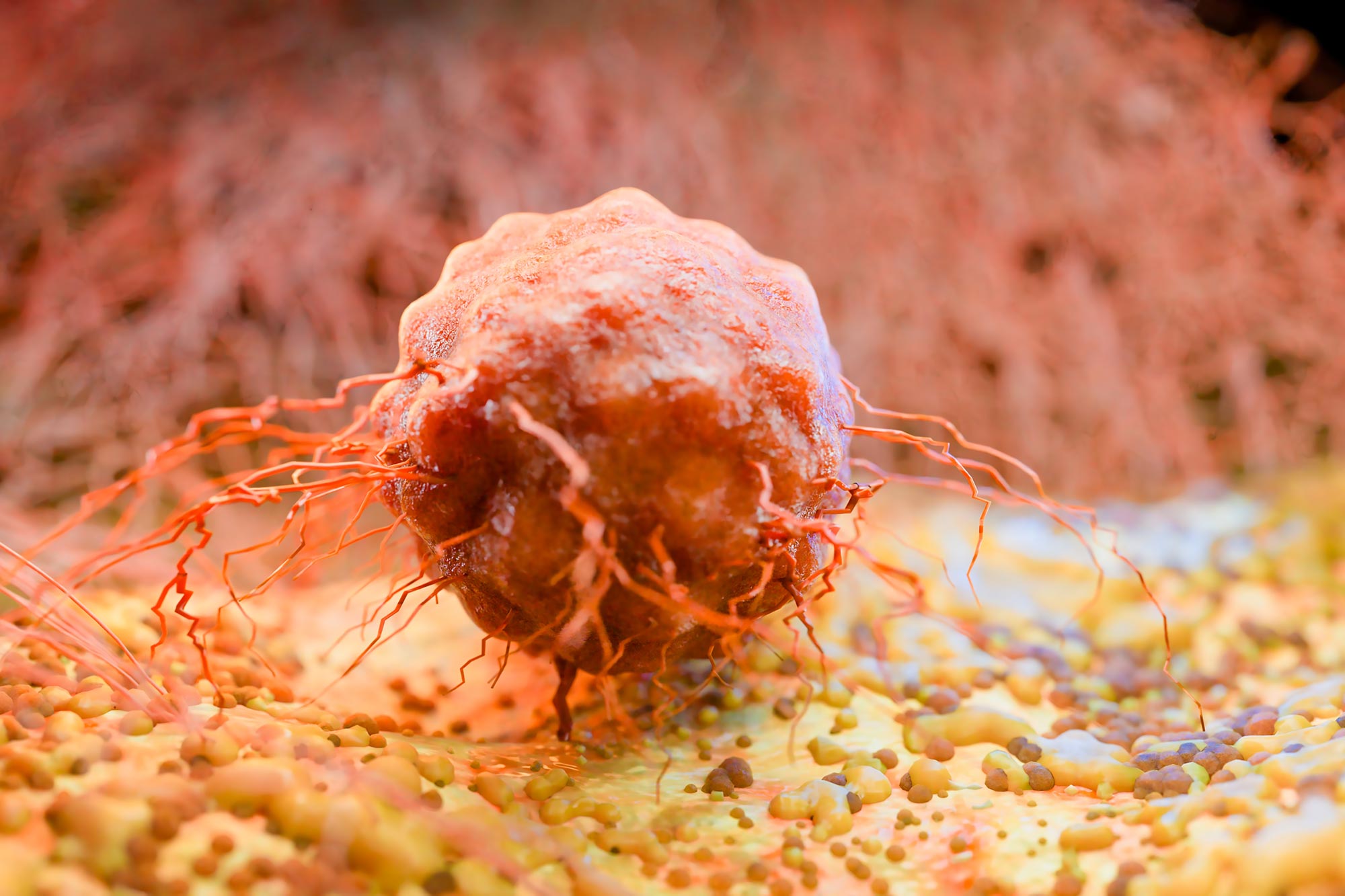
Gut bacteria may hold clues to cancer survival and chemotherapy side effects before treatment even begins.
A tumor can produce large amounts of lactate, a molecule that some gut bacteria consume as food. Mayo Clinic researchers found higher levels of both lactate and one of those bacteria, Veillonella parvula, in adults diagnosed with colorectal cancer at 50 or younger than in patients diagnosed later in life.
Colorectal cancer incidence is increasing about 3% a year among adults ages 20 to 49, according to the American Cancer Society. Breast cancer incidence is also climbing, rising 1.4% annually among women younger than 50. The Mayo findings identify specific microbial differences to investigate as researchers work to understand cancers diagnosed at younger ages.
Mayo Clinic researchers analyzed stool samples from 1,364 patients with cancer, examining the trillions of microbes living in their digestive tracts. Patients represented 40 states and provided samples before beginning treatment at Mayo Clinic in Arizona, Florida, and Minnesota. The team linked those samples to clinical records covering cancer types, stages, treatments, side effects, and outcomes, allowing researchers to examine both the patients’ diagnoses and what happened during their care. The study, part of the Mayo Clinic Cancer Microbiome cohort, appears in Cell.
Breast cancer’s gut patterns differ by age
Younger breast cancer patients also had a different microbial profile from those diagnosed later in life, with changes across 64 bacterial species. One was Clostridium scindens, which helps process bile acids and steroid molecules. These patients also had lower levels of primary bile acids, substances made by the liver that help digest fats.
Patients with brain cancer, the third cancer examined in the age analysis, showed no comparable differences between younger and older adults. The age-related patterns in colorectal and breast cancer therefore did not extend to every cancer the team examined, and the study did not establish that those patterns cause early-onset disease.
341 species linked to five cancer groups
Comparing the cancer patients with 287 people without cancer helped researchers identify broader differences in gut microbes. They then compared patients across cancer types to distinguish changes associated with particular cancers. After accounting for other health conditions, the team identified 341 bacterial species associated with five cancer groups.
Patients with neuroendocrine tumors showed a broad loss of common gut bacteria associated with health, while those with liver and intrahepatic bile duct cancers had higher levels of several bacteria, including Enterococcus faecalis. Esophageal cancer was associated with higher levels of six species, including Streptococcus bacteria. Researchers also found distinct associations in lymphoid leukemia and in multiple myeloma and related plasma cell cancers.

“We can now narrow the search to those microbial changes that are most specific to individual cancers,” says co-corresponding author Ruben Mars, Ph.D., a microbiome researcher at Mayo Clinic in Minnesota. “Those are the signals we need to understand first if we want to determine whether the microbiome plays a causal role in cancer and ultimately develop targeted interventions.”
Matching the microbial profiles with patients’ clinical outcomes extended the analysis beyond differences at diagnosis. Researchers identified gut bacteria associated with survival in colorectal, liver and intrahepatic bile duct, ovarian, and prostate cancers, as well as melanoma. In liver and intrahepatic bile duct cancers, Bifidobacterium longum was associated with longer survival, while Blautia A massiliensis was associated with shorter survival.
Bacterial genes linked to chemotherapy diarrhea
The samples collected before treatment also allowed researchers to look for connections between gut bacteria and how patients tolerated chemotherapy. Among patients receiving 5-fluorouracil, or 5-FU, those who later developed diarrhea had lower levels of bacterial genes capable of breaking down the drug. Much of that drug-processing capacity came from Anaerostipes hadrus, a common gut bacterium.
Patients receiving carboplatin, another chemotherapy drug, did not show the same link between those genes and diarrhea. That contrast suggests the finding was specific to 5-FU, which is used to treat many types of cancer, rather than a general association with diarrhea during chemotherapy.
“This gives us a proof of concept that we can begin to understand why some patients experience a particular side effect and identify a target that could potentially be acted upon,” says co-corresponding author Purna Kashyap, M.B.B.S., director of the Mayo Clinic Microbiome Program. “The microbiome is not the sole driver of cancer or treatment outcomes, but it is an underappreciated component that has not traditionally been considered in therapeutic approaches.”
The team will now test whether microbial signals can predict treatment side effects in larger patient groups. They will also investigate whether cancer-specific microbes contribute to disease, including whether V. parvula’s ability to feed on lactate inside the gut plays a role in colorectal cancer among younger adults.
Reference: “Microbiome signatures linked to cancer and treatment adverse events in a real-world cohort” by Lu Yang, Vaidhvi Singh, Brent J. Gawey, Jason P. Sinnwell, Stephen Johnson, Elle C. Billings, Trena M. Van Gorp, Jonathan J. Harrington, Michael Q. Slama, Lisa M. Till, Manavjot Singh, Thoshik R. Samineni, Mojun Zhu, Krishna R. Kalari, Gianrico Farrugia, Jun Chen, Ruben A.T. Mars and Purna C. Kashyap, 29 September 2026, Cell.
DOI: 10.1016/j.cell.2026.09.009
The research was supported in part by the National Institutes of Health and philanthropic gifts from the Valhalla Foundation, the Maxine & Jack Zarrow Family Foundation, and other benefactors to the Mayo Clinic Microbiome Program and Center for Individualized Medicine.
Never miss a breakthrough: Join the SciTechDaily newsletter.
Follow us on Google and Google News.