
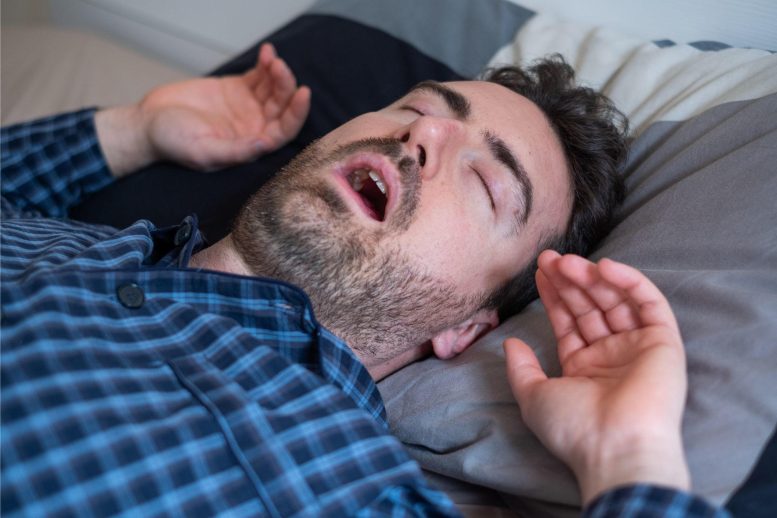
In a study involving 46 participants, it was discovered that individuals with untreated obstructive sleep apnea experienced faster telomere shortening, an indicator of cell aging. However, the use of continuous positive airway pressure reduced this damage.
Obstructive sleep apnea (OSA) is characterized by repeated episodes of the upper airway partially or fully closing during sleep. This leads to pauses in breathing that can last from a few seconds to several minutes, often followed by sudden waking and deep breaths. Common symptoms such as difficulty concentrating, tiredness, and excessive drowsiness during the day can significantly diminish one’s quality of life and can be debilitating.
If not addressed, individuals with OSA may face increased risks of hypertension, cardiovascular disease, heart failure, and diabetes, among other health problems, as well as poor memory and concentration.
The Role of CPAP in Telomere Maintenance
A study conducted at the Federal University of São Paulo (UNIFESP) in Brazil shows that the telomere shortening that naturally occurs with aging and is accelerated by OSA can be mitigated by the use of continuous positive airway pressure (CPAP), a method of respiratory therapy in which air is pumped into the lungs through the nose and mouth during spontaneous breathing.
Telomeres are structures made from DNA sequences and proteins found at the ends of chromosomes. They play a central role in maintaining the integrity of the genetic material in cell nuclei. They naturally shorten as cells divide to regenerate tissue and organs, and aging cells stop dividing when telomeres become too short. Accelerated telomere shortening due to OSA can therefore lead to premature cell aging.
The study was supported by FAPESP and reported in an article published in the journal Sleep.
Research Methodology
The researchers assessed 46 male patients aged 50-60 and diagnosed with moderate or severe OSA for six months. They divided these volunteers into two groups, treating one with CPAP and the other with a placebo (a CPAP machine with a hidden leak in the exhaust port of the mask to disperse the therapeutic pressure).
In monthly visits, they checked adherence to CPAP, considered complex and hard to get used to. They took blood samples to measure telomere length at the start of the trial, three months later, and at the end of the intervention. They also analyzed inflammatory and oxidative stress markers.
“Telomere shortening is inevitable because it’s associated with aging, inflammation, and oxidative stress, but OSA accelerates it and we found that CPAP attenuated this acceleration after three and six months,” said Priscila Farias Tempaku, first author of the article and a researcher in sleep biology at UNIFESP’s Department of Psychobiology.
The Link Between OSA, Inflammation, and Telomere Shortening
In their investigation of the molecular mechanisms associated with OSA and telomere shortening, the researchers observed that inflammation is probably the main pathway via tumor necrosis factor-alpha (TNF-α), a cytokine known to be involved in the pathogenesis of some inflammatory and autoimmune diseases.
“In the placebo group, TNF-α influenced telomere length, whereas the association wasn’t observed in the CPAP group. This shows that in addition to its already recognized importance in mitigating cardiovascular and metabolic risk, CPAP also reduces inflammation and therefore attenuates telomere shortening,” Tempaku explained.
“The results underscore the criticality of sleep as a protective factor in aging and a risk factor in patients with alterations. This is an excellent incentive since most people are reluctant to use CPAP,” said Sergio Tufik, last author of the article and head of UNIFESP’s Sleep Institute.
Sleep Epidemiology
A pioneer of sleep research in Brazil and worldwide, Professor Tufik created the Episono (“Episleep”) project to investigate sleep epidemiology. He and his team have conducted surveys of the population of São Paulo city every decade since 1986 to find out about their sleep-related health problems, including insomnia, snoring, and sleepwalking, and have published more than 70 articles on the subject in scientific journals.
The 2015 round of the survey focused on the effects of telomere shortening over a period of ten years, showing that having severe OSA was equivalent to aging ten years. This finding, alongside those of the latest study, led the researchers to conclude that they should investigate the links between sleep and aging in more depth.
The Wider Context: Sleep Disorders and the Public
“People age faster when they sleep badly. Poor quality sleep is associated with mortality as much as other diseases. Around 30% of the population have OSA, but there’s no care for the disorder. CPAP isn’t provided by public or private health services, and this has to change,” Tufik said.
The prevalence of OSA is rising in parallel with the advance of obesity, as the two disorders are frequently associated. According to the Brazilian Bariatric and Metabolic Surgery Society (SBCBM), 70% of obese people suffer from sleep disorders. The proportion is 80% in the case of morbid obesity.
Diagnosis of OSA requires a polysomnography test, also known as a sleep study. Treatment involves CPAP and lifestyle changes such as weight loss, and avoidance of sleep medication as well as alcoholic beverages at night.
Reference: “0466 Effect of Obstructive Sleep Apnea and CPAP on Telomere Length and its Associated Mechanisms” by Priscila Tempaku, Vânia D’Almeida, Sylvia Silva, Lia Bittencourt and Sergio Tufik, 29 May 2023, Sleep.
DOI: 10.1093/sleep/zsad077.0466
The study was funded by the São Paulo Research Foundation.
Never miss a breakthrough: Join the SciTechDaily newsletter.
Follow us on Google and Google News.