
Close Menu
    Facebook X (Twitter) Instagram
    SciTechDaily
    • Biology
    • Chemistry
    • Earth
    • Health
    • Physics
    • Science
    • Space
    • Technology
    Facebook X (Twitter) Pinterest YouTube RSS
    SciTechDaily
    Home»Space»NASA’s Deep Space Detective Story Unfolds With Voyager 1
    Space

    NASA’s Deep Space Detective Story Unfolds With Voyager 1

    By NASA's Jet Propulsion LaboratoryMarch 16, 20241 Comment3 Mins Read
    Facebook Twitter Pinterest Telegram LinkedIn WhatsApp Email Reddit
    Share
    Facebook Twitter LinkedIn Pinterest Telegram Email Reddit
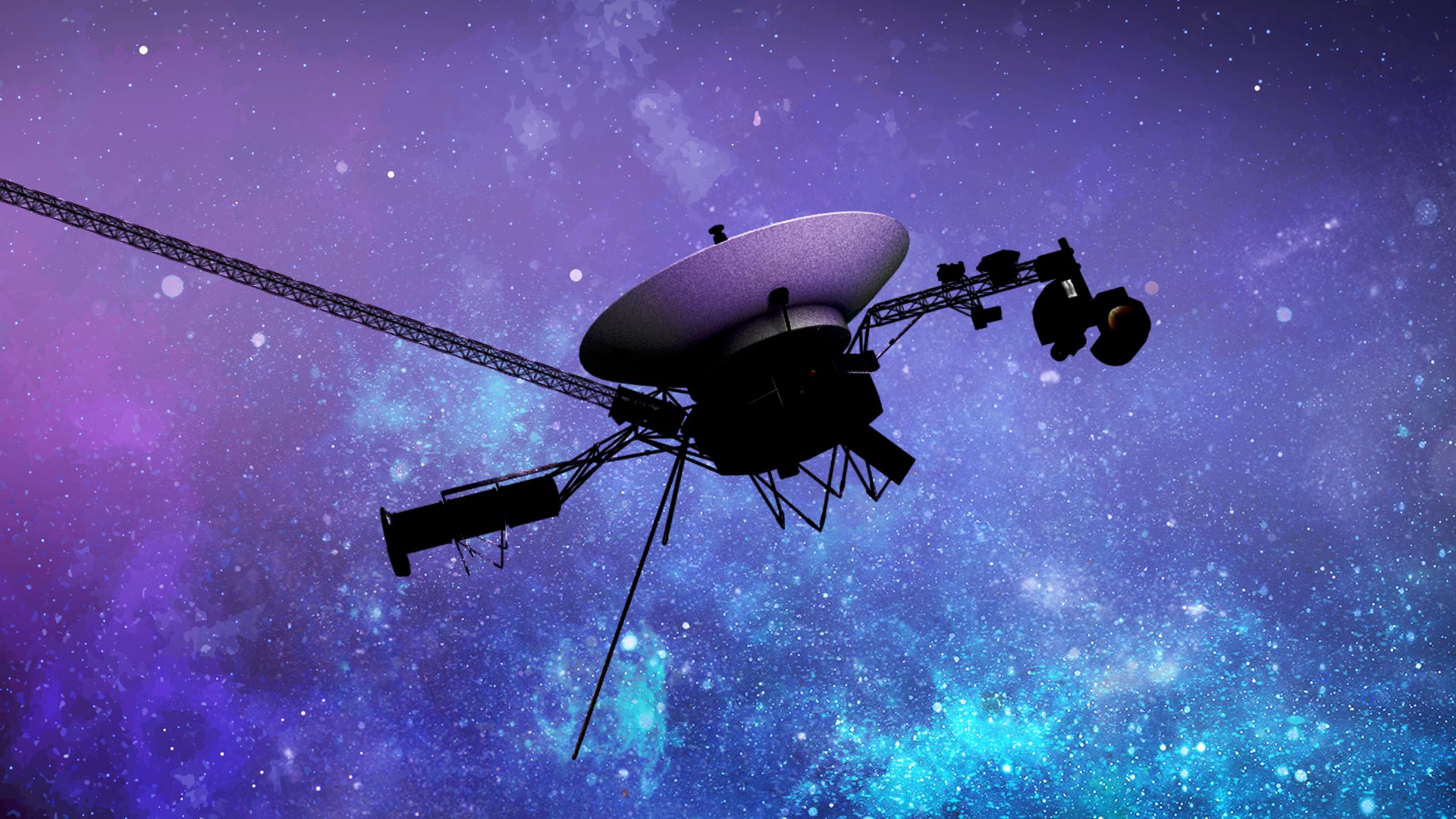
    NASA Voyager Spacecraft Illustration
    Artist’s illustration of one of the Voyager spacecraft. Credit: Caltech/NASA-JPL

    NASA’s Voyager 1 has been sending non-usable data to Earth since November 2023. Engineers detected unusual signals in March, revealing a full memory readout of the onboard computer, offering clues to resolve the spacecraft’s data transmission issues.

    Since November 2023, NASA’s Voyager 1 spacecraft has been sending a steady radio signal to Earth, but the signal does not contain usable data. The source of the issue appears to be with one of three onboard computers, the flight data subsystem (FDS), which is responsible for packaging the science and engineering data before it’s sent to Earth by the telemetry modulation unit.

    Discovery of New Data Signal

    On March 3, the Voyager mission team saw activity from one section of the FDS that differed from the rest of the computer’s unreadable data stream. The new signal was still not in the format used by Voyager 1 when the FDS is working properly, so the team wasn’t initially sure what to make of it. But an engineer with the agency’s Deep Space Network, which operates the radio antennas that communicate with both Voyagers and other spacecraft traveling to the Moon and beyond, was able to decode the new signal and found that it contains a readout of the entire FDS memory.

    Troubleshooting and Analysis

    The FDS memory includes its code, or instructions for what to do, as well as variables, or values used in the code that can change based on commands or the spacecraft’s status. It also contains science or engineering data for downlink. The team will compare this readout to the one that came down before the issue arose and look for discrepancies in the code and the variables to potentially find the source of the ongoing issue.

    This new signal resulted from a command sent to Voyager 1 on March 1. Called a “poke” by the team, the command is meant to gently prompt the FDS to try different sequences in its software package in case the issue could be resolved by going around a corrupted section.

    Because Voyager 1 is more than 15 billion miles (24 billion kilometers) from Earth, it takes 22.5 hours for a radio signal to reach the spacecraft and another 22.5 hours for the probe’s response to reach antennas on the ground. So the team received the results of the command on March 3. On March 7, engineers began working to decode the data, and on March 10, they determined that it contains a memory readout.

    The team is analyzing the readout. Using that information to devise a potential solution and attempt to put it into action will take time.

    Never miss a breakthrough: Join the SciTechDaily newsletter.
    Follow us on Google and Google News.

    JPL NASA Popular Voyager 1
    Share. Facebook Twitter Pinterest LinkedIn Email Reddit

    Related Articles

    Inside Voyager 1’s Comeback: NASA Rescues Humanity’s Distant Messenger

    NASA Beats the Odds With Ingenious Voyager 1 Thruster Fix From Billions of Miles Away

    Fresh Data From the Cosmos: NASA’s Voyager 1 Resumes Sending Science Data From 15 Billion Miles Away

    Back From the Brink: NASA’s Voyager 1 Restores Data Transmission After 5 Months

    Hear the Eerie Sounds of Interstellar Space Captured by NASA’s Voyager

    It’s Official – Voyager 1 Has Entered Interstellar Space

    Saturn’s Moon Phoebe Has Planet-Like Qualities

    Dawn Images Shine New Light on Vesta

    Searching for “Bubbles” in the Milky Way

    1 Comment

    1. CharlyUY on March 16, 2024 5:01 pm

      In the today’s era of expensive and much advanced and with far more powerful electronics space probes that frequently fail, these old “arcaic” space probes have demonstrated their real power is in their roughness and longevity, I feel admiration for those engineers that 40+ yrs ago achieved such sucess with very limited tech most of them being created on the process a real milestone in space exploration!

      Reply
    Leave A Reply Cancel Reply

    • Facebook
    • Twitter
    • Pinterest
    • YouTube

    Don't Miss a Discovery

    Subscribe for the Latest in Science & Tech!

    Trending News

    Scientists May Have Discovered How To Heal Damaged Kidneys

    Interstellar Visitor 3I/ATLAS Is Bursting With an Unexpected Chemical

    Scientists Just Found All 5 Genetic “Letters” of DNA and RNA on an Asteroid

    The 4,000-Year-Old City That Defied History’s Rules on Wealth and Power

    The World’s Biggest Population Fear Has Flipped – and It Could Change Everything

    This “Fake” Pill Improved Memory and Physical Performance in Just 3 Weeks

    Scientists Say Frequent Ejaculation May Improve Sperm Quality and Fertility

    Scientists Have Found “The Heaven Sword” After Years of Looking

    Follow SciTechDaily
    • Facebook
    • Twitter
    • YouTube
    • Pinterest
    • Newsletter
    • RSS
    SciTech News
    • Biology News
    • Chemistry News
    • Earth News
    • Health News
    • Physics News
    • Science News
    • Space News
    • Technology News
    Recent Posts
    • Europe’s First TES Spectrometer Makes Previously Impossible X-Ray Experiments Possible
    • This Sodium Battery From China Matched Tesla in a Surprising Head-to-Head Test
    • Common Laxative May Help Reverse Depression-Related Brain Fog
    • The Surprising Reason Frozen Fruit May Be Just As Nutritious as Fresh
    • Scientists Discover the Oldest Known Fossils of Humans’ Closest Invertebrate Relatives
    Copyright © 1998 - 2026 SciTechDaily. All Rights Reserved.
    • Science News
    • About
    • Contact
    • Editorial Board
    • Privacy Policy
    • Terms of Use

    Type above and press Enter to search. Press Esc to cancel.