
Close Menu
    Facebook X (Twitter) Instagram
    SciTechDaily
    • Biology
    • Chemistry
    • Earth
    • Health
    • Physics
    • Science
    • Space
    • Technology
    Facebook X (Twitter) Pinterest YouTube RSS
    SciTechDaily
    Home»Biology»Transcranial Direct Current Stimulation: The Ethics of Brain Boosting
    Biology

    Transcranial Direct Current Stimulation: The Ethics of Brain Boosting

    By SciTechDailyJanuary 30, 2012No Comments2 Mins Read
    Facebook Twitter Pinterest Telegram LinkedIn WhatsApp Email Reddit
    Share
    Facebook Twitter LinkedIn Pinterest Telegram Email Reddit
    neurons-firing-tdcs
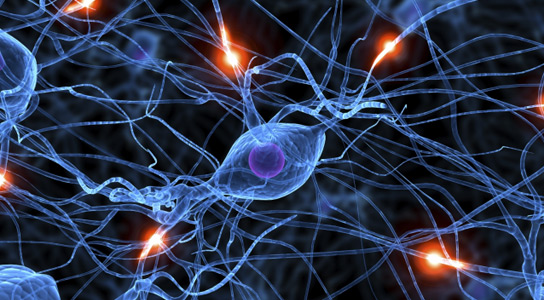
    Researchers argue that brain boosting is not considered cheating, but accessibility to such technology for everyone is crucial.

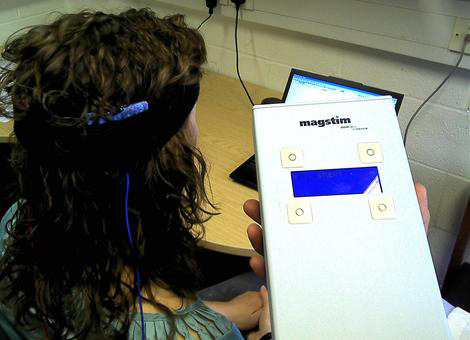
    Prominent Oxford neuroscientists are teaming up with ethicists to consider the issues raised by brain-stimulating techniques. They recently spoke on BBC’s Radio 4 morning program to have a discussion. The most promising stimulation, called transcranial direct current stimulation (TDCS) can be used to improve language, math, memory, problem solving, attention span, and even movement.
    transcranial-direct-current-stimulation

    The technology won’t just help restore mental functions to those with impaired abilities, TDCS can also be used to enhance the mental abilities of healthy people. TDCS places electrodes on the outside of the patients’ heads to pass tiny electrical currents across the regions of the brain for 20 minutes. The currents of 1-2mA make it easier for the neurons to fire, which could lead to strengthening the connections involved in learning and memory.

    Experimentally, the researchers have discovered that the techniques are painless and safe. Also, the effects might be long-lasting. Researchers have outlined their concerns in a short paper in Current Biology.

    The resulting effects could be good, but the technology could have unpredictable side effects. While the researchers don’t think that brain boosting is cheating, if it’s not available to all, it will become so. Unlike drugs, which are prescribed to specific individuals, a TDCS device could be used by many different people.

    Reference: “The neuroethics of non-invasive brain stimulation” by Roi Cohen Kadosh, Neil Levy, Jacinta O’Shea, Nicholas Shea and Julian Savulescu, 21 February 2022, Current Biology.
    DOI: 10.1016/j.cub.2012.01.013

    Never miss a breakthrough: Join the SciTechDaily newsletter.
    Follow us on Google and Google News.

    Brain Boosting Electricity Ethics Neuroscience TDCS University of Oxford
    Share. Facebook Twitter Pinterest LinkedIn Email Reddit

    Related Articles

    Autism’s High Prevalence Could Be an Evolutionary Trade-Off

    Why Do We Need Sleep? Oxford Scientists Trace the Answer to Mitochondria

    New Study Reveals How a Common Laxative Improves Cognitive Function and Memory

    Neuroscience Breakthroughs Could Be Harnessed by Military

    Researchers Use fMRI to Study How Humor Activates Kids’ Brain Regions

    Neuroscientists Decode Correlation Between Sound and Brain Activity

    Mother’s Nurturing Results in Larger Hippocampus in Children

    Neuroscientists Discover that Drosophila Orb2 Plays Role in Long-Term Memory

    Neuroscientists Study Cortical Areas Specialized in Processing Visual Inputs in Mice

    Leave A Reply Cancel Reply

    • Facebook
    • Twitter
    • Pinterest
    • YouTube

    Don't Miss a Discovery

    Subscribe for the Latest in Science & Tech!

    Trending News

    Scientists Say Love Follows Mathematical Patterns

    “Zombie Cells” Reveal a Hidden Weakness That Could Help Fight Aging

    Alien Signals May Be Hiding in a Radio Band SETI Has Barely Explored

    Earth’s Hidden Thermostat Has Regulated Climate for 60 Million Years

    This 518-Million-Year-Old Creature Reveals How Spiders Got Their Bite

    Scientists Built a Programmable Chip That Can Slow Light on Command

    The Backyard “Silly Sprinkler” That Cracked One of Physics’ Biggest Puzzles

    This Common Sleep Habit Could Be Making You Gain Weight

    Follow SciTechDaily
    • Facebook
    • Twitter
    • YouTube
    • Pinterest
    • Newsletter
    • RSS
    SciTech News
    • Biology News
    • Chemistry News
    • Earth News
    • Health News
    • Physics News
    • Science News
    • Space News
    • Technology News
    Recent Posts
    • Where on Earth Was This Fossil 200 Million Years Ago?
    • A 25,000-Year-Old Ritual Tradition Was Hidden Beneath This Cave Floor
    • A Hidden Source of Metal-Mining Emissions Could Be 10x Larger Than Estimated
    • Plant Compounds in Berries, Tea, and Cocoa May Support Healthy Brain Aging
    • Scientists Find a Way To Keep Cancer-Fighting T Cells From Burning Out
    Copyright © 1998 - 2026 SciTechDaily. All Rights Reserved.
    • Science News
    • About
    • Contact
    • Editorial Board
    • Privacy Policy
    • Terms of Use

    Type above and press Enter to search. Press Esc to cancel.