

A Pro-Cognitive Agent Has Therapeutic Potential
Cognitive impairments often coexist with mood disorders and other psychiatric conditions, often causing significant difficulties. Currently, there are only a limited number of treatments available, but research conducted on animals and humans suggests that drugs like prucalopride, a laxative that activates serotonin receptors, may offer potential therapeutic benefits for these symptoms. However, the way this medication impacts brain activity when at rest remains unknown. New research in Biological Psychiatry: Cognitive Neuroscience and Neuroimaging, published by Elsevier, is now investigating the effects of this drug on healthy adult humans.
Serotonin receptors, particularly the 5-HT4-type receptors, are widely distributed in various regions of the brain, including the frontal cortex, basal ganglia, and hippocampus. These areas play a critical role in cognitive functions and mood regulation. Serotonin receptors are the main targets of antidepressant drugs, but treating mood disorders doesn’t necessarily alleviate cognitive symptoms.
The researchers enlisted 50 healthy volunteers, half of whom received a six-day course of prucalopride, a highly selective agonist of the 5-HT4 type serotonin receptor, whereas the other half of the participants received a placebo. Participants underwent scanning with functional magnetic resonance imaging, including a “resting scan,” in which they relaxed in the scanner.
Lead author Angharad de Cates, Ph.D., MRCPsych, at the University of Oxford, said of the work, “Our previous studies on prucalopride demonstrated that even at low clinical doses it can improve cognition and memory in healthy volunteers. This latest research provides a neurological mechanism by which this might occur.”
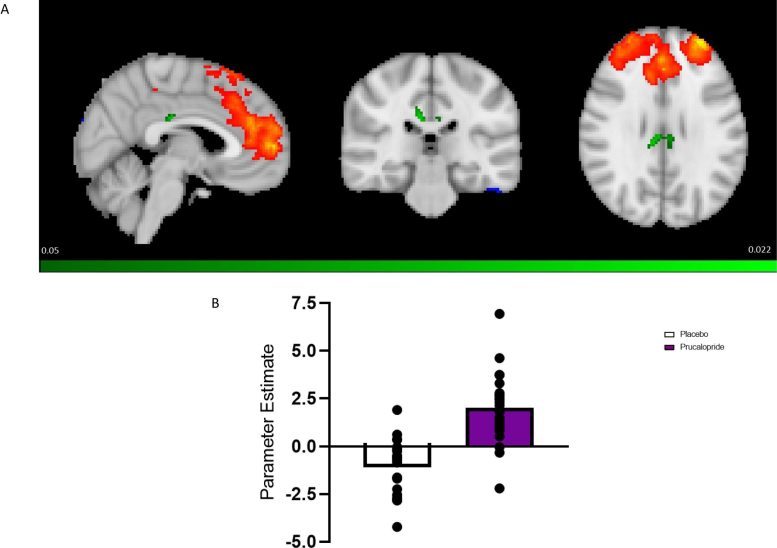
Brain Connectivity Changes with Prucalopride
Participants who received the medication displayed more functional connectivity in their resting-state (rsFC) between major cognitive networks. This included more rsFC between the central executive network, a brain network used for processing thoughts, and the posterior and anterior cingulate cortex (ACC), brain areas that regulate information processing and attention in the brain. There was also more rsFC between regions of the ACC and the lateral occipital cortex, a region that helps us pay attention to objects that matter. In addition, medicated participants compared to placebo controls showed decreased rsFC in the default mode network, a brain network that is activated during mind wandering.
Dr. de Cates added, “This provides further evidence that prucalopride is having an effect in areas of the brain that improve cognitive function – both by increasing and reducing connectivity between specific brain regions as required.”
Susannah Murphy, Ph.D., Associate Professor and joint senior author of the study, said, “Appropriate connectivity between and within these brain networks is needed to think properly, and this connectivity has been shown to be abnormal in depression. Here, the participants taking prucalopride had better scores on cognitive tests on the day of the scan compared to the placebo participants. That suggests that the changes in rsFC that we saw with prucalopride may serve as a ‘signature’ of a drug that improves cognition.”
A Promising Future for Cognitive Treatments
Dr. Murphy continued, “Untreated cognitive problems have a significant impact on the quality of life of people with depression. This study adds to the growing evidence base that drugs affecting the 5-HT4 serotonin receptor hold promise as a novel way to treat depression and cognitive impairment.”
Catherine Harmer, Ph.D., Professor of Cognitive Neuroscience and joint senior author of the study, said, “This study adds to the evidence base that the common laxative treatment prucalopride can have important effects in the brain, particularly affecting circuits which are important for learning and memory. Together with previous data, this suggests that this drug might be useful as a pro-cognitive treatment in disorders such as depression.”
Cameron Carter, MD, Editor of Biological Psychiatry: Cognitive Neuroscience and Neuroimaging, said of the work, “These data, showing modulation of resting state connectivity in the brain by the 5-HT4 receptor agonist and putative cognitive enhancer prucalopride, add to previous evidence that the agent modulates brain systems that are engaged during focused, higher cognitive activity and might have therapeutic potential.”
Reference: “5-HT4 Receptor Agonist Effects on Functional Connectivity in the Human Brain: Implications for Procognitive Action” by Angharad N. de Cates, Marieke A.G. Martens, Lucy C. Wright, Daisy Gibson, Gershon Spitz, Cassandra D. Gould van Praag, Sana Suri, Philip J. Cowen, Susannah E. Murphy and Catherine J. Harmer, 23 April 2023, Biological Psychiatry: Cognitive Neuroscience and Neuroimaging.
DOI: 10.1016/j.bpsc.2023.03.014
Never miss a breakthrough: Join the SciTechDaily newsletter.
Follow us on Google and Google News.
1 Comment
I was just going to say the same thing myself.