
Close Menu
    Facebook X (Twitter) Instagram
    SciTechDaily
    • Biology
    • Chemistry
    • Earth
    • Health
    • Physics
    • Science
    • Space
    • Technology
    Facebook X (Twitter) Pinterest YouTube RSS
    SciTechDaily
    Home»Technology»Record-Breaking Efficiency and Longevity: New Research Eliminates Major Weakness in Organic Solar Cells
    Technology

    Record-Breaking Efficiency and Longevity: New Research Eliminates Major Weakness in Organic Solar Cells

    By Abo Akademi UniversityJanuary 15, 20251 Comment3 Mins Read
    Facebook Twitter Pinterest Telegram LinkedIn WhatsApp Email Reddit
    Share
    Facebook Twitter LinkedIn Pinterest Telegram Email Reddit
    Advanced Solar Cells Art Concept
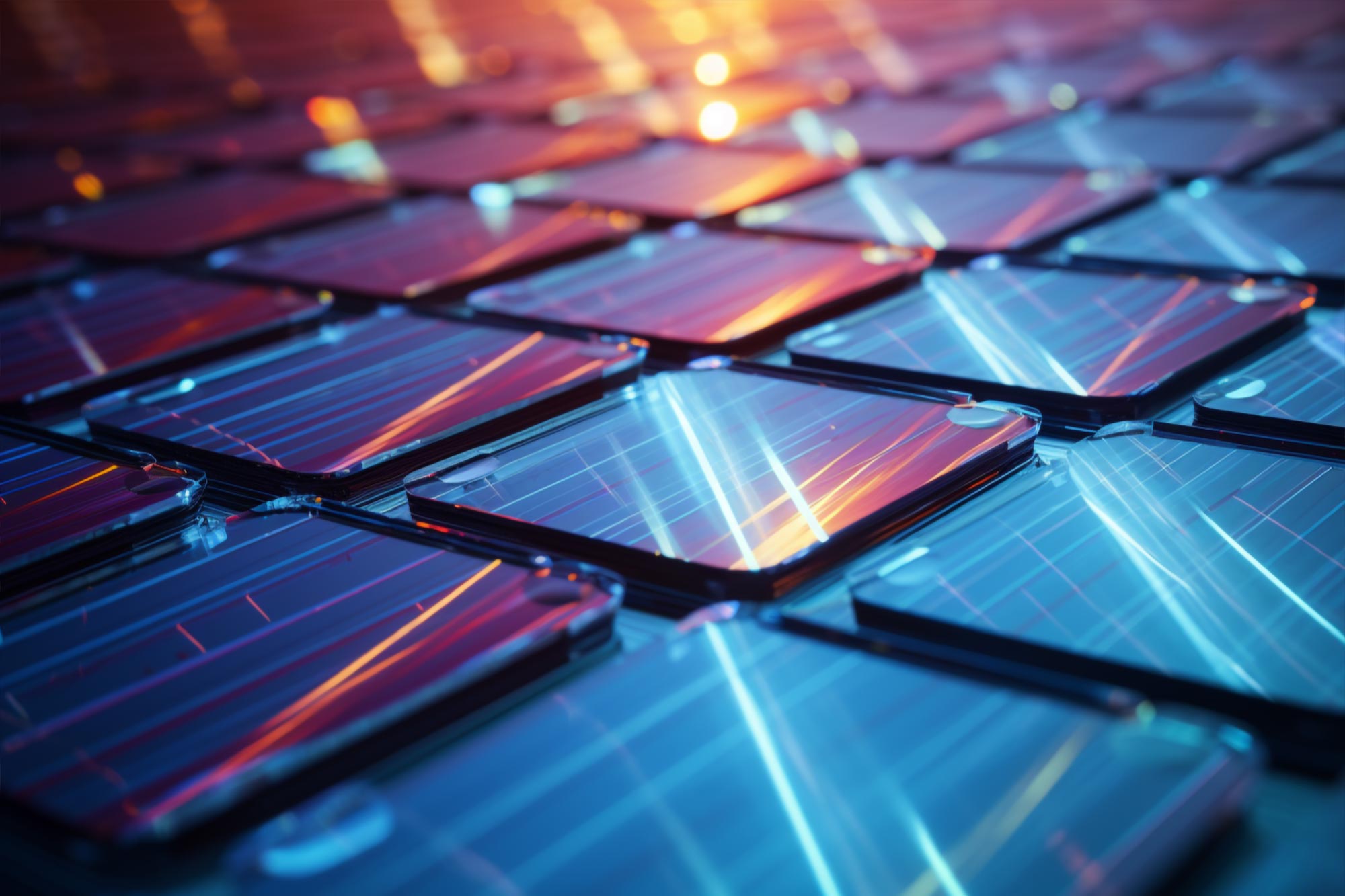
    Researchers at Åbo Akademi University discovered and eliminated a previously unknown loss mechanism in organic solar cells, significantly improving their efficiency and lifespan. Their method achieved over 18% efficiency and a record lifespan of 24,700 hours, paving the way for more durable and commercially viable solar technology. (Artist’s concept). Credit: SciTechDaily.com

    Researchers enhanced organic solar cell efficiency and stability by eliminating a loss mechanism using a SiOxNy passivation layer, achieving record-breaking performance and longevity.

    Researchers at Åbo Akademi University in Finland have discovered and eliminated a previously unknown loss mechanism in organic solar cells, significantly improving their efficiency and extending their lifespan. This breakthrough offers valuable insights into enhancing the future performance and stability of organic solar technology.

    The study was conducted by the Organic Electronics Research Group at Åbo Akademi University in collaboration with Professor Chang-Qi Ma’s team at the Suzhou Institute for Nano-Tech and Nano-Bionics. Key contributors from Åbo Akademi University include Ronald Österbacka, Sebastian Wilken, and Oskar Sandberg.

    Record-Breaking Efficiency and Longevity

    The study demonstrated an outstanding efficiency of over 18% in structure-inverted solar cells with a 1cm2 area. It also achieved the highest reported lifespan of organic solar cells to date, reaching 24,700 hours under white light illumination, which corresponds to a predicted operational life of more than 16 years.

    Organic photovoltaics are interesting in terms of commercialisation because they are light, flexible and have an energy-efficient manufacturing process. The power conversion efficiency has increased dramatically over the last five years, with the best organic solar cells, which are based on a so-called conventional structure, reaching over 20% in the lab.

    However, the employed materials are susceptible to degradation when exposed to sunlight and air, and the long-term stability of these cells still requires improvements to make them widely available.

    Enhancing Stability Through Inverted Structures

    In terms of lifetime, it is beneficial that the topmost contact layer of the solar cell is made from the most durable material. These structure-inverted, or n-i-p solar cells, are a more stable option, although their power conversion efficiency still lags behind that of conventional designs. The researchers’ discovery shows a promising way to improve both the performance and stability of these structurally inverted organic solar cells.

    The work identified a previously unknown loss mechanism in organic solar cells and a way to overcome it. The bottom contact of these devices, made from metal oxides such as zinc oxide, creates a narrow recombination area leading to a loss of photocurrent. By applying a thin, solvent-processed silicon oxide nitrate (SiOxNy) passivation layer on the bottom contact, the recombination area is eliminated, resulting in improved efficiency. The work underlines the potential for using the method in the large-scale production of efficient and stable organic solar cells.

    Reference: “Inverted organic solar cells with an in situ-derived SiOxNy passivation layer and power conversion efficiency exceeding 18%” by Bowen Liu, Oskar J. Sandberg, Jian Qin, Yueying Liu, Sebastian Wilken, Na Wu, Xuelai Yu, Jin Fang, Zhiyun Li, Rong Huang, Wusong Zha, Qun Luo, Hongwei Tan, Ronald Österbacka and Chang-Qi Ma, 9 January 2025, Nature Photonics.
    DOI: 10.1038/s41566-024-01574-0

    Never miss a breakthrough: Join the SciTechDaily newsletter.
    Follow us on Google and Google News.

    Energy Photovoltaics Popular Renewable Energy Solar Cells
    Share. Facebook Twitter Pinterest LinkedIn Email Reddit

    Related Articles

    Revolutionary One-Atom-Thick Ribbons Set To Transform Batteries and Solar Cells

    Solar’s Slim Solution: The Rise of High-Efficiency Thin Silicon Cells

    Major Power Efficiency Boost for Flexible Solar Cells

    New Photovoltaic Materials Developed by Stanford Scientists for Ultrathin, Lightweight Solar Panels

    NREL Develops Switchable Photovoltaic Windows

    New Shortcut Simplifies the Production of Solar Cells

    Squaraine Dye Improves Polymer Solar Cell Efficiency

    First All Carbon Solar Cell Made From Nanotubes and Buckyballs

    Highly Transparent Polymer Solar Cell Produces Energy by Absorbing Near-Infrared Light

    1 Comment

    1. Aum on January 17, 2025 10:38 am

      Nice to know hope this information is true

      Reply
    Leave A Reply Cancel Reply

    • Facebook
    • Twitter
    • Pinterest
    • YouTube

    Don't Miss a Discovery

    Subscribe for the Latest in Science & Tech!

    Trending News

    Scientists Uncover Potential Brain Risks of Popular Fish Oil Supplements

    Scientists Discover a Surprising Way To Make Bread Healthier and More Nutritious

    After 60 Years, Scientists Uncover Unexpected Brain Effects of Popular Diabetes Drug Metformin

    New Research Uncovers Hidden Side Effects of Popular Weight-Loss Drugs

    Scientists Rethink Extreme Warming After Surprising Ocean Discovery

    Landmark Study Links Never Marrying to Significantly Higher Cancer Risk

    Researchers Discover Unknown Beetle Species Just Steps From Their Lab

    Largest-Ever Study Finds Medicinal Cannabis Ineffective for Anxiety, Depression, PTSD

    Follow SciTechDaily
    • Facebook
    • Twitter
    • YouTube
    • Pinterest
    • Newsletter
    • RSS
    SciTech News
    • Biology News
    • Chemistry News
    • Earth News
    • Health News
    • Physics News
    • Science News
    • Space News
    • Technology News
    Recent Posts
    • Scientists Discover Caffeine Can Repair Key Memory Circuits After Sleep Loss
    • Strange 65-Foot Dinosaur Discovered in Argentina
    • Researchers Uncover Source of Strange Deformation in Earth’s Largest Continental Rift
    • Scientists Solve Mystery of Where the Colorado River Vanished Millions of Years Ago
    • Not Just Alzheimer’s: Scientists Uncover Clues to a Second, Overlooked Disorder
    Copyright © 1998 - 2026 SciTechDaily. All Rights Reserved.
    • Science News
    • About
    • Contact
    • Editorial Board
    • Privacy Policy
    • Terms of Use

    Type above and press Enter to search. Press Esc to cancel.