
Close Menu
    Facebook X (Twitter) Instagram
    SciTechDaily
    • Biology
    • Chemistry
    • Earth
    • Health
    • Physics
    • Science
    • Space
    • Technology
    Facebook X (Twitter) Pinterest YouTube RSS
    SciTechDaily
    Home»Technology»First All Carbon Solar Cell Made From Nanotubes and Buckyballs
    Technology

    First All Carbon Solar Cell Made From Nanotubes and Buckyballs

    By SciTechDailyNovember 2, 2012No Comments3 Mins Read
    Facebook Twitter Pinterest Telegram LinkedIn WhatsApp Email Reddit
    Share
    Facebook Twitter LinkedIn Pinterest Telegram Email Reddit
    all-carbon-solar-cell
    The all-carbon solar cell consists of a photoactive layer, which absorbs sunlight, sandwiched between two electrodes. Credit: Mark Shwartz/Stanford

    Scientists at Stanford University have put together the first solar cell that’s entirely made up of carbon, which is a promising alternative to the expensive materials used in photovoltaic cells today.

    The scientists published their findings in the journal ACS Nano. Carbon has the potential to deliver high performance at low cost, states Zhenan Bao, a chemical engineer, at Stanford University. This is the first demonstration of a working solar cell in which all of its components are made out of carbon.
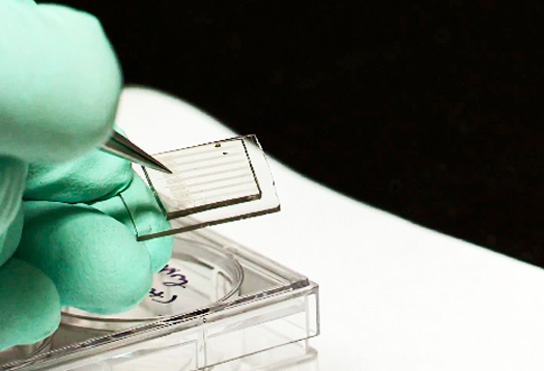
    experimental-carbon-solar-cell
    The thin film prototype is made of carbon materials that can be coated from solution. Credit: Stanford University

    Unlike rigid silicon solar panels, these thin prototypes are made up of carbon materials that can be coated from a solution. This coating technique also has the potential to reduce manufacturing costs. The processing of silicon-based solar cells requires a lot of steps, but Stanford’s device can be built using simple coating methods that don’t require expensive tools or machines.

    The experimental solar cell consists of a photoactive layer sandwiched between two electrodes. Instead of using silver and indium tin oxide (ITO) found in conventional electrodes, they used electrodes with graphene and carbon nanotubes. For the active layer, they used a material that was made up of carbon nanotubes and buckyballs.

    The research team has filed a patent for their device. One drawback of this prototype is that it primarily absorbs near-infrared wavelengths of light, contributing to an efficiency of less than 1%, which is much lower than commercially available cells. With better materials and processing techniques, the researchers believe that the efficiency will dramatically increase.

    The team is looking at a variety of ways to improve efficiency. “Roughness can short-circuit the device and make it hard to collect the current,” Bao said. “We have to figure out how to make each layer very smooth by stacking the nanomaterials really well.” The ability of carbon solar cells to outperform conventional devices under extreme conditions may overcome the need for greater efficiency, but that remains to be seen.

    Reference: “Evaluation of Solution-Processable Carbon-Based Electrodes for All-Carbon Solar Cells” by Marc P. Ramuz, Michael Vosgueritchian, Peng Wei, Chenggong Wang, Yongli Gao, Yingpeng Wu, Yongsheng Chen and Zhenan Bao, 31 October 2012, ACS Nano.
    DOI: 10.1021/nn304410w

    Never miss a breakthrough: Join the SciTechDaily newsletter.
    Follow us on Google and Google News.

    Green Technology Nanotechnology Photovoltaics Popular Renewable Energy Solar Cells
    Share. Facebook Twitter Pinterest LinkedIn Email Reddit

    Related Articles

    New Shortcut Simplifies the Production of Solar Cells

    New Type of CNT Solar Cell is Twice as Efficient as Its Predecessors

    Squaraine Dye Improves Polymer Solar Cell Efficiency

    New Carbon Films Pave the Way for the Next Generation of Solar Cells

    Princeton’s Nanomesh Triples Solar Cell Efficiency

    Highly Transparent Polymer Solar Cell Produces Energy by Absorbing Near-Infrared Light

    All-Carbon Photovoltaic Cell to Harness Infrared Light

    Textured Surface Maintains Efficiency and Reduces Thickness of Silicon Solar Cells

    Nanotextures Make Anti-Fogging, Self-Cleaning and Glare-Free Glass

    Leave A Reply Cancel Reply

    • Facebook
    • Twitter
    • Pinterest
    • YouTube

    Don't Miss a Discovery

    Subscribe for the Latest in Science & Tech!

    Trending News

    Scientists May Have Found the Key to Jupiter and Saturn’s Moon Mystery

    Scientists Uncover Brain Changes That Link Pain to Depression

    Saunas May Do More Than Raise Body Temperature – They Activate Your Immune System

    Exercise in a Pill? Metformin Shows Surprising Effects in Cancer Patients

    Hidden Oceans of Magma Could Be Protecting Alien Life

    New Study Challenges Alzheimer’s Theories: It’s Not Just About Plaques

    Artificial Sweeteners May Harm Future Generations, Study Suggests

    Splashdown! NASA Artemis II Returns From Record-Breaking Moon Mission

    Follow SciTechDaily
    • Facebook
    • Twitter
    • YouTube
    • Pinterest
    • Newsletter
    • RSS
    SciTech News
    • Biology News
    • Chemistry News
    • Earth News
    • Health News
    • Physics News
    • Science News
    • Space News
    • Technology News
    Recent Posts
    • Researchers Capture Quantum Interference in One of Nature’s Rarest Atoms
    • Ancient DNA Reveals Irish Goats Have a 3,000-Year-Old Lineage Still Alive Today
    • Historians Reveal Secrets of the Strange Hat Wars That Shook Early Modern England
    • “A Plague Is Upon Us”: The Mass Death That Changed an Ancient City Forever
    • This Strange Material Can Turn Superconductivity on and off Like a Switch
    Copyright © 1998 - 2026 SciTechDaily. All Rights Reserved.
    • Science News
    • About
    • Contact
    • Editorial Board
    • Privacy Policy
    • Terms of Use

    Type above and press Enter to search. Press Esc to cancel.