
Close Menu
    Facebook X (Twitter) Instagram
    SciTechDaily
    • Biology
    • Chemistry
    • Earth
    • Health
    • Physics
    • Science
    • Space
    • Technology
    Facebook X (Twitter) Pinterest YouTube RSS
    SciTechDaily
    Home»Health»Study Reveals a Promising New Target to Treat Type 2 Diabetes
    Health

    Study Reveals a Promising New Target to Treat Type 2 Diabetes

    By Ziba Kashef, Yale UniversityAugust 31, 2016No Comments3 Mins Read
    Facebook Twitter Pinterest Telegram LinkedIn WhatsApp Email Reddit
    Share
    Facebook Twitter LinkedIn Pinterest Telegram Email Reddit
    Yale Study Reveals Protein to Target in Type 2 Diabetes
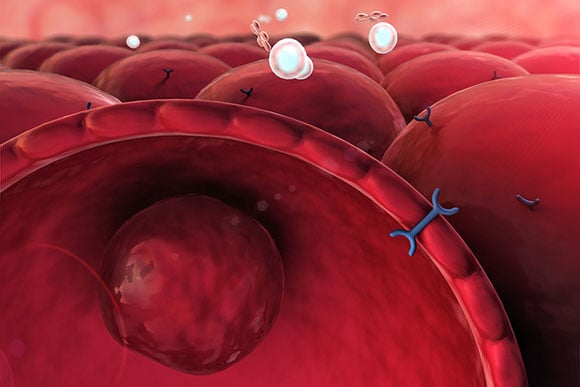
    MARCH1, a protein elevated in obesity, impairs insulin by breaking down its cell surface receptor. This discovery points to MARCH1 as a potential target for type 2 diabetes drugs.

    Scientists at Yale University reveal promising new target for drugs to treat type 2 diabetes.

    When the body’s cells don’t respond normally to insulin — a condition known as insulin resistance — blood glucose levels can increase, resulting in type 2 diabetes. Researchers have long known that insulin resistance is linked to defects in the insulin receptor (which controls glucose uptake) in multiple organs, including the liver.

    To study the underlying mechanism, a team of researchers led by Narendra Wajapeyee, assistant professor of pathology, and Gerald Shulman, professor of cellular and molecular physiology and internal medicine, used a genomic technique to screen more than 600 proteins. They found that one of the proteins, MARCH1, impairs insulin by promoting the breakdown of the insulin receptor on the cell surface. MARCH1, which is increased in obese individuals, could be a promising new target for drugs to treat type 2 diabetes, they said. Lead authors on the study were Arvind Nagarajan and Max Petersen.

    Abstract

    Insulin resistance is a key driver of type 2 diabetes (T2D) and is characterized by defective insulin receptor (INSR) signaling. Although surface INSR downregulation is a well-established contributor to insulin resistance, the underlying molecular mechanisms remain obscure. Here we show that the E3 ubiquitin ligase MARCH1 impairs cellular insulin action by degrading cell surface INSR. Using a large-scale RNA interference screen, we identify MARCH1 as a negative regulator of INSR signaling. March1 loss-of-function enhances, and March1 overexpression impairs, hepatic insulin sensitivity in mice. MARCH1 ubiquitinates INSR to decrease cell surface INSR levels, but unlike other INSR ubiquitin ligases, MARCH1 acts in the basal state rather than after insulin stimulation. Thus, MARCH1 may help set the basal gain of insulin signaling. MARCH1 expression is increased in white adipose tissue of obese humans, suggesting that MARCH1 contributes to the pathophysiology of T2D and could be a new therapeutic target.

    Reference: “MARCH1 regulates insulin sensitivity by controlling cell surface insulin receptor levels” by Arvindhan Nagarajan, Max C. Petersen, Ali R. Nasiri, Gina Butrico, Annie Fung, Hai-Bin Ruan, Romy Kursawe, Sonia Caprio, Jacques Thibodeau, Marie-Claude Bourgeois-Daigneault, Lisha Sun, Guangping Gao, Sanjay Bhanot, Michael J. Jurczak, Michael R. Green, Gerald I. Shulman and Narendra Wajapeyee, 31 August 2016, Nature Communications.
    DOI: 10.1038/ncomms12639

    Never miss a breakthrough: Join the SciTechDaily newsletter.
    Follow us on Google and Google News.

    Cell Biology Diabetes Disease Molecular Physiology Pathology Yale University
    Share. Facebook Twitter Pinterest LinkedIn Email Reddit

    Related Articles

    Yale Researchers Reveal Genes Behind Aggressive Ovarian and Endometrial Cancers

    Researchers Identify a New Way to Suppress Lung Tumors

    Study Shows Diabetes Drug Significantly Reduces Risk of Heart Failure

    New Synthetic Process Provides a Better View of Diabetes, Inflammation, and Human Aging

    Yale Researchers Reveal How HIV Spreads in Real Time

    Lysosomes May Contribute to Alzheimer’s Disease

    Scientists Reverse Type 2 Diabetes and Fatty Liver Disease

    Unique Drug Combinations Show Positive Results in Fighting Late-Stage Melanoma

    Intensive Glycemic Control Does Not Definitively Reduce the Risk of Impaired Kidney Function

    Leave A Reply Cancel Reply

    • Facebook
    • Twitter
    • Pinterest
    • YouTube

    Don't Miss a Discovery

    Subscribe for the Latest in Science & Tech!

    Trending News

    AI Could Detect Early Signs of Alzheimer’s in Under a Minute – Far Before Traditional Tests

    What if Dark Matter Has Two Forms? Bold New Hypothesis Could Explain a Cosmic Mystery

    This Metal Melts in Your Hand – and Scientists Just Discovered Something Strange

    Beef vs. Chicken: Surprising Results From New Prediabetes Study

    Alzheimer’s Breakthrough: Scientists Discover Key Protein May Prevent Toxic Protein Clumps in the Brain

    Quantum Reality Gets Stranger: Physicists Put a Lump of Metal in Two Places at Once

    Scientists May Have Found the Key to Jupiter and Saturn’s Moon Mystery

    Scientists Uncover Brain Changes That Link Pain to Depression

    Follow SciTechDaily
    • Facebook
    • Twitter
    • YouTube
    • Pinterest
    • Newsletter
    • RSS
    SciTech News
    • Biology News
    • Chemistry News
    • Earth News
    • Health News
    • Physics News
    • Science News
    • Space News
    • Technology News
    Recent Posts
    • Students Found an Ancient Star That Shouldn’t Be in the Milky Way
    • Astronomers Solve 50-Year Mystery and Reveal Hidden Culprit Behind Strange X-Ray Emissions
    • One of the Universe’s Largest Stars May Be Getting Ready To Explode
    • Scientists Discover Enzyme That Could Supercharge Ozempic-Like Weight Loss Drugs
    • Asthma and Depression Don’t Mix the Way Scientists Expected
    Copyright © 1998 - 2026 SciTechDaily. All Rights Reserved.
    • Science News
    • About
    • Contact
    • Editorial Board
    • Privacy Policy
    • Terms of Use

    Type above and press Enter to search. Press Esc to cancel.