
Targeting Specific Fall-Risk Factors Could Improve Fall Screening and Prevention Strategies
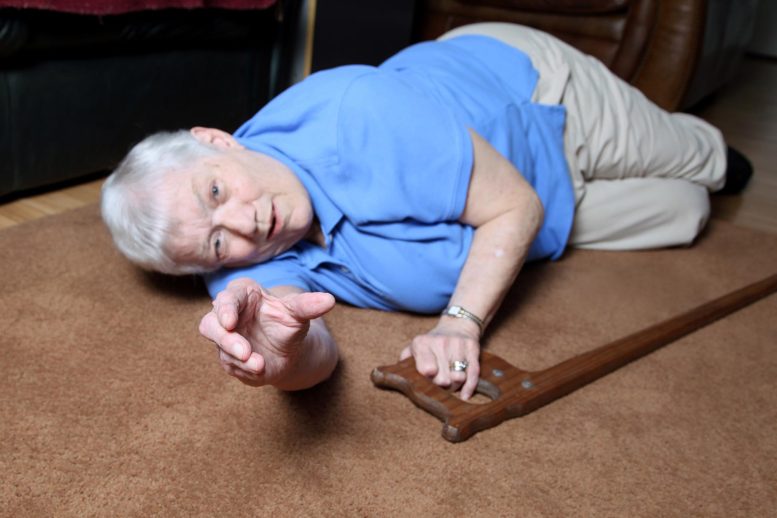
Falls among the elderly are an increasingly important public health concern, causing millions of injuries in older adults each year. Older adults living with dementia have twice the risk of falling and three times the risk of incurring serious fall-related injuries, like fractures, compared to those without dementia. For older adults with dementia, even minor fall-related injuries can lead to hospitalization and nursing home admission. A new study from researchers in Drexel University’s College of Nursing and Health Professions, has shed light on the many and varied fall-risk factors facing older adults in community-living environments.
Published today (January 12) in Alzheimer’s & Dementia: The Journal of the Alzheimer’s Association, the research led by Safiyyah Okoye, PhD, an assistant professor at Drexel, and Jennifer L. Wolff, PhD, a professor at Johns Hopkins Bloomberg School of Public Health, examined a comprehensive set of potential fall-risk factors — including environmental factors, in addition to health and function — in older community-living adults in the United States, both with and without dementia.
“Examining the multiple factors, including environmental ones like a person’s home or neighborhood, is necessary to inform fall-risk screening, caregiver education and support, and prevention strategies for this high-risk population of older adults,” said Okoye.
CDC Statistics on Older Adult Falls
- In 2019, falls among adults aged 65 and older resulted in over 34,000 deaths, making it the top cause of injury-related deaths for that demographic.
- Emergency departments recorded 3 million visits for older adult falls in 2019.
- Older adult falls cost $50 billion in medical costs annually, with 75% paid by Medicare and Medicaid.
Despite awareness of this elevated risk, there are very few studies that have examined fall-risk factors among people with dementia living in a community setting (not nursing homes or other residential facilities). The studies that do exist, overwhelmingly focus on health and function factors. According to the authors, this is the first nationally representative study to compare a comprehensive set of potential risk factors for falls for older Americans living with dementia to those without dementia.
The research team examined data from the 2015 and 2016 National Health and Aging Trends Study (NHATS), a population-based survey of health and disability trends and trajectories of adults 65 and older in the U.S. They were able to obtain potential sociodemographic, health and function predictors of falls, as well as potential social and physical environmental predictors.
Data from NHATS showed that nearly half (45.5%) of older adults with dementia had experienced one or more falls in 2016, compared to less than one-third (30.9%) of older adults without dementia.
Key Risk Factors Identified for Older Adults with Dementia
Among older adults living with dementia, three characteristics stood out as significantly associated with a greater likelihood of falls: a history of falling the previous year; impaired vision; and living with others (versus alone). For older adults without dementia, financial hardship, a history of falling, fear of falling, poor lower extremity performance, depressive symptoms, and home disrepair were strongly associated with an increased risk of falls.
While prior history of falling and vision impairment are well-known risk factors for falls among older adults in general; the researchers’ findings indicate that these were strong risk factors for falls among people living with dementia. According to the team, this suggests that people living with dementia should be assessed for presence of these characteristics. If they’re present, the individuals should receive further assessment and treatment, including examining their feet and footwear, assessing their environment and ability to carry out daily living activities, among other items.
The finding that older adults living with dementia who lived with a spouse or with non-spousal others had higher odds of experiencing a fall, compared to those who lived alone, highlights that caregiver support and education are understudied components of fall prevention programs for older adults with dementia who live with family caregivers, and deserve greater attention from clinicians, researchers, and policymakers.
Multidimensional Nature of Fall Risk in Dementia
“Overall, our findings demonstrate the importance of understanding and addressing fall risk among older adults living with dementia,” said Okoye. “It confirms that fall risk is multidimensional and influenced by environmental context in addition to health and function factors.”
The results of the study indicate the need to further investigate and design fall-prevention interventions, specifically for people living with dementia.
“To decrease the high rates of falls among older adults with dementia, additional tailored fall-risk screening, and fall-prevention interventions should be developed and tested,” said Okoye.
Reference: “Predictors of falls in older adults with and without dementia” by Safiyyah M. Okoye, Chanee D. Fabius, Lisa Reider and Jennifer L. Wolff, 12 January 2023, Alzheimer’s & Dementia.
DOI: 10.1002/alz.12916
Funding: NIH/National Institutes of Health
Never miss a breakthrough: Join the SciTechDaily newsletter.
Follow us on Google and Google News.