
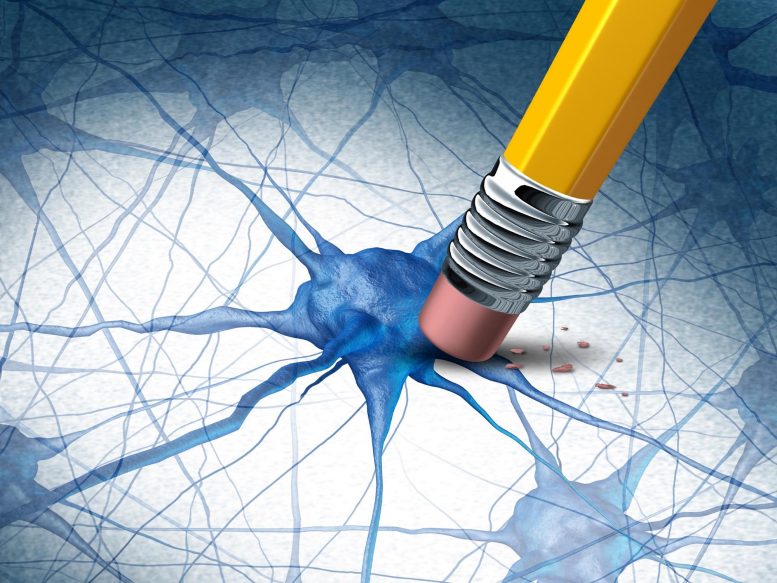
Psychotic Disorders Can Increase Your Risk of Dementia by 250%
According to a review of the existing evidence conducted by University College London researchers, people with psychotic disorders like schizophrenia are 2.5 times more likely than those without a psychotic disorder to eventually develop dementia.
The recent systematic review and meta-analysis, which was published in the journal Psychological Medicine, indicated that psychotic disorders may be more closely related to dementia than other mental disorders such as depression or anxiety.
Senior author Dr. Jean Stafford (MRC Unit for Lifelong Health & Ageing at UCL) said: “We found that having a diagnosis of a psychotic disorder is linked to a much higher risk of developing dementia later in life. Our findings add to evidence that protecting people’s mental health throughout life could help to prevent dementia.”
The study is the first high-quality systematic review looking at a range of psychotic disorders and their association with dementia risk. Schizophrenia and other related psychotic disorders are severe illnesses that involve symptoms such as hallucinations and delusions, and social withdrawal. Many people also experience impairments in cognitive and functional skills.
The researchers compiled data from 11 studies that were conducted in nine different nations across four continents with a combined total of over 13 million participants.
They discovered that regardless of the age at which someone initially had their mental illness, there was a greater risk of dementia later in life across multiple psychotic disorders. Some studies involved individuals diagnosed with psychotic disorders as young adults, with decades of follow-up. Additionally, they discovered that individuals with a history of psychotic disorders are much more likely to get a dementia diagnosis when they are still in their 60s.
Modifiable Risk Factors for Dementia Prevention
The findings add to the list of modifiable risk factors for dementia. UCL researchers have previously found that four in 10 dementia cases could be prevented or delayed by targeting risk factors from across the lifespan. The current study’s joint senior author, Dr. Vasiliki Orgeta (UCL Psychiatry), previously found that PTSD increases the likelihood of dementia, and while depression and anxiety also increase the risk, these latest findings suggest that psychotic disorders have the strongest association with dementia risk.
The researchers were not able to confirm the cause of the association, whether it is due to the mental illness itself, or perhaps because psychotic disorders increase the likelihood of conditions that in turn increase the risk of dementia. Some of the association may be because psychotic symptoms could be early markers of dementia for some people, but the fact that some of the studies had very long follow-up periods and included people experiencing psychosis at young ages suggests this is not the only explanation.
Dr. Orgeta said: “People with psychotic disorders are more likely to have other health conditions such as cardiovascular disease or obesity, which can increase the risk of dementia, while they are also more likely to have a poor diet, smoke or use drugs, which may harm their health in ways that could increase their likelihood of developing dementia.”
Potential Cognitive Links Between Psychosis and Dementia
Lead author Sara El Miniawi (UCL Psychiatry), who completed the research as her MSc dissertation, said: “Cognitive impairment and hallucinations can be symptoms of both dementia and psychotic disorders, so it is possible there could be a link between the two illnesses. This impairment could also limit people’s cognitive reserve, and increase their vulnerability to dementia symptoms.”
The researchers were not able to determine whether effective treatment for psychotic disorders could mitigate the dementia risk, or whether antipsychotic medication could be a factor, as there was limited and conflicting evidence.
Sara El Miniawi added: “As people with psychotic disorders face a higher risk of numerous other health conditions, managing their overall physical and mental health is very important, and here we found that health professionals working with them should also be watchful for any signs of cognitive decline.”
Reference: “Non-affective psychotic disorders and risk of dementia: a systematic review and meta-analysis” by Sara El Miniawi, Vasiliki Orgeta and Jean Stafford, 6 October 2022, Psychological Medicine.
DOI: 10.1017/S0033291722002781
The study was funded by the NIHR University College London Hospitals Biomedical Research Center.
Never miss a breakthrough: Join the SciTechDaily newsletter.
Follow us on Google and Google News.
7 Comments
It’s the medication given to those with psychotic disorders that’s causing the dementia … as well as the weight problems, diabetes, heart disease, and everything else that goes along with metabolic disorder.
But this is all pretty well known. Other countries don’t constantly medicate psychotic disorders, only when in crisis, and they have better outcomes in all regards.
I’ve had a hunch about this for years. Have known more than one person with serious personality disorders who ended up with dementia. None of them were medicated as far as I know, because they didn’t think they had a problem.
Antipsychotic medication is known to shrink the brain so it stands to reason this will have cognitive impairment and long term negative outcomes for those taking them. Finland is leading the way to treat patients without meds and are having excellent results. Other Western counties are too far behind and patients are suffering.
May I ask how you know re finland? Do you have a contact there? Thanks
I completely agree w those above 100%…besides the fact that many people fall between the cracks of our health system while attempting to get help emotionally. It takes an act of Congress to get assistance even w insurance. Also note: nurturing of elderly is rare w out much family involved, no different than a newborn “love” & “caring” consistently is needed for decent mental health. Thus, there is no bubble to keep the world and media out of our lives only meds to help us sustain sanity. Just an idea but, instead of spending more on studies of mental illnesses after neglect, anxiety, depression; let’s help those w EARLIER ONSET issues to a label isn’t needed nor the stigma.
It’s been long known that shrink meds only make things worse. U r better off to be born in India where they r too poor to afford shrink meds
RIP the American in a psychiatric ward