
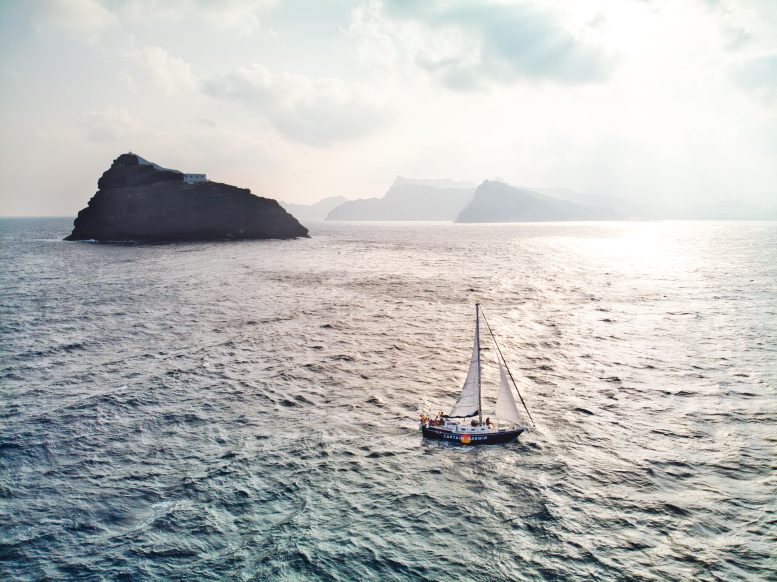
The Captain Darwin expedition revisited Charles Darwin’s path, offering scientists like Eduardo Sampaio the opportunity to explore the Cape Verde Islands’ underwater biodiversity. This Citizen Science initiative demonstrates the value of collaborative research and support for scientists from under-resourced areas.
Eduardo Sampaio is certain that Charles Darwin would have been ecstatic if he had the opportunity to explore the underwater world of the Cape Verde Islands. The species-rich landscape would have left a lasting impression on Darwin, who, due to lack of diving equipment, had described the islands as barren in his famous journal The Voyage of the Beagle.
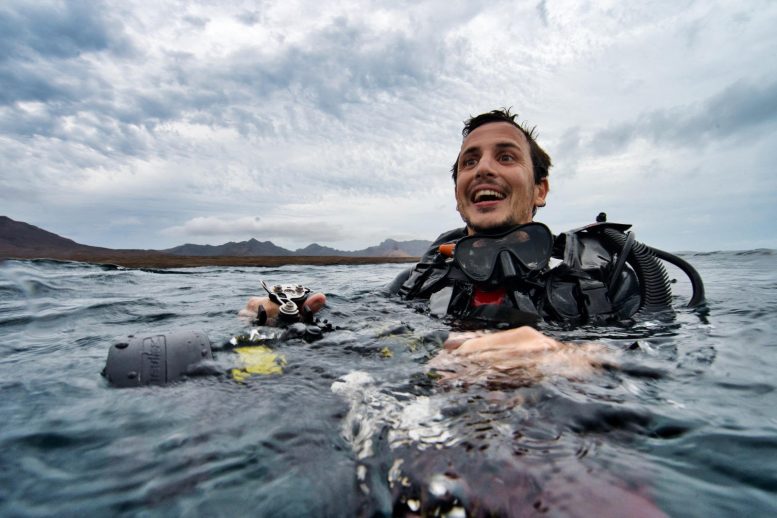
Eduardo Sampaio, an affiliate member of the Cluster of Excellence “Centre for the Advanced Study of Collective Behaviour” (CASCB) at the University of Konstanz, had quite the opposite experience. He was invited on board the ship Captain Darwin by filmmaker Victor Rault to continue his octopus research.
Victor Rault, 30, set sail from Plymouth on the Captain Darwin in 2021, following in the footsteps of Darwin’s HMS Beagle. He wants to explore how the ecosystem has changed since Darwin’s voyage on the HMS Beagle in 1832. Researchers and citizens have been invited to travel along and conduct experiments in the spirit of Darwin. “When Victor told me about his project, I was baffled”, recalls biologist Eduardo Sampaio from Portugal. He says: “It was immediately clear to me that it’s an excellent idea to retrace the path of Charles Darwin. I was more than keen to jump on board!”
What Do Octopuses See in a Mirror Image?
Eduardo Sampaio spent ten days on the Captain Darwin. The focus was on the dives: The biologist, who works with the Max Planck Institute of Animal Behavior, actually wanted to observe the joint hunting behavior of octopuses and fish. However, as it was mating season, the animals rarely showed themselves. If they came out, they wanted to interact with other octopuses and did not hunt at all.
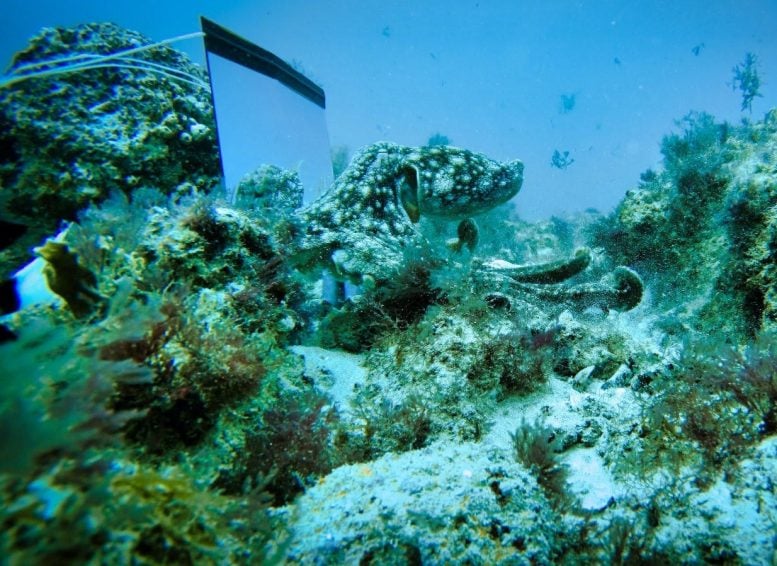
So, he spontaneously changed his research project and conducted a mirror test instead: “We wanted to determine whether the octopuses could realize that they were seeing another individual in the mirror.” In the evening on board, the crew watched the video footage: “When the octopus approached the mirror, it changed color – but only the side facing the mirror changed. That was very fascinating to watch,” says Eduardo Sampaio. In a further experiment, the researcher now wants to test whether the octopuses can even recognize themselves.
Bringing Darwin’s Research Style Up to Date
In the evenings, Eduardo Sampaio read Darwin’s The Origin of Species, because “it inspired me.” Often, he wondered: “How can we update Darwin’s kind of scientific work with the new methods we have today, like machine learning and computer vision, to better understand how animals move in their natural habitats or use different strategies to exploit social information?” He does not have an answer yet but may find it the next time he sails on the Captain Darwin.
Great Support for Scientists Who Do Not Have the Necessary Resources
Eduardo Sampaio will be back on board the Captain Darwin: “This trip, launched as a Citizen Science project, is a great support for researchers who don’t have the means to do this kind of field research, especially for researchers from disadvantaged areas and in countries where research structures are not so well equipped.” Much of the work that researchers usually have to handle themselves was taken over, such as obtaining permits, purchasing equipment, and raising funds.
“I also realized that citizens can play a much more active role in science than just collecting data,” says Eduardo Sampaio, who hopes that this sailing trip will be a prelude to more exciting Citizen Science expeditions.
Reference: “Citizen-led expeditions can generate scientific knowledge and prospects for researchers” by Eduardo Sampaio and Victor Rault, 15 November 2022, PLOS Biology.
DOI: 10.1371/journal.pbio.3001872
Never miss a breakthrough: Join the SciTechDaily newsletter.
Follow us on Google and Google News.