
Close Menu
    Facebook X (Twitter) Instagram
    SciTechDaily
    • Biology
    • Chemistry
    • Earth
    • Health
    • Physics
    • Science
    • Space
    • Technology
    Facebook X (Twitter) Pinterest YouTube RSS
    SciTechDaily
    Home»Earth»Antarctica Is Home to the World’s Largest Wetland
    Earth

    Antarctica Is Home to the World’s Largest Wetland

    By SciTechDailyNovember 1, 2012No Comments2 Mins Read
    Facebook Twitter Pinterest Telegram LinkedIn WhatsApp Email Reddit
    Share
    Facebook Twitter LinkedIn Pinterest Telegram Email Reddit
    antarctica-ice-shelf-lake
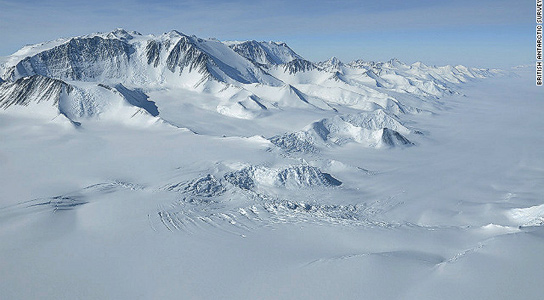
    Antarctica’s vast ice sheet bottom is wet, forming Earth’s largest wetland, possibly hosting microbial life within the glaciers. Credit: Image by British Antarctic Survey

    While to most observers, Antarctica is a barren wasteland, there are many who see it as something completely different. There’s a rich network of rivers and enormous lakes, which happen to be covered by ice.

    Thanks to radar imagery, John Priscu managed to see through the ice. The ice is several thousand meters thick at some points, and sandwiched in between the ice and rock, there are river systems that rival the Amazon in spatial extent feed lakes, and possibly fuel an entire hidden biosphere.
    blood-falls-antarctica
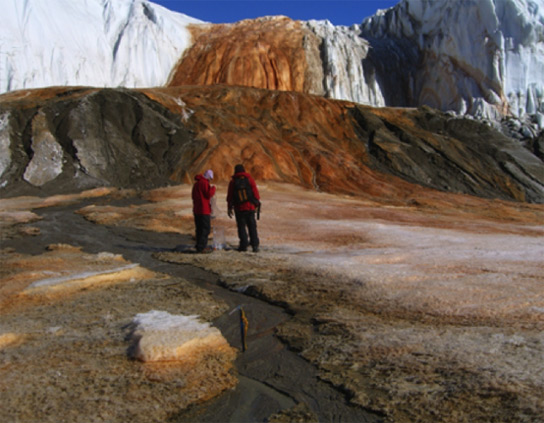
    Scientists examine the iron-tinged ice at Blood Falls, Antarctica. Credit: John Priscu

    Priscu presented at the Center for Dark Energy Biosphere Investigation, sites where he highlighted a few subglacial lakes, where exotic chemical mixtures and unique physical phenomenons converge to create bizarre environments.

    At the bottom of the Taylor Glacier, there is an icefall several stories tall and streaked with orange and red bands, known as Blood Falls. Over time, subglacial water lost its oxygen and got saltier, creating a viscous liquid brine. Water emerging from the base of the glacier contains Fe2+ due to anaerobic microbes. When the solution emerges, it’s quickly oxidized, which is why the icefall is red with rust.

    Satellite imagery has provided evidence of an active hydrologic cycle. At Adventurer Trench, the ice has moved up and down as subglacial lakes fill up and drain. The changes are as much as nine meters in two years and the flat surface indicates that there is a subglacial lake far below.

    The whole bottom of the Antarctic ice sheet is wet, and it’s Earth’s largest wetland. There could even be microbial life throughout the glaciers themselves.

    Never miss a breakthrough: Join the SciTechDaily newsletter.
    Follow us on Google and Google News.

    Antarctica Environment Environmental Microbiology Microbial Wetland
    Share. Facebook Twitter Pinterest LinkedIn Email Reddit

    Related Articles

    “Important and Unexpected Finding” – Formation of the West Antarctic Ice Sheet Was Very Different Than Previously Believed

    Global Warming Could Lead to the Melting of More Than a Third of Antarctic Ice Shelves, Huge Rise in Sea Levels

    Intense Atmospheric Rivers Help Create Massive Holes in Antarctic Sea Ice

    Plans to Protect Antarctic Sea Faces Difficult Challenges

    Antarctic Ecosystems Threatened by Invasive Alien Species and Climate Change

    Microbial Oasis Discovered Under Atacama Desert in Chile

    Russians Celebrate Drilling into Lake Vostok, Biggest Antarctic Subglacial Lake

    New Models Hone Picture of Climate Impact on Earth

    After 20 Years, Russian Drill Nears 14-Million-Year-Old Lake Vostok

    Leave A Reply Cancel Reply

    • Facebook
    • Twitter
    • Pinterest
    • YouTube

    Don't Miss a Discovery

    Subscribe for the Latest in Science & Tech!

    Trending News

    Bone-Strengthening Discovery Could Reverse Osteoporosis

    Scientists Uncover Hidden Trigger Behind Stem Cell Aging

    Scientists Find Way to Reverse Fatty Liver Disease Without Changing Diet

    Could Humans Regrow Limbs? New Study Reveals Promising Genetic Pathway

    Scientists Reveal Eating Fruits and Vegetables May Increase Your Risk of Lung Cancer

    Scientists Reverse Brain Aging With Simple Nasal Spray

    Scientists Uncover Potential Brain Risks of Popular Fish Oil Supplements

    Scientists Discover a Surprising Way To Make Bread Healthier and More Nutritious

    Follow SciTechDaily
    • Facebook
    • Twitter
    • YouTube
    • Pinterest
    • Newsletter
    • RSS
    SciTech News
    • Biology News
    • Chemistry News
    • Earth News
    • Health News
    • Physics News
    • Science News
    • Space News
    • Technology News
    Recent Posts
    • Scientists Decode Mysterious Magnetic “Maze Domains” To Boost EV Efficiency
    • Scientists Say This Fungus Could Survive the Trip to Mars
    • The Universe Is Expanding Too Fast and Scientists Can’t Explain Why
    • Gaining Weight Young May Be More Dangerous Than You Think
    • Scientists Discover Hidden Pathway Inside Catalysts That Defies Decades of Assumptions
    Copyright © 1998 - 2026 SciTechDaily. All Rights Reserved.
    • Science News
    • About
    • Contact
    • Editorial Board
    • Privacy Policy
    • Terms of Use

    Type above and press Enter to search. Press Esc to cancel.