

Our brain doesn’t just feel, it decides how much to feel. Researchers discovered a feedback loop that adjusts how sensitive we are to touch, depending on context. This dynamic brain circuit could help explain sensory fluctuations and traits linked to autism.
The cerebral cortex handles incoming sensory input through an intricate web of neural connections. But how exactly does the brain fine-tune these signals to shape what we perceive? Researchers at the University of Geneva (UNIGE) have uncovered a mechanism where specific projections from the thalamus influence the excitability of certain neurons.
Their findings, published in Nature Communications, highlight a previously unrecognized form of communication between two key brain regions: the thalamus and the somatosensory cortex. This discovery may explain why the same physical sensation can feel different at different times, and it could also shed light on the neural basis of certain mental health conditions.
Why the Same Touch Feels Different
Touching the same object can feel sharply defined one moment and strangely vague the next. These shifts in perception are tied to how the brain processes sensory information. For instance, feeling an object without seeing it might help us recognize it—or not—depending on the circumstances.
While scientists still do not fully understand why perception varies, they suspect factors such as focus, attention, or competing sensory input may play a role. What is clear is that when we experience touch, signals from the skin travel to a region of the brain known as the somatosensory cortex, which is specialized for interpreting these tactile messages.
“This alteration could play a role in certain pathologies, such as autism spectrum disorders.”
Before reaching the cortex, these signals pass through a dense network of neurons, including a central hub called the thalamus. Often described as the brain’s relay station, the thalamus is more than a passive conduit. It also receives messages back from the cortex, creating a loop of continuous two-way communication. Although the full purpose of this feedback loop remains uncertain, scientists are now asking whether it might actively shape how we interpret the world around us.
A New Modulatory Pathway
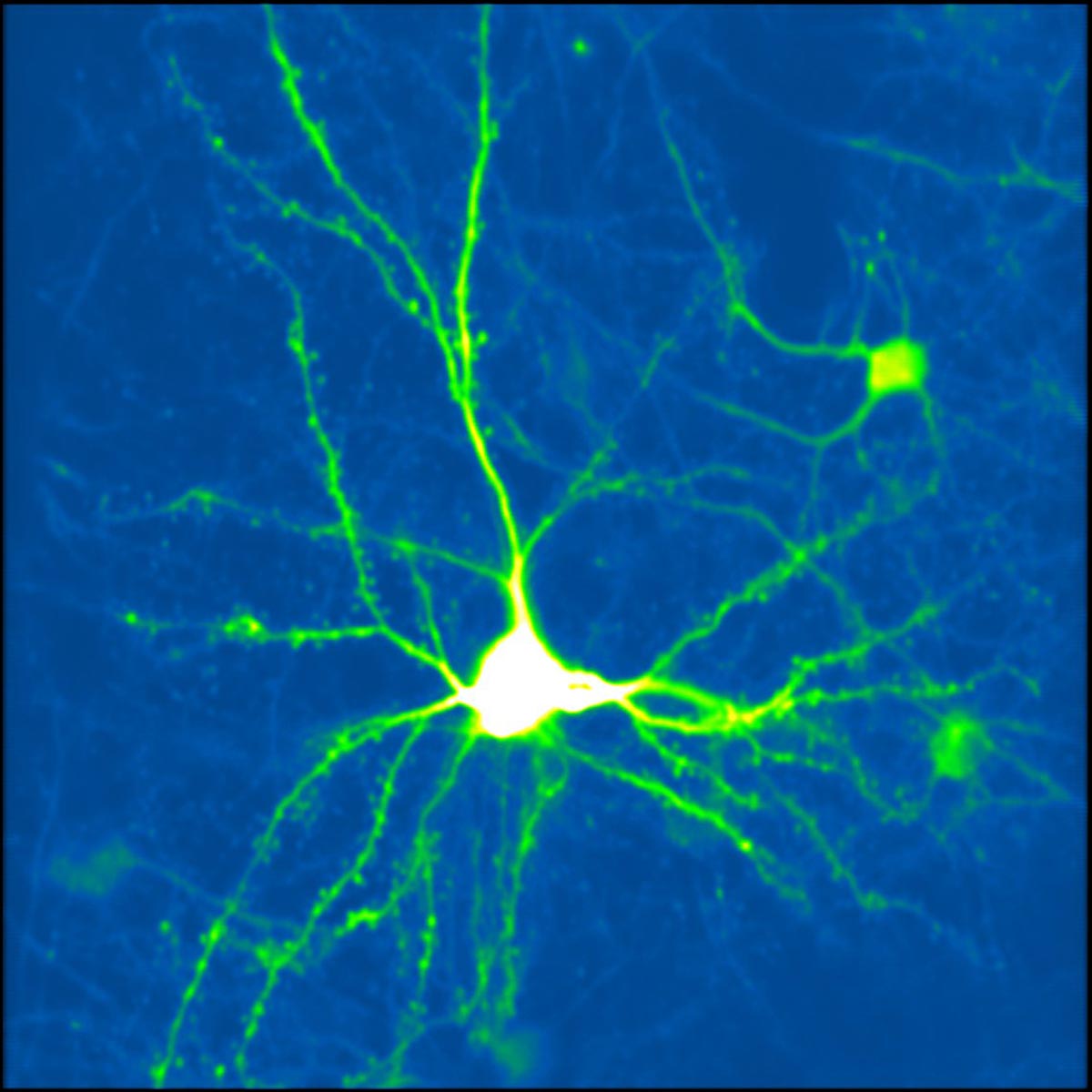
To explore this question, neuroscientists at UNIGE studied a region at the top of pyramidal neurons of the somatosensory cortex, rich in dendrites – extensions that receive electrical signals from other neurons.
“Pyramidal neurons have rather strange shapes. They are asymmetrical, both in shape and function. What happens at the top of the neuron is different from what happens at the bottom,” explains Anthony Holtmaat, full professor at the Department of Basic Neurosciences (NEUFO) and the Synapsy Centre for
Neuroscience Research for Mental Health at UNIGE’s Faculty of Medicine, and director of the study.
His team focused on a pathway in which the top of pyramidal neurons in mice receives projections from a specific part of the thalamus. By stimulating the animal’s whiskers – the equivalent of touch in humans – a precise dialogue between these projections and the dendrites of pyramidal neurons was revealed.
“What is remarkable, unlike the regular thalamic projections known to activate pyramidal neurons, is that the part of the thalamus providing feedback modulates their activity, in particular by making them more sensitive to stimuli,” says Ronan Chéreau, senior researcher at NEUFO and co-author of the study.
Glutamate’s Surprising New Role
Using cutting-edge techniques – imaging, optogenetics, pharmacology and, above all, electrophysiology – the research team was able to record the electrical activity of tiny structures such as dendrites. These approaches helped clarify how this modulation works at the synaptic level. Normally, the neurotransmitter glutamate acts as an activation signal. It helps neurons transmit sensory information by triggering an electrical response in the next neuron.
In this newly discovered mechanism, glutamate released from thalamic projections binds to an alternative receptor located in a specific region of the cortical pyramidal neuron. Rather than directly exciting the neuron, this interaction alters its state of responsiveness, effectively priming it for future sensory input. The neuron then becomes more easily activated, as if it were being conditioned to better respond to a future sensory stimulus.
“This is a previously unknown pathway for modulation. Usually, the modulation of pyramidal neurons is ensured by the balance between excitatory and inhibitory neurons, not by this type of mechanism,” explains Ronan Chéreau.
Implications for Perception and Disorders
By demonstrating that a specific feedback loop between the somatosensory cortex and the thalamus can modulate the excitability of cortical neurons, the study suggests that thalamic pathways do not simply transmit sensory signals, but also act as selective amplifiers of cortical activity.
“In other words, our perception of touch is not only shaped by incoming sensory data, but also by dynamic interactions within the thalamocortical network,” adds Anthony Holtmaat.
This mechanism could also contribute to understanding the perceptual flexibility observed in states of sleep or wakefulness, when sensory thresholds vary. Its alteration could also play a role in certain pathologies, such as autism spectrum disorders.
Reference: “Thalamocortical feedback selectively controls pyramidal neuron excitability” by Federico Brandalise, Ronan Chéreau, I-Wen Chen, David van Oorschot, Claudia Morin Raig, Tanika Bawa, Nandkishor Mule, Stéphane Pagès, Foivos Markopoulos and Anthony Holtmaat, 1 July 2025, Nature Communications.
DOI: 10.1038/s41467-025-60835-w
Never miss a breakthrough: Join the SciTechDaily newsletter.
Follow us on Google and Google News.