
A nearly complete fossil shows that one early dog combined climbing ability with a body unlike those of modern running canids.
For more than 30 years, a fossil roughly 30 million years old remained sealed inside rock in an Oregon museum collection. When paleontologists first recovered it, they believed it might belong to an oreodont, an abundant group of extinct mammals related to sheep, camels and pigs.
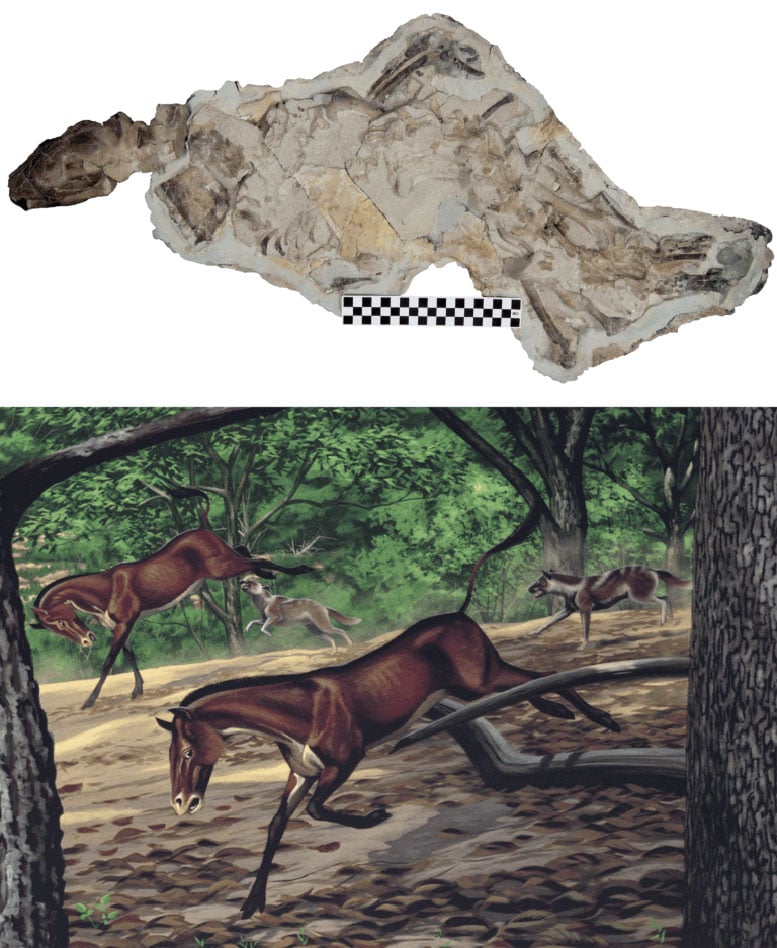
Researchers later recognized the specimen as an early dog. University of Michigan paleontologist Anne Kort has now identified it as one of the most complete pre-Ice Age dog fossils ever found in North America. The animal belongs to Mesocyon coryphaeus, a species named in 1879 that had previously been known only from individual skulls.
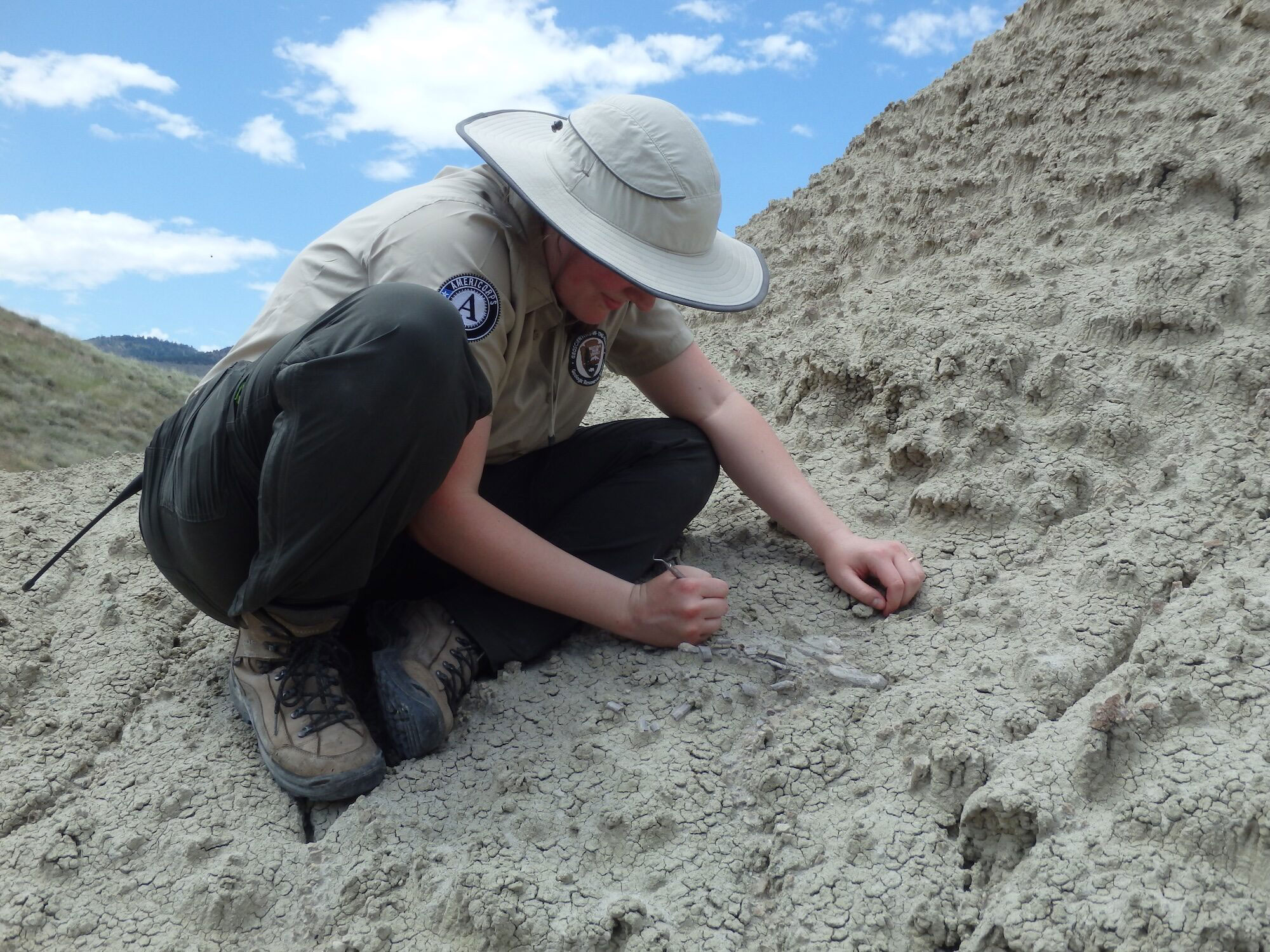
Kort was asked to study and describe the fossil for a special issue of the Journal of Paleontology marking the 50th anniversary of John Day Fossil Beds National Monument, known as JODA. The specimen was discovered in the late 1980s on Bureau of Land Management property near the Oregon monument.
Paleontologists removed the fossil together with the rock surrounding it, then enclosed the entire block in a protective plaster jacket. During the 1990s, researchers separated the skull for display and determined that it came from a dog. In 2012, park paleontologists, including study coauthor Jennifer Cavin prepared the rest of the skeleton and recognized how much of the animal had survived.
“They thought at first it was an oreodont, which we like to call sheep-camel-pigs,” said Kort, who was a postdoctoral scholar at U-M’s Museum of Paleontology. “This was the most magical, fun project to just be handed on a silver platter.”
Multiple clues confirm an early dog
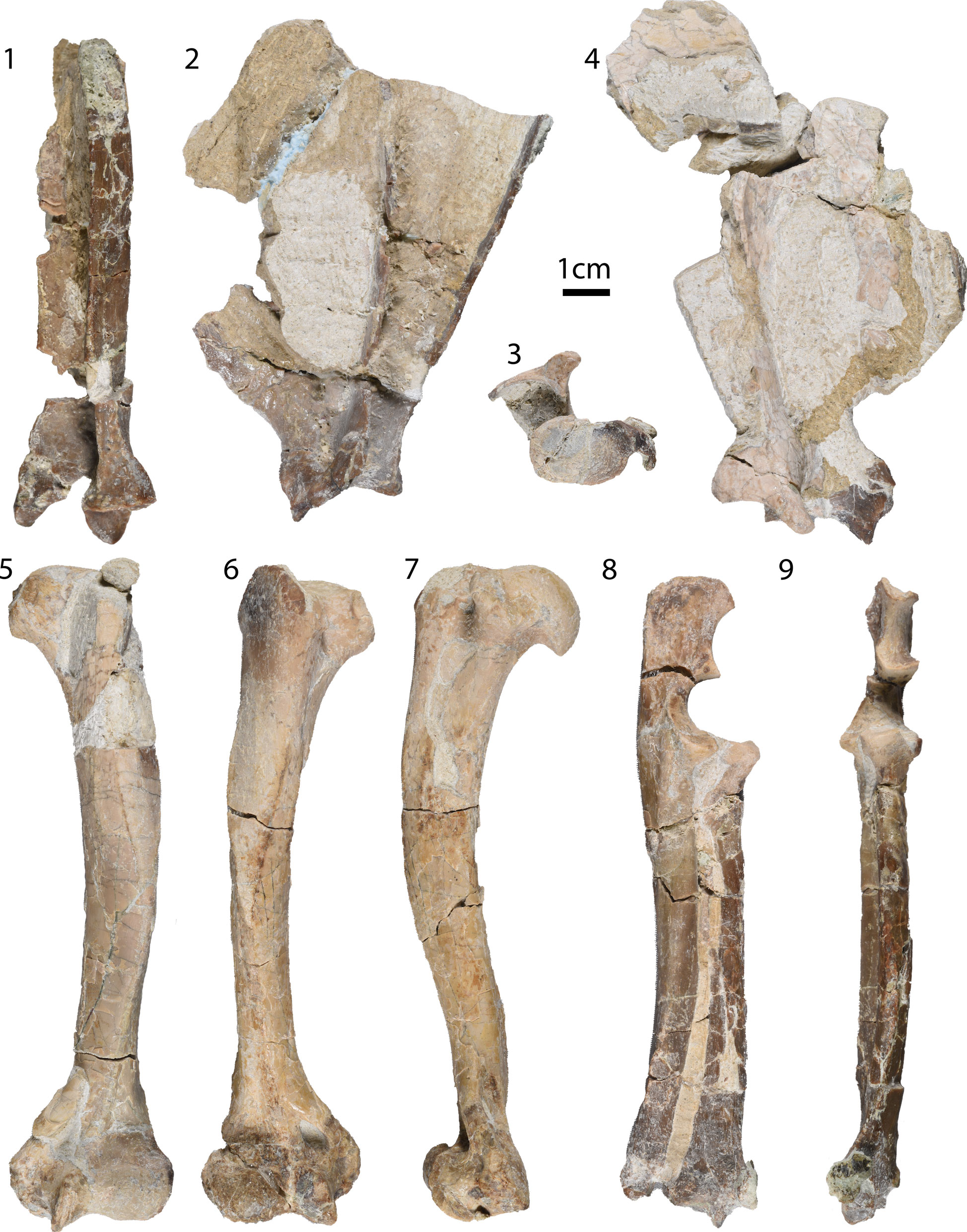
Paleontologists usually identify an ancient dog by comparing its skull, teeth and other anatomical features with those of known canid fossils. This specimen contained another revealing clue: a hereditary bone growth at the end of the wrist called an osteochondroma. The same condition occurs in approximately 60% of the earliest known dog fossils.
“It’s just this really cool direct hereditary link that we wouldn’t normally find,” Kort said. “This is another line of evidence, and that gives you an idea of how great this fossil is.”
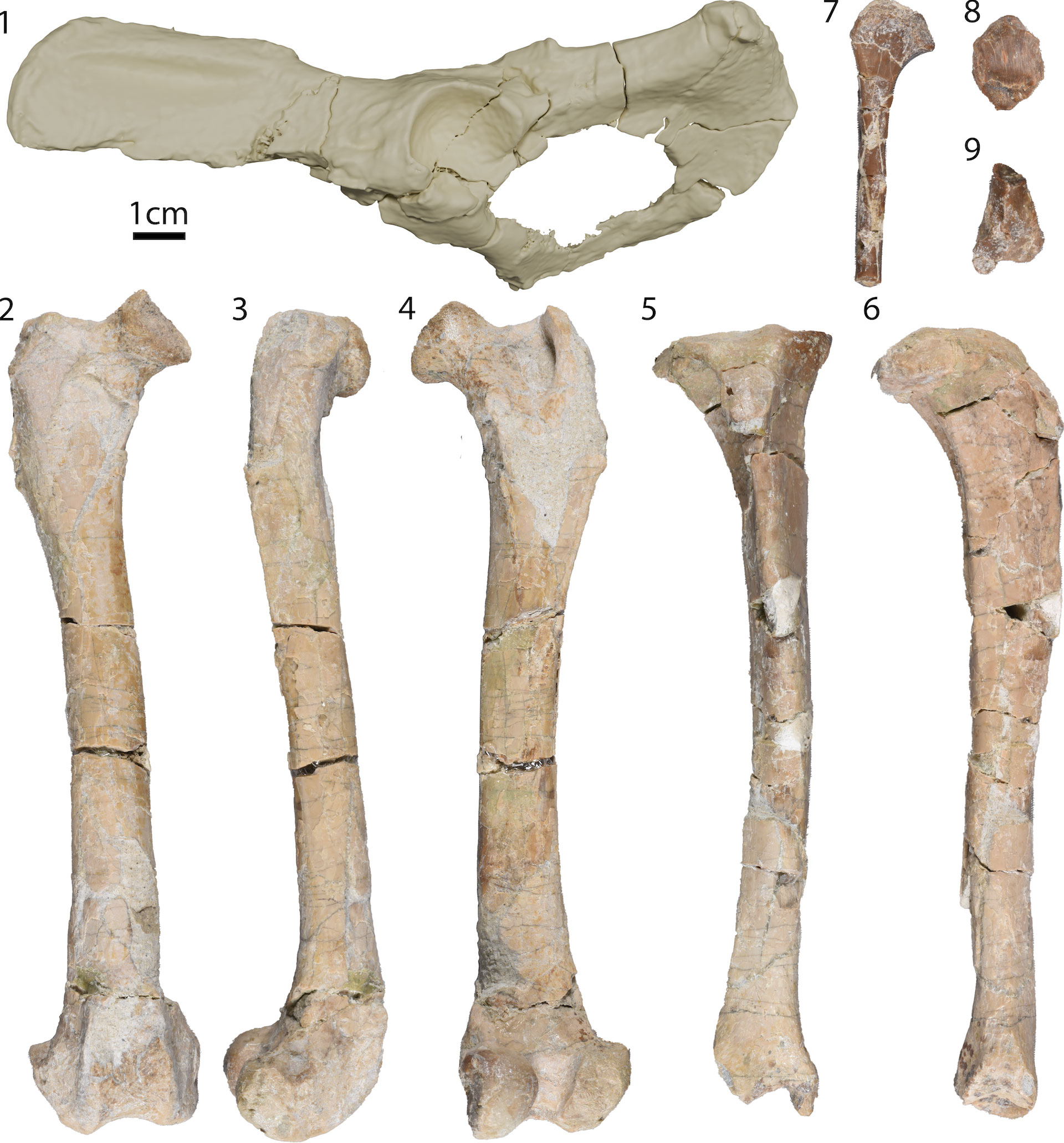
Nearly the entire skeleton is preserved. Only the tail and portions of the hands and feet are missing. Its completeness also allowed the researchers to determine the animal’s sex without relying on indirect anatomical estimates.
“The other fun thing is, it even had the baculum, so, the penis bone,” Kort said. “That means we definitely know this was a male.”
This dog had not mastered running
According to Kort, dogs originated in North America approximately 40 million years ago. Their common ancestor was a canid called Hesperocyon. At that time, much of the continent was covered by dense forests resembling rainforests, and Hesperocyon was probably a “pretty good climber,” unlike dogs living today, Kort says.
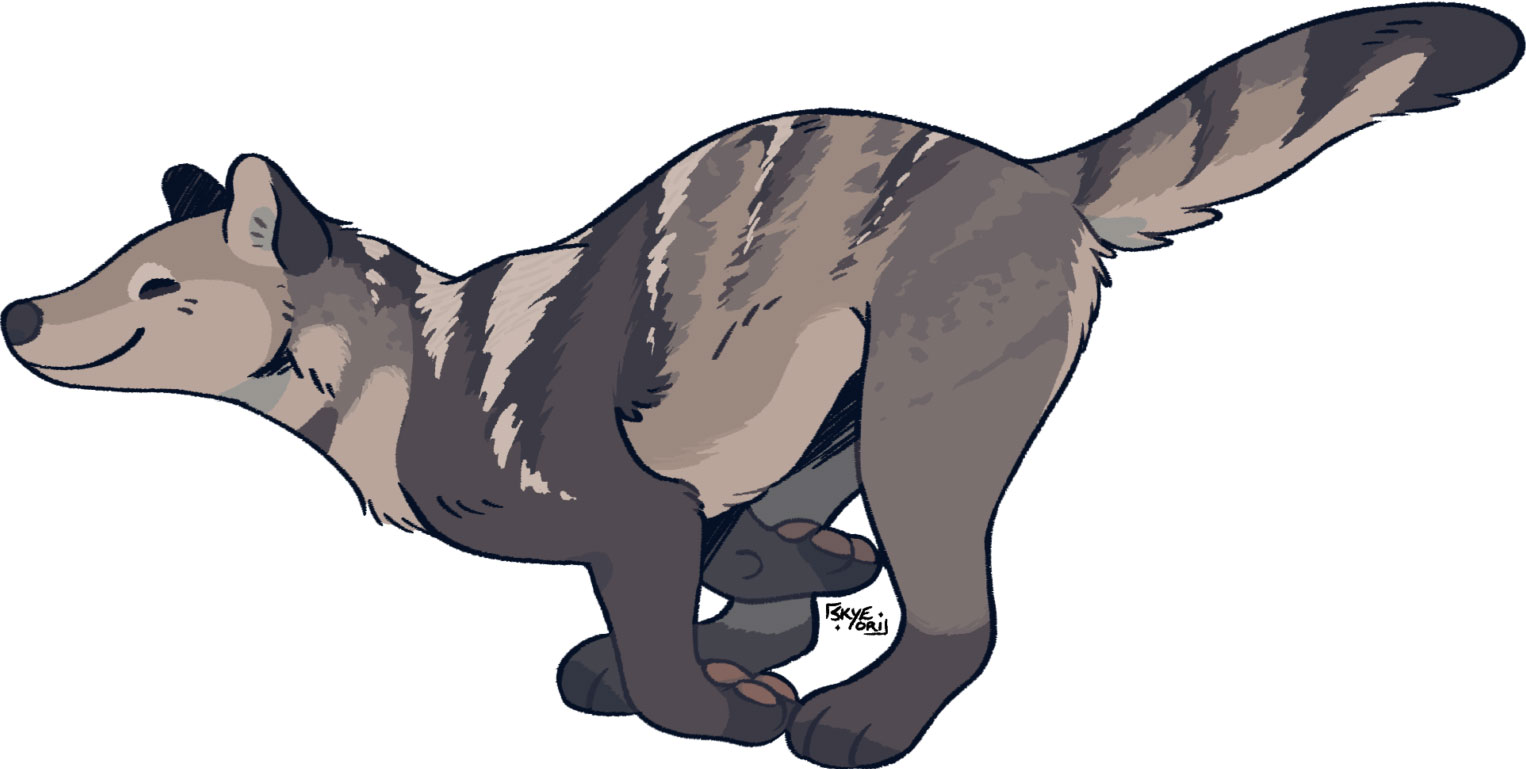
Mesocyon appeared about 10 million years later as the global climate cooled. Dense forests were gradually replaced by more open woodlands and, in some places, shrublands. Kort examined the unusually complete skeleton to determine whether Mesocyon had already developed the running adaptations seen in modern dogs.
“The answer is pretty definitely no,” said Kort, who studies the interaction between environment and running adaptations in mammals. “Mesocyon also just has more robust bones in general. It’s shorter and stockier.”
The shape of the elbow joint indicates that Mesocyon could rotate its forearms, an ability that would have helped it grapple and climb, Kort says. The animal also retained a large first toe, represented by the dew claw in modern dogs. This anatomy suggests that Mesocyon sometimes placed its heel on the ground rather than walking entirely on its toes as dogs do today.
Extinction erased a different dog ecology
Kort says the specimen also illustrates a broader consequence of extinction. When a species and its relatives disappear, the distinctive way they lived disappears with them.
“This fossil is not our current dogs’ great-great-great uncle, because this whole line went fully extinct. And with that extinction, we did lose a whole kind of dog ecology that we just don’t see anymore,” she said. “I think sometimes there’s an assumption that life finds a way if something goes extinct. It will be replaced, or something will magically bounce back.
“But evolution never finds a perfect fit, it finds good fits. So when we lose things, they’re gone forever. They’re never going to be perfectly replaced, and I think that’s an important lesson to take away when we’re thinking about extinctions today.”
JODA paleontologist Ted Fremd originally found the fossil, made its recovery a priority, and completed the first preparation work that exposed the skull. JODA paleontologist Joshua Samuels assigned Cavin to remove the remaining skeleton from its protective jacket in 2011. Nicholas Famoso, now the chief paleontologist at JODA, later proposed that Kort study the specimen. Xiaoming Wang of the Natural History Museum of Los Angeles County is also a coauthor of the research.
Reference: “Postcrania and locomotor function of Mesocyon coryphaeus (Canidae, Carnivora) from the Arikareean of North America” by Anne E. Kort, Jennifer Cavin and Xiaoming Wang, 29 May 2026, Journal of Paleontology.
DOI: 10.1017/jpa.2026.10232
Funding for preparation work was provided by the National Park Service and funding for travel to collections was provided by the Turner Award through the Department of Earth & Environmental Sciences at the University of Michigan. Additional funding was provided by the Michigan Society of Fellows at the University of Michigan.
Never miss a breakthrough: Join the SciTechDaily newsletter.
Follow us on Google and Google News.
2 Comments
Maybe it climbed trees to GET the sticks…
A lot of modern day dogs also climb trees.
I knew a guy who had a Bacingie Dog. It had retractable claws just like a Cat. It was very good at climbing trees. They had to constantly get the dog down from the roof all the time. The Dog constantly chassed squirrels.