
Close Menu
    Facebook X (Twitter) Instagram
    SciTechDaily
    • Biology
    • Chemistry
    • Earth
    • Health
    • Physics
    • Science
    • Space
    • Technology
    Facebook X (Twitter) Pinterest YouTube RSS
    SciTechDaily
    Home»Science»Strange 65-Foot Dinosaur Discovered in Argentina
    Science

    Strange 65-Foot Dinosaur Discovered in Argentina

    By Staatliche Naturwissenschaftliche Sammlungen BayernsApril 21, 20263 Comments3 Mins Read
    Facebook Twitter Pinterest Telegram LinkedIn WhatsApp Email Reddit
    Share
    Facebook Twitter LinkedIn Pinterest Telegram Email Reddit
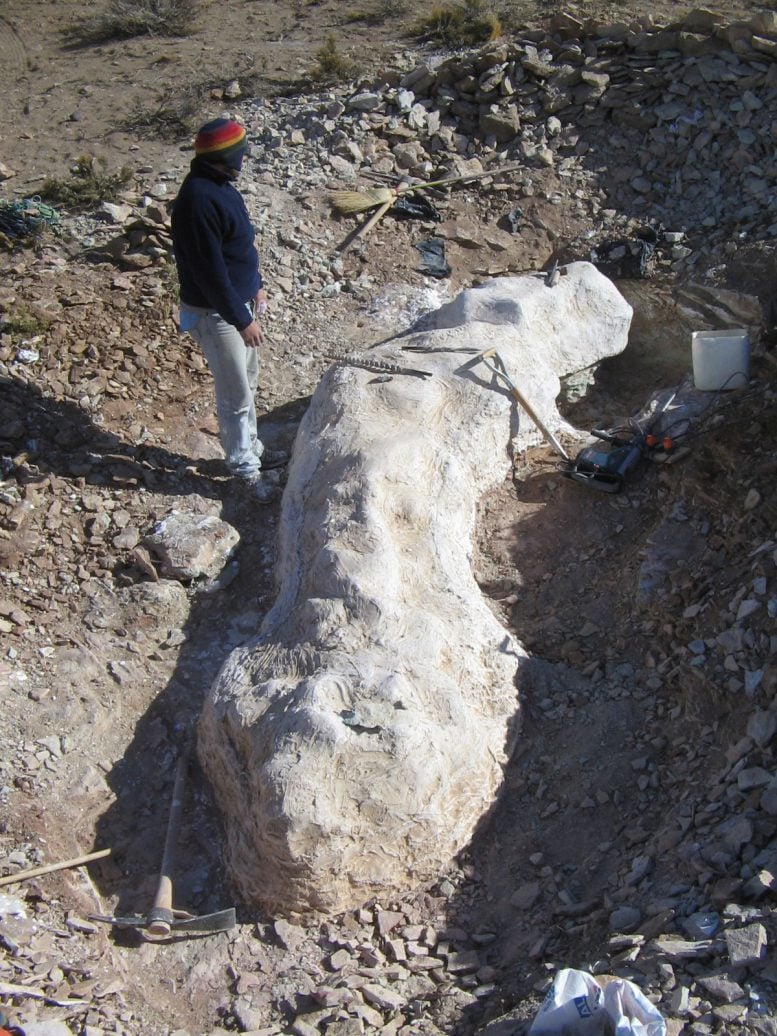
    Fossil Extraction of Bicharracosaurus Dionidei 2
    A newly identified long-necked dinosaur from Argentina, Bicharracosaurus dionidei, offers fresh insight into the evolution of some of the largest animals to ever walk the Earth. Credit: Pablo Puerta

    Bicharracosaurus dionidei, a newly discovered sauropod from Argentina, shows a mix of brachiosaurid and diplodocid traits, offering new insights into dinosaur evolution in the Southern Hemisphere.

    Long-necked dinosaurs, known as sauropods, are often what people picture when they think of dinosaurs. With their huge bodies, long necks and tails, and small heads, they include the largest land animals ever discovered. Some reached lengths of up to 40 meters (about 131 feet), with well-known examples such as Diplodocus and Brachiosaurus.

    A newly identified species from southern Argentina, Bicharracosaurus dionidei, was smaller but still impressive. Researchers estimate it measured about 20 meters (around 66 feet) in length.
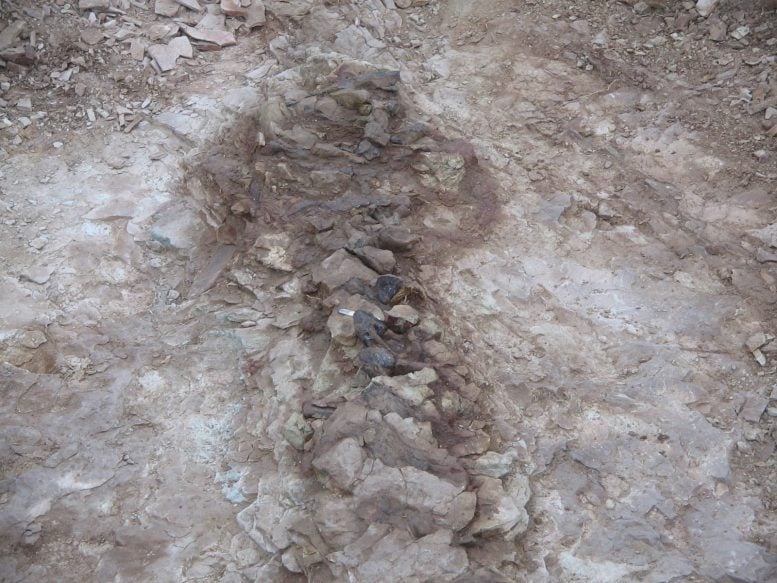
    Fossil Extraction of Bicharracosaurus Dionidei
    Fossil extraction of Bicharracosaurus dionidei. Credit: Pablo Puerta

    Scientists recovered parts of its spine, including more than 30 vertebrae from the neck, back, and tail, along with several ribs and part of the pelvis. The bone structure shows the remains belonged to an adult that lived on Gondwana about 155 million years ago.

    The fossil stands out because it displays a combination of traits seen in different sauropod groups. Some bones resemble those of Giraffatitan, a brachiosaurid from Tanzania. Others, especially the dorsal vertebrae, are more similar to Diplodocus and related species from North America.
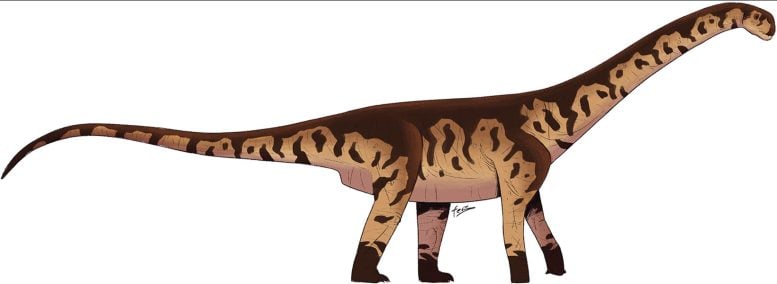
    Reconstruction of Bicharracosaurus Dionidei
    Reconstruction of Bicharracosaurus dionidei. Credit: Felipe Cutro-Lev

    Evolutionary Insights and Southern Hemisphere Gaps

    “Our phylogenetic analyses of the skeleton indicate that Bicharracosaurus dionidei was related to the Brachiosauridae, which would make it the first Brachiosauridae from the Jurassic of South America,” says LMU doctoral student Alexandra Reutter, the study’s first author. She examined the fossil as part of her doctoral research.

    “Our knowledge of the evolution of sauropods from the Late Jurassic has so far been based almost entirely on numerous fossil findings from North America and other sites in the Northern Hemisphere. For a long time, there was only a single significant site on the southern continents, in Tanzania.”
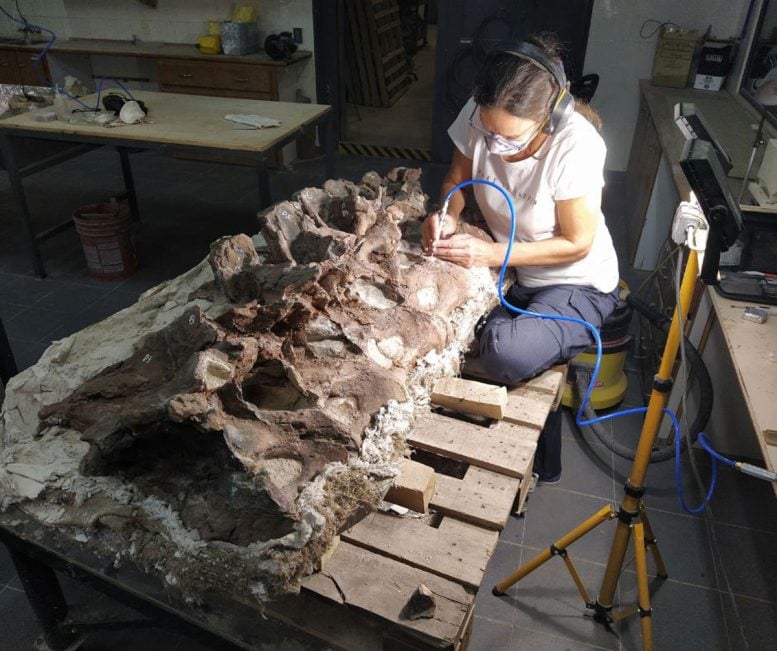
    Bicharracosaurus Vertebrae Being Prepared
    Bicharracosaurus vertebrae being prepared at the Egidio Feruglio Paleontological Museum in Trelew, Argentina. Credit: Amalia Villafañe

    “The fossil site in the Argentine province of Chubut, from which Bicharracosaurus dionidei originates, provides us with important comparative material, allowing us to continuously supplement and reevaluate our understanding of the evolutionary history of these animals, particularly in the Southern Hemisphere,” says leader of the study and dinosaur expert Prof. Oliver Rauhut of the Bavarian State Collections of Natural History (SNSB).

    The first fossils of Bicharracosaurus dionidei were discovered by shepherd Dionide Mesa on his farm, and the species was named in his honor. The genus name comes from “bicharraco,” a colloquial Spanish term meaning “big animal.” The remains were discovered in the Cañadón Calcáreo formation in Chubut Province, Patagonia, and are now kept at the Museo Paleontológico Egidio Feruglio in Trelew, Argentina.

    Reference: “Bicharracosaurus dionidei, gen. et sp. nov., a new macronarian (Dinosauria, Sauropoda) from the Late Jurassic Cañadón Calcáreo Formation of Argentina and the problematic early evolution of macronarians” by Alexandra Reutter, José Luis Carballido, Guillermo José Windholz, Diego Pol and Oliver W.M. Rauhut, 16 April 2026, PeerJ.
    DOI: 10.7717/peerj.20945

    Never miss a breakthrough: Join the SciTechDaily newsletter.
    Follow us on Google and Google News.

    Dinosaurs Fossils Jurassic Period Paleontology
    Share. Facebook Twitter Pinterest LinkedIn Email Reddit

    Related Articles

    Research Reveals First Complete Chemical Analysis of ‘Dinobird’ Feathers

    World’s Oldest Dinosaur Bonebed Reveals How Dinosaur Embryos Grew and Developed

    Stubby-Tailed Oviraptors Had Tails for Courtship Displays

    Xenoceratops, A New Species of Horned Dinosaur Discovered in Canada

    How Tyrannosaurus Rex Ate Triceratops Horridus

    Fossils Reveal Headbutts May Have Been Used as a Dinosaur Courtship Behavior

    Cretaceous Period Sankofa Pyrenaica Fossilized Eggs Are Unusually Shaped

    Microraptor Feathers Were Black With Iridescent Sheen

    Jurassic Period Super-Sized Fleas Had Armored Mouthparts to Attack the Thick Hide of Dinosaurs

    3 Comments

    1. [email protected] on April 22, 2026 3:22 am

      This news is more recent and relevant than the political entertainment we receive.

      Reply
    2. Ellis Cauthon on April 23, 2026 6:56 pm

      I would love you to know more about this Dinosaur . Dinosaur i love stuff like this

      Reply
    3. Allyssa watson on April 26, 2026 1:53 am

      I’m such a dinosaur fan I have a room full of dinosaur

      Reply
    Leave A Reply Cancel Reply

    • Facebook
    • Twitter
    • Pinterest
    • YouTube

    Don't Miss a Discovery

    Subscribe for the Latest in Science & Tech!

    Trending News

    Researchers Discover a Hidden Vitamin D Problem That Persists Year-Round

    Interstellar Comet 3I/ATLAS Reveals Strange Chemistry Beyond Our Solar System

    A Newly Found Cellular Shift May Explain Why Aging Leads to Disease

    Scientists Discover Gut Signal That Turns Off Sugar Cravings

    Scientists Discover Rogue Gene That Could Unlock New Cancer Treatments

    Constantly Tired? Scientists Say These Vitamin Deficiencies May Be Why

    A Surprising Discovery Inside Fish Could Change What We Know About the Ocean

    Scientists May Have Finally Solved the Mystery of the Strange Hum Heard Around the World

    Follow SciTechDaily
    • Facebook
    • Twitter
    • YouTube
    • Pinterest
    • Newsletter
    • RSS
    SciTech News
    • Biology News
    • Chemistry News
    • Earth News
    • Health News
    • Physics News
    • Science News
    • Space News
    • Technology News
    Recent Posts
    • Yale Discovery Overturns Long-Held “Evolutionary Dead End” Theory
    • Scientists Uncover Surprising Secrets of a Mysterious Man Buried in Finland 400 Years Ago
    • Scientists Create “Intelligent” Bandage That Targets Harmful Bacteria
    • The Kombucha Surprise: One Ingredient Dramatically Changes Its Chemistry and Health Potential
    • Hidden Solar Storms May Be Lighting Japan’s Skies With Massive Red Auroras
    Copyright © 1998 - 2026 SciTechDaily. All Rights Reserved.
    • Science News
    • About
    • Contact
    • Editorial Board
    • Privacy Policy
    • Terms of Use

    Type above and press Enter to search. Press Esc to cancel.