
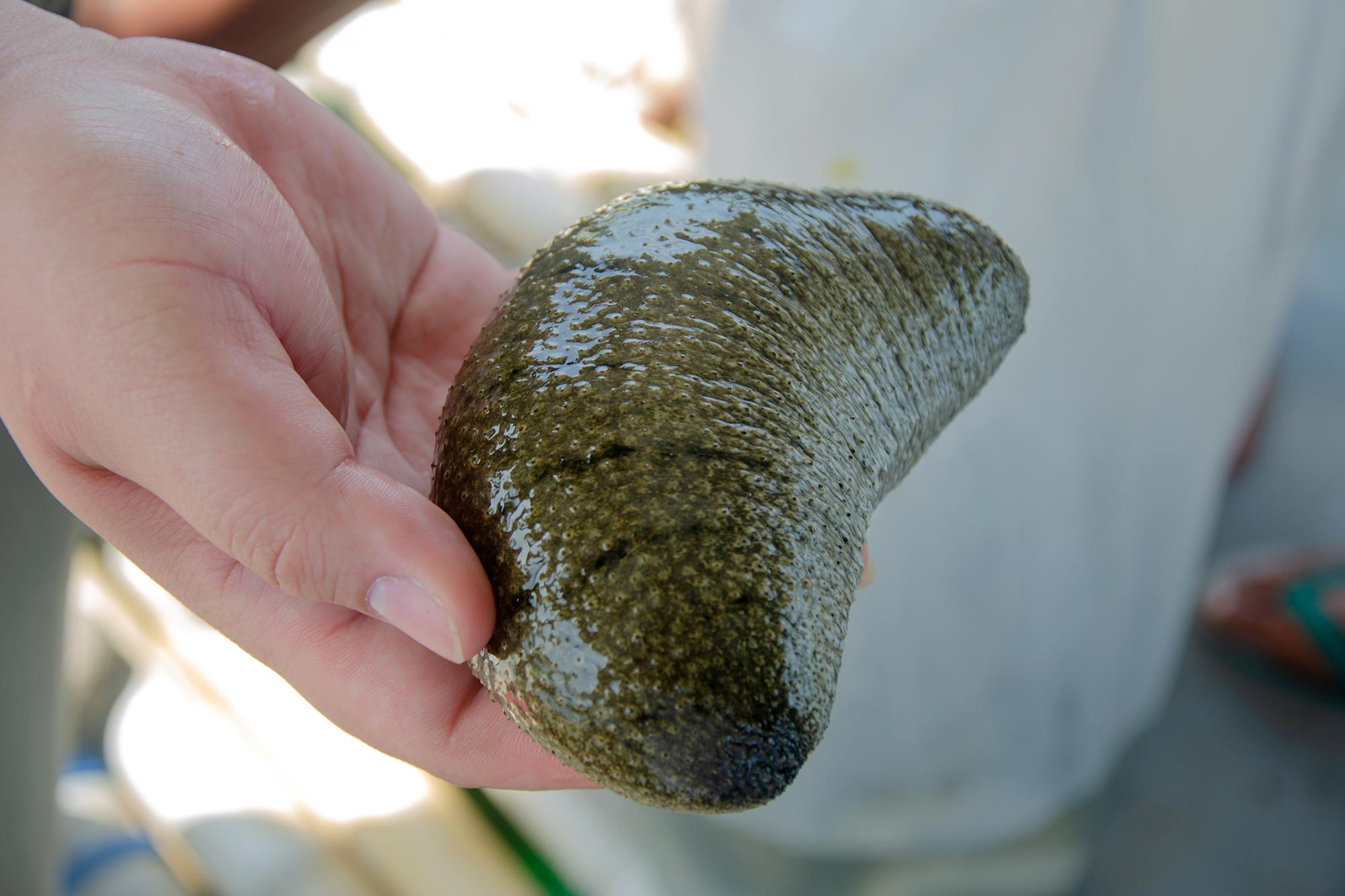
Detached sea cucumber tissue survived, healed, and grew for years in natural seawater, revealing a remarkable new model for regeneration and biomedical research.
A chance observation has led scientists to a discovery that challenges one of biology’s most basic assumptions: that detached animal tissue eventually dies. Instead, researchers found that tissue removed from a sea cucumber remained alive, active, and growing in ordinary seawater for more than three years.
The study marks the first documented case of discarded tissue surviving and continuing to develop for such a long period outside a sterile, tightly controlled laboratory environment. The findings raise intriguing questions about the limits of cellular longevity and regeneration.
Beyond its biological significance, the discovery could provide researchers with a simple new model for studying tissue growth and healing, potentially sidestepping some of the ethical and logistical hurdles associated with traditional cell cultures.
The research, led by scientists at Memorial University of Newfoundland and featuring Bigelow Laboratory for Ocean Sciences Senior Research Scientist Rachel Sipler, was recently published in Science Advances.
Sea Cucumber Tissue Survives and Grows for Years
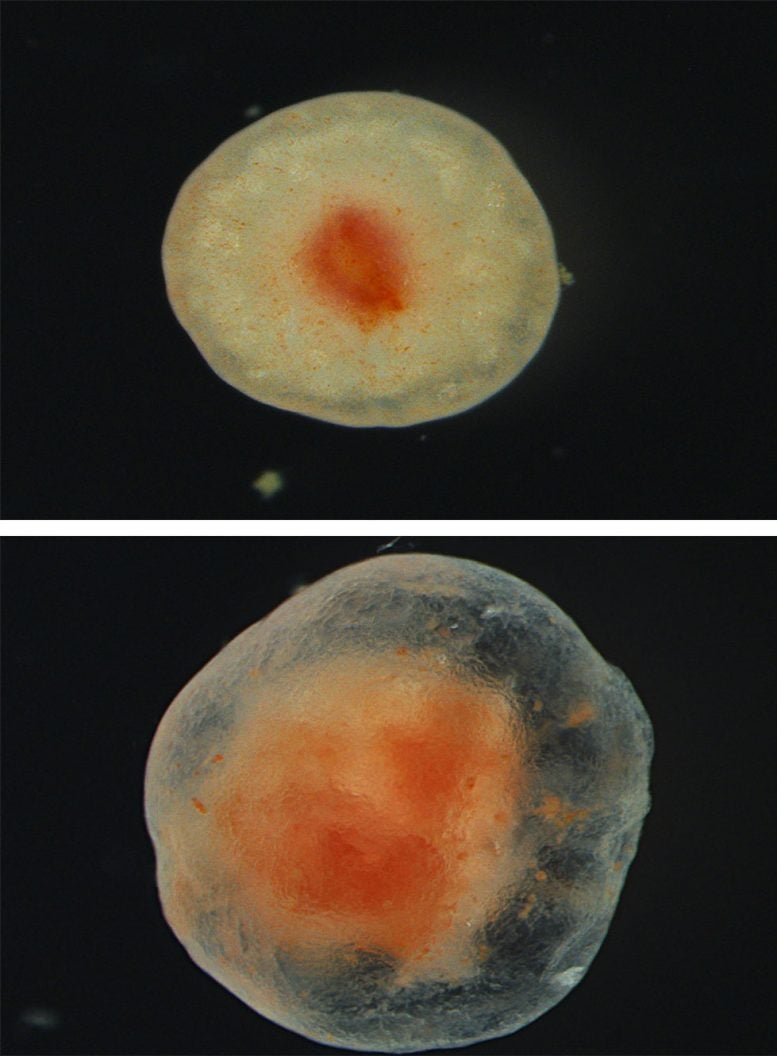
“We haven’t grown a new, complete sea cucumber yet, but we are seeing pretty stunning growth and diversification of cells literally years after this tissue was removed,” Sipler said. “It’s like a lizard that loses its tail. We know some lizards can grow new tails; we’re talking about whether the tail can grow a new lizard.”
Since the mid-20th century, researchers have developed “immortal” cell lines such as the well-known HeLa cells, which can multiply indefinitely in laboratory settings. However, previous tissue cultures have only survived under tightly controlled “axenic” conditions that exclude bacteria and other organisms. Even under those conditions, they have not shown the same signs of healing, growth, or independent movement.
Many echinoderms, the phylum that includes sea cucumbers, are known to display impressive regeneration capacity and negligible cell aging. Lost tissue, though, was always assumed to eventually decay or die. Yet, in what Sipler calls a product of “keen observation,” the researchers noticed that some discarded tissue from a tube foot of a sea cucumber hadn’t decayed after a number of weeks. In fact, it seemed to be growing.
To investigate further, the team conducted experiments using tissue taken from the feet, body, and tentacles of three Psolus fabricii individuals, a cold-water sea cucumber species.
How Discarded Tissue Remained Alive in Natural Seawater
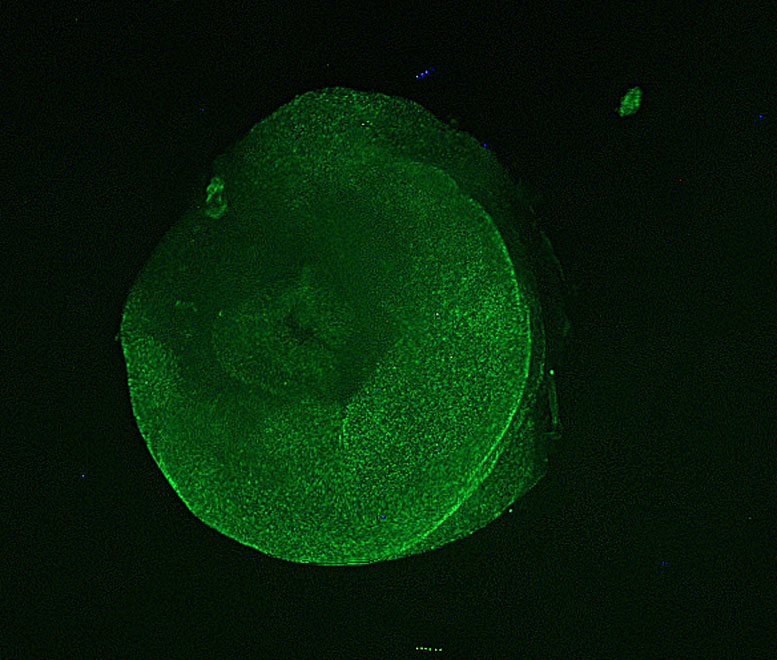
The experiments revealed signs of cell diversification, immune system activity, and tissue reorganization. Despite lacking a mouth, the tissue appeared to obtain nutrients by absorbing amino acids dissolved in seawater. When the researchers ended the experiments after more than three years to publish their findings, the tissue remained active. According to Sipler, its ability to persist in a challenging natural environment sets it apart from other tissue cultures.
“Natural seawater is just about the most microbially diverse, least clean approach we could take experimentally,” she said. “Yet, that rich environment full of bacteria and all this organic matter was actually feeding them and allowing this tissue to heal and grow.”
The authors say the findings could have major implications for biomedical science and engineering, including potential advances in tissue regeneration and antimicrobial healing.
The preserved tissue may also become a valuable tool for research and education. In addition to maintaining its structural complexity in culture, it is relatively easy to grow in a laboratory. Because it comes from an invertebrate, it also faces fewer regulatory restrictions than human or vertebrate cell lines, making it useful in settings with legal limitations or limited biosafety resources.
Biomedical Potential and Ocean Science Implications
“This discovery highlights that the ocean holds profoundly unexpected biological innovations,” said Gloucester Marine Genomics Institute Science Director Andrea Bodnar, who was not involved in the study. “The fact that tissue explants from a sea cucumber can heal, reorganize, and survive independently for years in natural seawater suggests an entirely new model for biological resilience and tissue regeneration.”
Sipler said the finding also underscores how much remains unknown about marine life and its potential scientific value.
“The best advances in science are made when you find a natural analog for what you’re studying,” she said. “Here is this species that has this groundbreaking ability, and we had no idea. It’s a reminder how much is yet to be discovered in the marine environment, and how important it is to protect these resources that may hold really valuable knowledge for us.”
Reference: “Natural tissue immortality: Indefinite survival of sea cucumber explants” by Sara Jobson, Emaline M. Montgomery, Jean-François Hamel, Rachel E. Sipler and Annie Mercier, 27 May 2026, Science Advances.
DOI: 10.1126/sciadv.aeb1394
Never miss a breakthrough: Join the SciTechDaily newsletter.
Follow us on Google and Google News.
1 Comment
God’s Creation is amazing and beautiful!🙏🏻