
In addition to diet and medication, person-to-person transmission can also play an important role in shaping the microbiome.
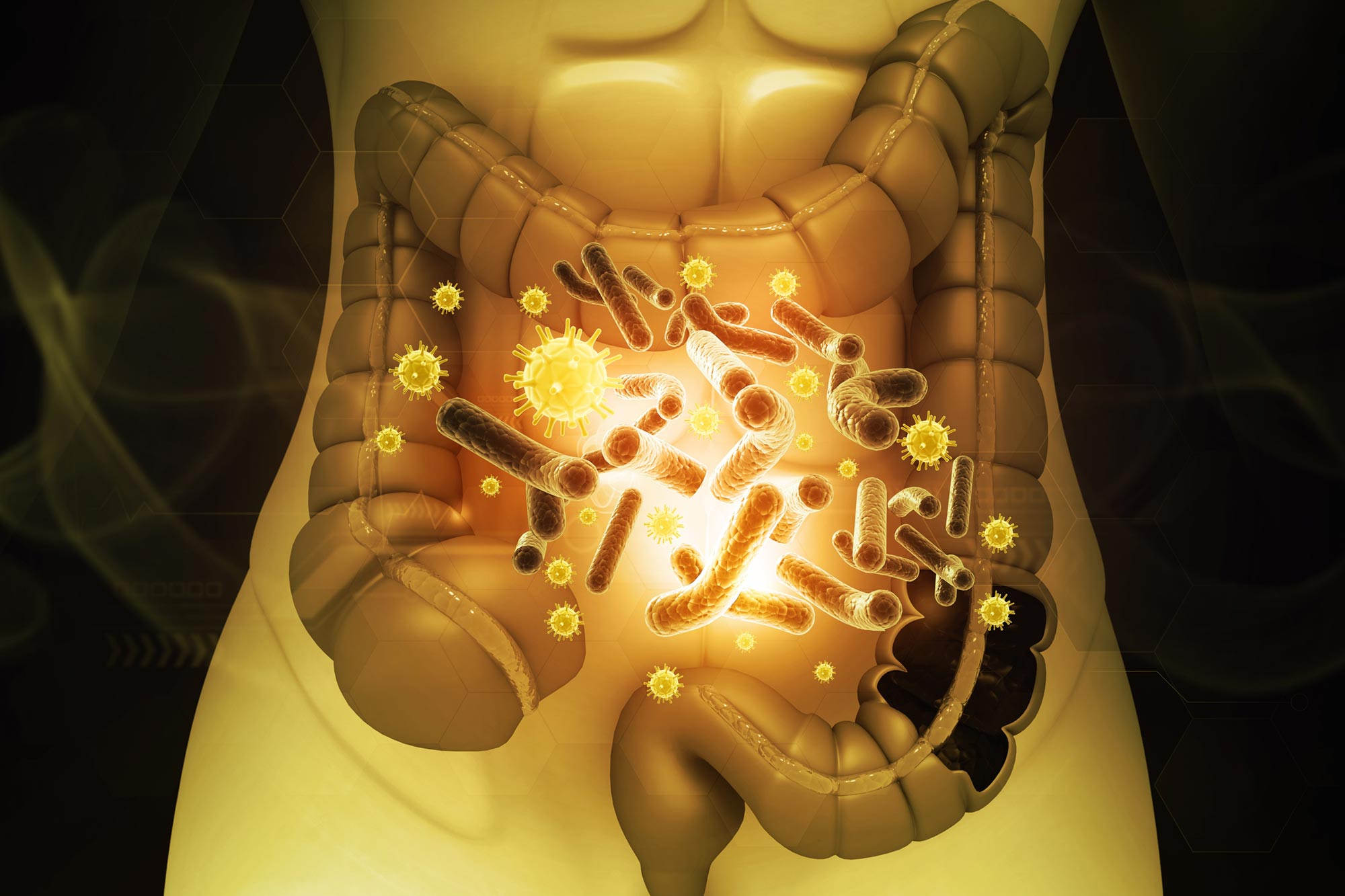
The human gut contains a vast community of trillions of microorganisms (the microbiome) that helps shape digestion, immune function, and metabolism.
A team led by the University of Vienna used a method called ‘reverse ecology’ to show that many familiar gut bacterial species are actually made up of several evolutionarily separate groups, each adapted to different conditions inside the gut. Some of these bacterial populations are linked with older age, chronic inflammatory bowel diseases, colorectal cancer, and type 2 diabetes. The results, now published in Nature, could eventually help improve biomarker discovery and, over the long term, support more precise treatments.
Most microbiome research groups bacteria by whole species or by broad genetic similarity. These categories are useful, but they may miss the distinct populations that have evolved to live under specific conditions in the human body. Because of that, it can be difficult to tell which bacteria are connected to disease, which are simply present by chance, and which may help protect health. The central question is whether scientists can identify more precise biological units that arose through adaptation and occupy separate ecological niches in the gut.
About the study
The research team analyzed thousands of bacterial isolates from the human gut, along with extensive metagenomic data, meaning the complete genetic information of microbial communities in a sample, from people across different countries, ages, and health groups.
Using a newly developed bioinformatic method within the framework of ‘reverse ecology,’ an approach that infers ecological adaptations from genomic data, the researchers looked for genetic signs of successful adaptation.
More than one species
One important clue came from signs of so-called genome-wide selective sweeps. These events occur when one individual gains a useful mutation and then outcompetes closely related individuals.
The process reduces diversity, but it also produces populations whose members are highly similar in both ancestry and function, making them stand apart clearly in the dataset. The analysis revealed that many known gut bacterial species split into several such lineages. These populations seem to differ in the conditions where they are most successful.
“If you don’t just count species but take evolutionary adaptation into account, you can identify the biologically relevant units in the microbiome much more accurately,” says lead author Xiaoqian Annie Yu, Center for Microbiology and Environmental Systems Science (CeMESS), University of Vienna. “Even within the same bacterial species, some populations occur more frequently than others in certain diseases. When all are considered together, this often remains hidden.”
Global spread within a few decades
The researchers also found evidence that highly competitive bacterial populations can spread quickly across continents, in some cases within only a few decades. Until now, this kind of pattern had mainly been seen in pathogens.
“Our findings show that gut bacteria are also more dynamic than previously thought. Well-adapted strains can spread internationally and occupy new ecological niches,” says study leader Martin F. Polz from the University of Vienna.
The finding suggests that the microbiome is shaped not only by diet, medication, or lifestyle, but also by transmission between people.
New perspectives for medicine and diagnostics
The study creates new opportunities for microbiome research. Rather than connecting entire bacterial species with disease, scientists may eventually be able to focus on the specific populations that matter most. This could improve biomarker searches and, over the long term, help make therapies more precise, for example, by encouraging beneficial bacterial strains or reducing problematic ones.
Next, the team plans to study which genes distinguish the identified populations from one another and what biological functions those genes may control.
Reference: “Genome-wide sweeps create ecological units in the human gut microbiome” by Xiaoqian Annie Yu, Cameron R. Strachan, Craig W. Herbold, Michaela Lang, Christoph Gasche, Athanasios Makristathis, Nicola Segata, Shaul Pollak, Adrian Tett and Martin F. Polz, 6 May 2026, Nature.
DOI: 10.1038/s41586-026-10476-w
Never miss a breakthrough: Join the SciTechDaily newsletter.
Follow us on Google and Google News.
3 Comments
Whether it’s a pathogen is largely determined by how well the host adapts.
I thought that was established when we started doing microbiome transplants. That one South Park episode comes to mind.
A bélrendszer és flórája; mintha gondolkodni is képes lenne.