
Close Menu
    Facebook X (Twitter) Instagram
    SciTechDaily
    • Biology
    • Chemistry
    • Earth
    • Health
    • Physics
    • Science
    • Space
    • Technology
    Facebook X (Twitter) Pinterest YouTube RSS
    SciTechDaily
    Home»Biology»A Matchmaker for Microbiomes – Identifying Relationships of Microbes and Metabolites
    Biology

    A Matchmaker for Microbiomes – Identifying Relationships of Microbes and Metabolites

    By DOE/Lawrence Berkeley National LaboratoryDecember 1, 2019No Comments2 Mins Read
    Facebook Twitter Pinterest Telegram LinkedIn WhatsApp Email Reddit
    Share
    Facebook Twitter LinkedIn Pinterest Telegram Email Reddit
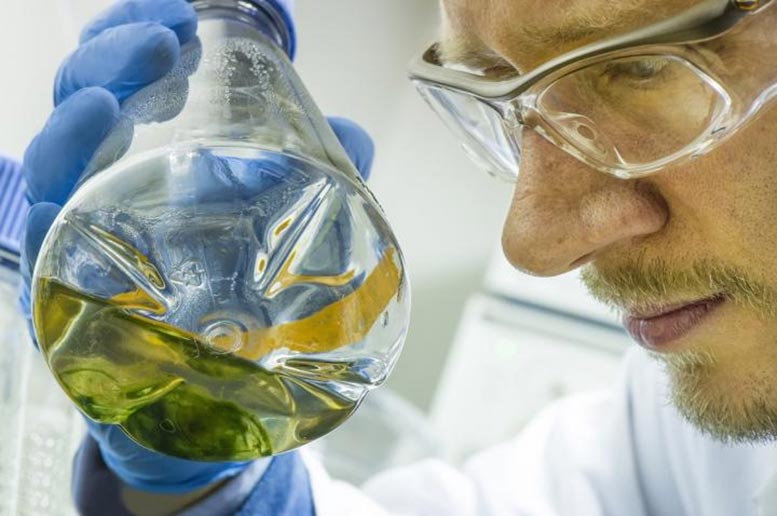
    Trent Northen, Berkeley Lab
    Trent Northen, a Berkeley Lab co-author, analyzes a microbiome sample. Credit: Roy Kaltschmidt/Berkeley Lab

    Microbiomes play essential roles in the natural processes that keep the planet and our bodies healthy, so it’s not surprising that scientists’ investigations into these diverse microbial communities are leading to advances in medicine, sustainable agriculture, cheap water purification methods, and environmental cleanup technology, just to name a few. However, trying to determine which microbes contribute to an important geochemical or physiological reaction is both incredibly challenging and slow-going, because the task involves analyzing enormous datasets of genetic and metabolic information to match the compounds mediating a process to the microbes that produced them.

    But now, researchers have devised a new way to sort through the information overload.

    Writing in Nature Methods, a team led by UC San Diego describes a neural network-based approach called microbe-metabolite vectors (mmvec), which uses probabilities to identify the most likely relationship of co-occurring microbes and metabolites. The team demonstrates how mmvec can outperform traditional correlation-based approaches by applying mmvec to datasets from two well-studied microbiomes types — those found in desert soils and cystic fibrosis patients’ lungs — and gives a taste of how the approach could be used in the future by revealing relationships between microbially-produced metabolites and inflammatory bowel disease.

    “Previous statistical tools used to estimate microbe-metabolite correlations performed comparably to random chance,” said Marc Van Goethem, a postdoctoral researcher who is one of three study authors from Berkeley Lab. “Their poor performance led to the detection of spurious relationships and missed many true relationships. Mmvec is a powerful new tool that accurately links metabolite and microbial abundances to solve this problem. There could be wide-ranging applications from clinical trials to environmental engineering. Ultimately, mmvec will allow us to begin moving away from simple pattern recognition towards unraveling mechanisms.”

    Reference: “Learning representations of microbe–metabolite interactions” by James T. Morton, Alexander A. Aksenov, Louis Felix Nothias, James R. Foulds, Robert A. Quinn, Michelle H. Badri, Tami L. Swenson, Marc W. Van Goethem, Trent R. Northen, Yoshiki Vazquez-Baeza, Mingxun Wang, Nicholas A. Bokulich, Aaron Watters, Se Jin Song, Richard Bonneau, Pieter C. Dorrestein and Rob Knight, 4 November 2019, Nature Methods.
    DOI: 10.1038/s41592-019-0616-3

    Never miss a breakthrough: Join the SciTechDaily newsletter.
    Follow us on Google and Google News.

    DOE Lawrence Berkeley National Laboratory Microbiology Microbiome
    Share. Facebook Twitter Pinterest LinkedIn Email Reddit

    Related Articles

    Scientists Successfully Edit the Genes of Nature’s Master Manipulators

    Giant Bacteria – 5,000 Times Bigger Than Normal – Discovered in Guadeloupe Mangroves

    Microbe Genetic “Rewiring” Technique Promises a Boom in Biomanufacturing of Fuels, Materials and Chemicals

    Microorganisms Can Help Us Get to Net Negative Emissions – Here’s How

    The Green Secrets of Goat Poop – Smarter Materials, Better Medicines, and Sustainable Biofuels

    Uncovering Novel Genomes From Earth’s Microbiomes – Expands Known Diversity of Bacteria and Archaea by 44%

    New Genetic Engineering Tool Unlocks Biochemical Treasure Chest Within Microbes

    The Search for “Microbial Dark Matter”

    Strains of E. Coli Have Been Linked to Cancer in Mice

    Leave A Reply Cancel Reply

    • Facebook
    • Twitter
    • Pinterest
    • YouTube

    Don't Miss a Discovery

    Subscribe for the Latest in Science & Tech!

    Trending News

    Scientists Uncover Potential Brain Risks of Popular Fish Oil Supplements

    Scientists Discover a Surprising Way To Make Bread Healthier and More Nutritious

    After 60 Years, Scientists Uncover Unexpected Brain Effects of Popular Diabetes Drug Metformin

    New Research Uncovers Hidden Side Effects of Popular Weight-Loss Drugs

    Scientists Rethink Extreme Warming After Surprising Ocean Discovery

    Landmark Study Links Never Marrying to Significantly Higher Cancer Risk

    Researchers Discover Unknown Beetle Species Just Steps From Their Lab

    Largest-Ever Study Finds Medicinal Cannabis Ineffective for Anxiety, Depression, PTSD

    Follow SciTechDaily
    • Facebook
    • Twitter
    • YouTube
    • Pinterest
    • Newsletter
    • RSS
    SciTech News
    • Biology News
    • Chemistry News
    • Earth News
    • Health News
    • Physics News
    • Science News
    • Space News
    • Technology News
    Recent Posts
    • Early Warning Signals of Esophageal Cancer May Be Hiding in Plain Sight
    • Researchers Have Discovered a THC-Free Cannabis Compound That May Replace Opioids
    • Common Blood Pressure Drug Shows Surprising Power Against Deadly Antibiotic-Resistant Superbug
    • Students Build Dark Matter Detector and Set New Experimental Limits
    • Scientists Discover Caffeine Can Repair Key Memory Circuits After Sleep Loss
    Copyright © 1998 - 2026 SciTechDaily. All Rights Reserved.
    • Science News
    • About
    • Contact
    • Editorial Board
    • Privacy Policy
    • Terms of Use

    Type above and press Enter to search. Press Esc to cancel.