
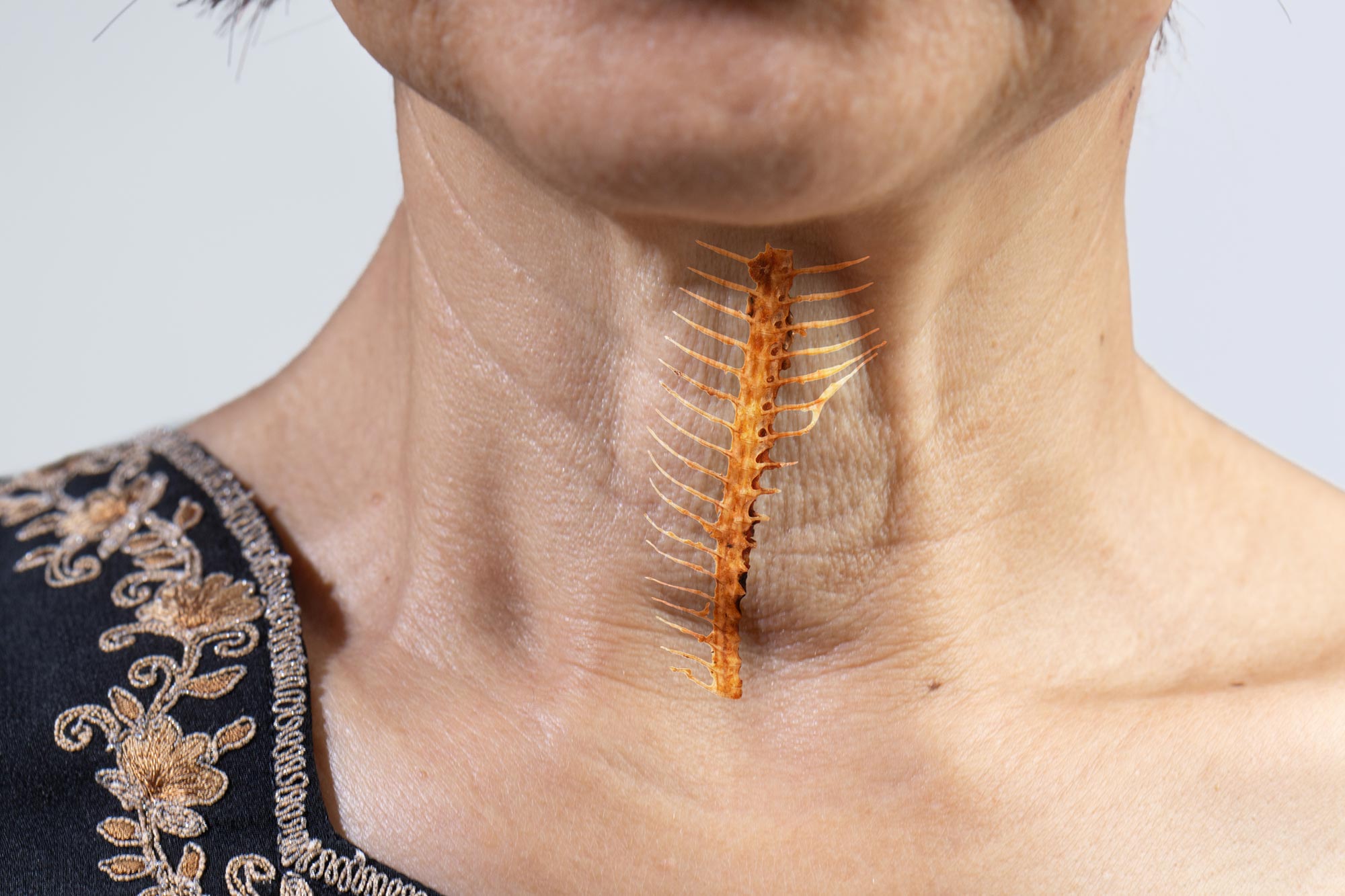
A swallowed fish bone can be far more dangerous than a brief choking scare.
For Shirley Ballas, a meal turned frightening when a fish bone stuck in her throat and left her struggling to breathe. The Strictly Come Dancing judge later said she’d “thought that was it” during the 20-minute ordeal, before her hair and makeup artist dislodged the bone using the Heimlich maneuver (also known as abdominal thrusts).
Her experience was alarming, but not unusual. The late Queen Mother also went through a similar incident, and doctors regularly see people who have swallowed fish bones.
Fish bones are common hazards
Fish bones are among the most frequent reasons people seek emergency care for something lodged in the throat. The issue is especially common in Asian countries, where fish is a major part of many diets. In China, the problem is common enough that specialist fish bone removal clinics have opened.
Fish can be a healthy food, providing protein, minerals, and heart-healthy fatty acids. But many species also contain small, thin “pin” bones (usually in the fillet) that can be easy to miss during preparation.
Cod have about 17 pin bones, while salmon have roughly 30. Some fish can have more than 100. Eel bones are often linked to emergency room visits, and flounder bones can be especially risky because their size and number make them more likely to become stuck deep in the throat.
This means that despite the care taken during the food prep process, some may inadvertently slip through. These bones can be dangerous if swallowed accidentally – and choking is just one of the serious complications that they can cause.
Fish bones typically become lodged in the tonsils at the back of the throat, in the pharynx at the back of the mouth, the piriform sinus (a small hollow that plays a role in swallowing) and, of course, the esophagus (the canal which connects the throat to the stomach).
If you do accidentally swallow a fish bone, you’ll probably experience coughing, a prickly or “something stuck” sensation in the throat, as well as pain or difficulty swallowing and spitting up blood.
Hidden bones can migrate
However, they don’t always cause symptoms – and some people end up living unknowingly with a fish bone stuck in their throat. For instance, in 2012, a 69-year-old Japanese woman went to hospital complaining of a swollen neck – only for doctors to discover she had a 32mm fish bone which had been lodged in her throat for nine months.
Undiscovered fish bones can also migrate around the neck. Repeated swallowing can also result in the bones penetrating the wall of the oesophagus and moving into the tight spaces in the neck.
Here, the bone poses a high risk to the vast number of critical nerves and blood vessels that pass through the neck – such as the carotid artery, which is one of the major vessels that supplies blood to the brain.
Bones can also pierce the thyroid gland, which can cause abscesses and inflammation. This can also lead to sepsis, a rare but incredibly dangerous complication.
In some cases, lodged fish bones have even managed to migrate into the neck’s muscles and under the skin. They can even pop out the skin too – as happened recently to one Thai woman.
Any bones that manage to migrate out of the throat are a surgical emergency as there’s no way to dislodge it otherwise. These bones can also cause infections in the spaces around the heart, or migrate into the spinal cord, leading to secondary infections, which could cause paralysis.
This is why it’s imperative that if you do accidentally swallow a bone, you try to remove it as soon as possible.
What to do
Stuck fish bones can be removed in a variety of ways.
For some people, a forceful cough will be enough to eject it. This technique is most effective in cases where the bone is stuck in the airway, rather than the oesophagus.
But one problem with coughing is that instead of ejecting it, it could dislodge the bone and allow it to pass into the stomach and through the intestines, where there’s a risk of perforation.
Bones that are stuck in the wall of the esophagus could potentially move through the body, but many cases will require endoscopic removal.
Some tips suggest that eating something such as bread or banana can force the bone down, but there’s no scientific evidence to support this remedy. It may even further block the airway or esophagus—and could potentially make things worse by lodging the bone further into the tissue. So if coughing doesn’t help and you still have symptoms, seeking medical advice is the next sensible step.
Where a person is unable to speak or breathe, then abdominal thrusts may be needed to help dislodge the offending fish bone (or other item). If it comes to this, you should call emergency services and seek urgent medical support.
Adapted from an article originally published in The Conversation.
Never miss a breakthrough: Join the SciTechDaily newsletter.
Follow us on Google and Google News.