
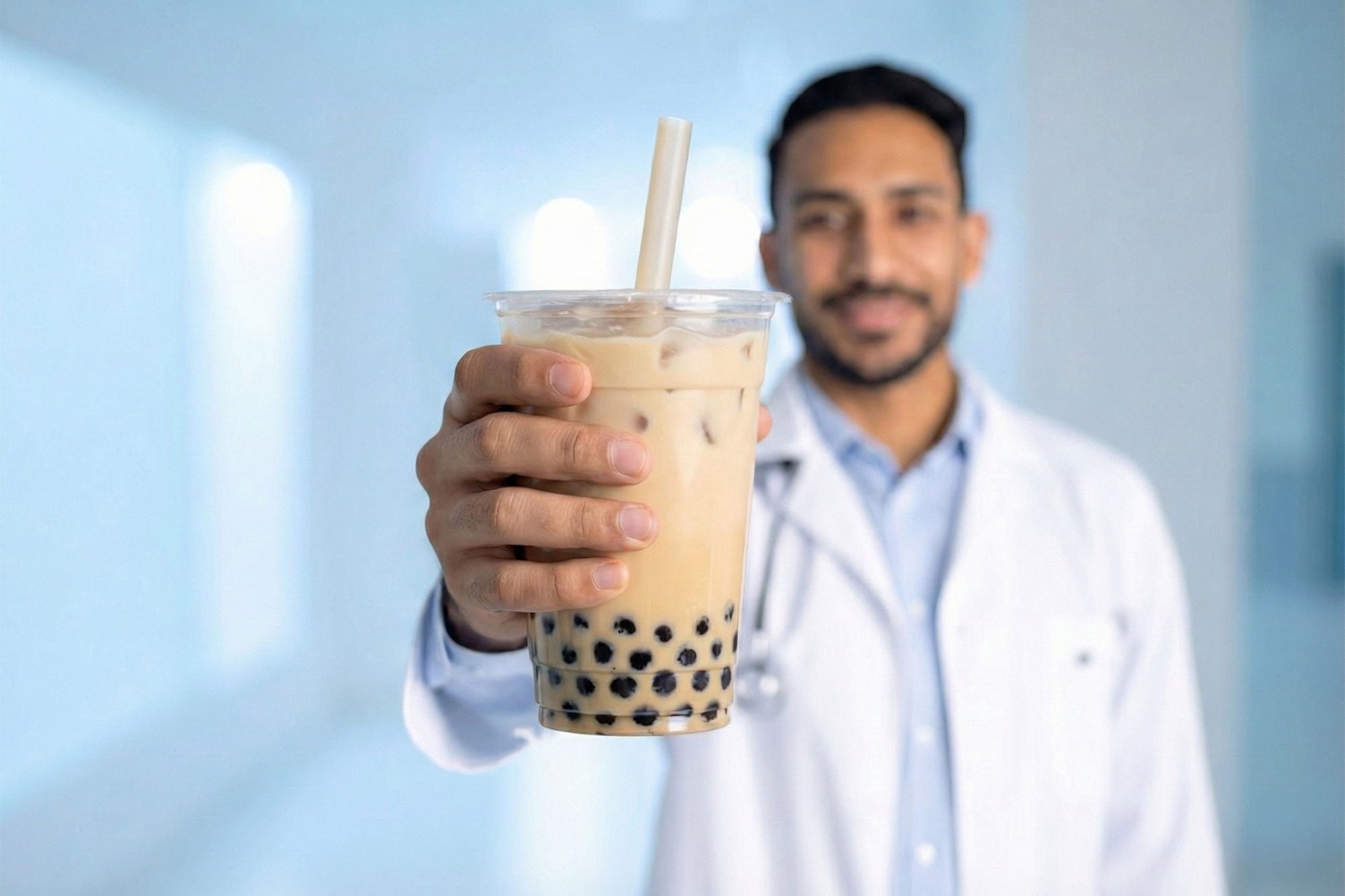
Once an occasional treat, bubble tea may carry underestimated risks when consumed frequently.
Bubble tea shops are now a common sight in cities, rivaling coffee chains with their brightly colored, Instagram-ready drinks offered in countless flavor combinations.
The beverage originated in Taiwan in the 1980s and typically combines black tea, milk, sugar, and chewy tapioca pearls. Its rapid rise in global popularity has been striking, but recent research suggests the drink may deserve closer attention.
From trendy drink to contamination concern
An investigation by Consumer Reports found elevated levels of lead in some bubble tea products sold in the United States, reinforcing earlier concerns linked to foods made from cassava. (No equivalent testing has been published in the UK.) The tapioca pearls, often referred to as the drink’s “bubbles,” are produced from cassava starch. As it grows, the cassava root readily absorbs lead and other heavy metals from the surrounding soil.
The pearls may also pose risks unrelated to contamination. Because they are dense and highly starchy, consuming large amounts can slow the movement of food through the stomach, a condition known as gastroparesis, or in more severe cases, contribute to intestinal blockages.
Both can cause nausea, vomiting, and abdominal pain, and symptoms can be particularly severe in people who already have slow-moving digestion. Even guar gum — a thickener often added to bubble tea and harmless in small amounts – can lead to constipation if you drink it often.
The drink’s composition also affects kidney health. In 2023, Taiwanese doctors removed over 300 kidney stones from a 20-year-old woman who’d been drinking bubble tea instead of water. Certain components, including oxalate and elevated phosphate levels, can contribute to stone formation. However, this extreme case probably reflects exceptionally high consumption.
For children, the risks are more immediate. The pearls can be a choking hazard – a risk that is well documented by pediatricians. Adults are not immune to this risk. According to media reports in Singapore, a 19-year-old woman died after inhaling three pearls when sucking harder on a partially blocked straw, while another woman narrowly avoided the same fate thanks to fast-acting bystanders.
The sugar problem
The sugar content raises longer-term health concerns. Most bubble teas contain 20–50g of sugar, comparable to or exceeding a can of Coca-Cola (35g). Research in Taiwan found that by age nine, children who regularly consumed bubble tea were 1.7 times more likely to have cavities in their permanent teeth.
In California, the drink is considered a contributing factor to the youth obesity epidemic, yet many young adults remain unaware of these risks. The high sugar and fat content increases the likelihood of developing type 2 diabetes, obesity and metabolic disease, while prolonged consumption may contribute to fatty liver disease – outcomes associated with any high-sugar product that spikes blood glucose and promotes fat storage in the liver.
Perhaps most surprisingly, emerging research suggests potential mental health implications. Studies of Chinese children who frequently consume bubble tea show an association with increased rates of anxiety and depression. Similar patterns appear in adults: research on Chinese nurses found that regular bubble tea consumption was associated with anxiety, depression, fatigue, job burnout and reduced wellbeing, even after controlling for other factors. The same study linked lower consumption to reduced thoughts of suicide, though establishing causation remains complex.
Strange scans
There’s even a curious medical phenomenon associated with consuming bubble tea: tapioca pearls appearing on scans of patients admitted for unrelated emergencies.
Doctors treating people after car accidents or with appendicitis have found dozens of pearls visible in stomachs and digestive tracts. These can occasionally cause diagnostic confusion, as they appear denser than the surrounding tissues and have stone-like properties similar to those seen with kidney- or gallstones.
This doesn’t mean bubble tea should be banned, but it does suggest we treat it as an occasional indulgence instead of a daily habit. And if you do indulge, consider skipping a straw. Drinking directly from the cup gives you better control, and allows your mouth’s sensory receptors to properly prepare for what’s coming.
Adapted from an article originally published in The Conversation.
Never miss a breakthrough: Join the SciTechDaily newsletter.
Follow us on Google and Google News.
26 Comments
I read the title and I’m like: “what did I do to you, people?”
Good thing I never had boba in my life
Ikr🥲
Moderation in most things is probably good advice to follow.
I find it hard to believe that anyone is “unaware” of boba being, shall we say, calorically extra
And in other news, people have been binging on chemical induced products from Mars Inc, PepsiCo, Hershey Co, McDonald’s Corp, and thousands of others yet they are still alive.
Another Western site wasting time on the effects of something Asia has consumed for decades without fault because everyone else knows about moderation and portion size. Everyone else but the United States.
A girl choked and died…
But most of the studies are by Asian scientists on Asian people in Asia… They haven’t been drinking it “without fault”, they are the ones getting the brunt of the adverse effects. I feel like “300 kidney stones is bad” cannot be Western propaganda lol
Its because those co pabies have the pokiticians in there pockets. When bubble tea gets big, they would be buying politician also.
Cassava a plant consumed by people of colour all over the world. Westerners: better find a way to shit on that!
What wild examples-woman drinks boba instead of water, gets sick. 🤯mind blown.
Love that its always the food, never the fact that we are contaminating the ground everything grows in, and cant have anything in moderation.
And in other news, people have been binging on chemical induced products from Mars Inc, PepsiCo, Hershey Co, McDonald’s Corp, and thousands of others yet they are still alive.
Article image actually shows a doctor prescribing me boba, and he’s so right for that.
✨️
At this point, everything is bad for u, don’t even breath since the air might have some dust or bacteria particles in it☠️
I find it interesting that they compare the 20-50g of sugar compared to a can of coke at 35g. Um excuse me. A can is 12 oz and a boba tea is 16-24 oz. So that comparison is misleading and causes misinformation to spread by those who can’t see that.
Ngl 40 years of people enjoying a beverage your gonna have some people die from set beverage . In the last 20 years 5 people died from water intoxication (drinking too much water) . The mass majority of people have not been impacted by this in the slightest . It’s kinda crazy this even past the sniff test . I hope this a one off and not the beginning of this kind of article. I really like scitech it is the last bastion of non-hyper inflammatory , click batey news. However I will mute it in a heart beat if it starts to change .
Mean while people in Taiwan and other Asian countries where Boba is heavily consumed live longer than people in western countries. Me thinks these researchers should focus their attention elsewhere.
Tapioca is in so many processed foods these days.
It’s not good for you.
It’s why I stopped buying pre-shredded cheese. It’s not hard to shred your own cheese and it takes very little time.
Guys I love boba 💕 but I guess it’s just not meant to be 😭😭😭🥺🥺🥺☹️☹️☹️🙁🙁🙁🫤🫤😕😕😕😞😞😞😟😟😟😢😢😢😮💨😮💨😮💨😧😧😧😦😦😦😮😮😮😯😯😯😿😿😿💔💔💔💔💔💔💔💔
Boba is gross and the very idea of it makes me gag. However, I do use tapioca as a thickener in fruit pies and the occasional tapioca pudding.
Ok come on I get its bad for you (everything is nowadays), but they put a sht tone of sugar in practically everything we eat and drink. Funny enough the only boba shops that have the best ingredients and less sugar are either really expensive or not popular. Americans put sugar in everything which is why amaerica is so fat. Boba pearls are bad for you but there are many different toppings you can choose from, you dont have to stop drinking boba all together, you just need to not be a slob and drink or eat bad sht all the time 😒🙄
Making me want one now with popping pearls lol
thanks for this
Never had this, sounds disgusting.
Parents looking for advanced options often consider stem cell treatment for asd to improve overall well-being.