
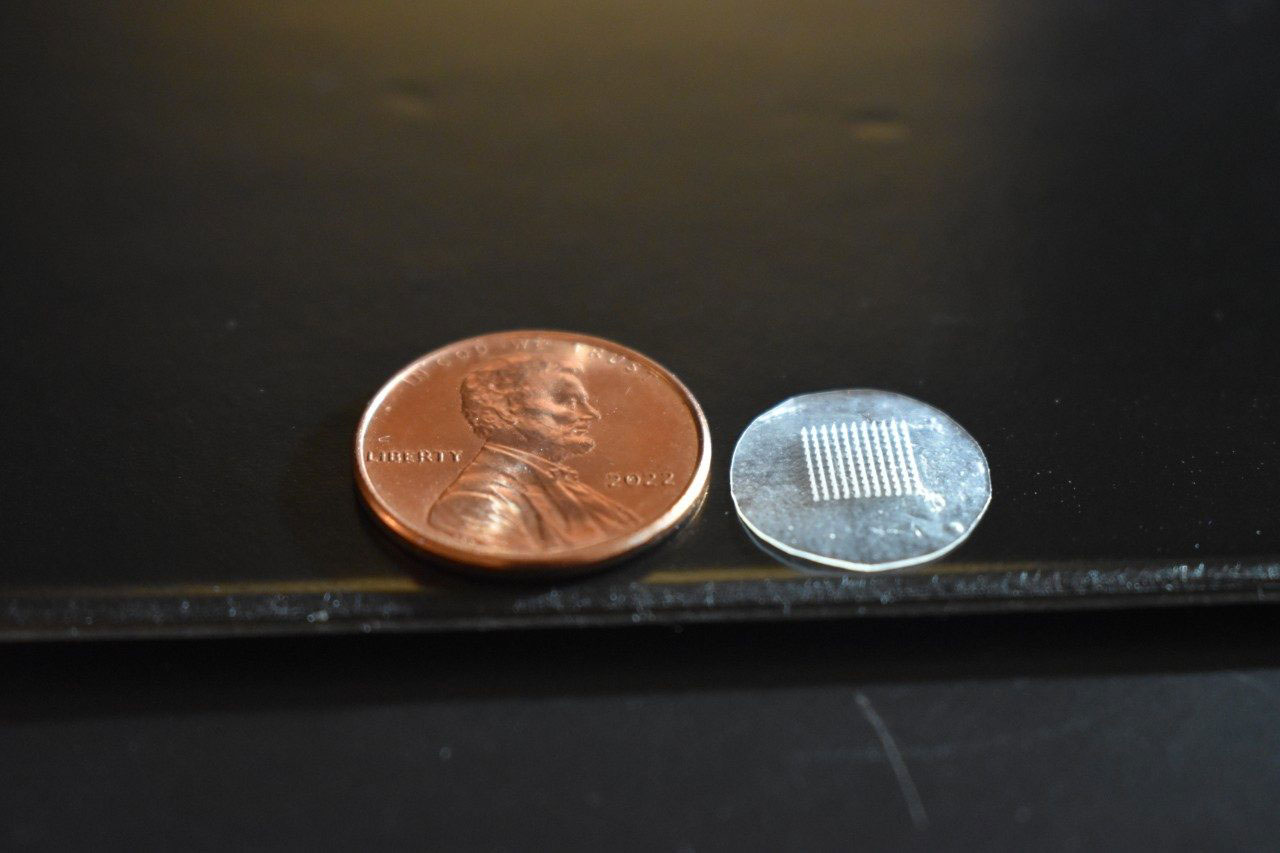
A wearable patch that can detect fentanyl and automatically release naloxone may offer a new way to prevent unwitnessed opioid overdose deaths.
A device smaller than a penny is designed to recognize dangerous fentanyl exposure and release an overdose reversal medication automatically, potentially providing help even when no one else is present.
Researchers in Virginia Tech’s Department of Biological Systems Engineering developed the wearable microneedle device to detect fentanyl in the body and deliver naloxone, a medication that reverses the effects of opioid overdose. If further testing succeeds, the technology could eventually provide an automated response to overdoses that happen without a bystander nearby.
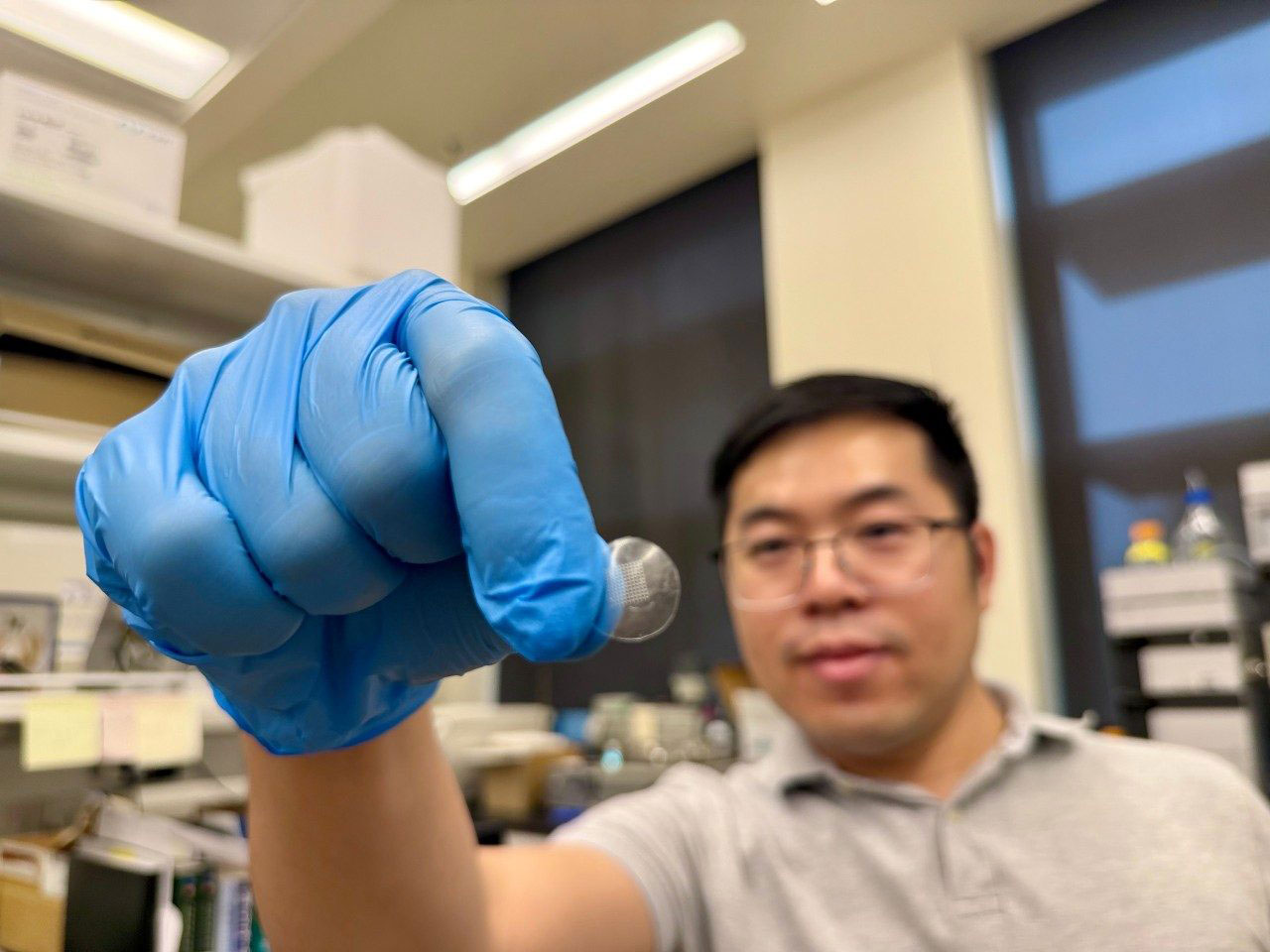
Called the iNal patch, the device was created by researchers led by Wujin Sun, an assistant professor of biological systems engineering, a department within both the College of Agriculture and Life Sciences and the College of Engineering. Their findings were recently published in Advanced Science.
“In general situations when there’s an overdose, we need to have someone there to save you,” Sun said. “In this case, we don’t need a bystander because we’re protected all the time.”
The patch responds directly to fentanyl
The patch contains an array of 121 microscopic needles that reach fluid just below the skin. When the device is applied, the needles extend only far enough to access this fluid while causing minimal tissue damage.
The patch also contains porous silica nanoparticles filled with naloxone, which blocks opioid effects. Molecular gates that are sensitive to fentanyl cover the openings in these particles.
When fentanyl reaches the patch, those gates open and allow naloxone to enter the body. The amount released rises as fentanyl concentrations increase. Only some pores open during each response, leaving additional naloxone stored in the patch in case fentanyl exposure occurs again.
Penghui Zhao, first author of the paper and a visiting instructor in Virginia Tech’s Academy of Integrated Science, led the patch’s development and testing.
“One of the greatest technical challenges was finding the right combination of biomaterials and microneedle technology to achieve reliable, on-demand drug release while maintaining mechanical strength, biocompatibility, and responsiveness,” Zhao said.
The ability to release naloxone more than once could be especially important because fentanyl can remain active longer than naloxone. Overdose symptoms may return after an initial naloxone dose wears off, so the patch is intended to trigger another response if fentanyl levels stay elevated.
Sun describes the patch as a harm reduction tool rather than a substitute for pain medication or other medical treatment. Opioids are widely prescribed for legitimate pain relief, and an accidental overdose can happen if someone becomes uncertain about whether they have already taken a dose.
“We expect an opioid concentration in the bloodstream because you need pain relief,” Sun said. “But we don’t want that to be too high. We designed the sensor to monitor the opioid concentration, and once it reaches a threshold, it triggers the release of an antagonist that can prevent overdose.”
The researchers demonstrated the system using fentanyl and naloxone, but Sun said its underlying chemistry could potentially be modified to detect other opioids or deliver other medications that counter their effects.
Animal tests showed repeated drug release
Researchers first tested whether fentanyl would consistently trigger naloxone release under laboratory conditions. The patch responded within minutes, released increasing amounts of naloxone as fentanyl concentrations rose, and continued delivering medication for as long as 24 hours.
They then tested the system in mice. Higher fentanyl doses caused the patch to release more naloxone, and the device remained responsive through at least three separate exposures to fentanyl.
“The most exciting moment came from the animal studies,” Zhao said. “Seeing the patch respond to fentanyl exposure and effectively reverse opioid-induced effects showed us that the technology could potentially work beyond the laboratory.”
Mice that received the patch developed substantially fewer opioid induced symptoms than mice exposed to fentanyl without the device.
Human use still requires more testing
The researchers observed no significant evidence of irritation or other harmful effects from the patch. However, more studies are necessary to determine how durable it is over time, whether it works consistently across different skin types and real-world conditions, and how precisely it responds to different opioids.
The project began in 2022 as part of Sun’s broader interest in designing drug delivery systems that can respond directly to clinical challenges.
“I was looking for a challenge where engineering could make a real difference,” Sun said. “When I learned more about opioid overdose and how many lives it claims, I knew this was a problem I wanted to help solve.”
Sun and Zhao have filed a patent application covering the technology. Sun is now considering the next steps needed to turn the patch into a product that could eventually move beyond laboratory testing.
“This is a very general platform,” Sun said. “It has a lot of opportunities.”
Reference: “A Fentanyl-Responsive Microneedle Patch for Harm Reduction” by Penghui Zhao, Zerui Zhou, Tyler Wolter, Huanqing Niu, Yuanzhi Bian, Chixia Tian, Chun Xu, Chenming Zhang, Juhong Chen, Matthew W. Buczynski and Wujin Sun, 9 July 2026, Advanced Science.
DOI: 10.1002/advs.202524301
This work was funded by VT BSE startup package.
Never miss a breakthrough: Join the SciTechDaily newsletter.
Follow us on Google and Google News.
1 Comment
I understand “harm reduction” but saving unsavable people seems a misguided use of time, energy and funds.