
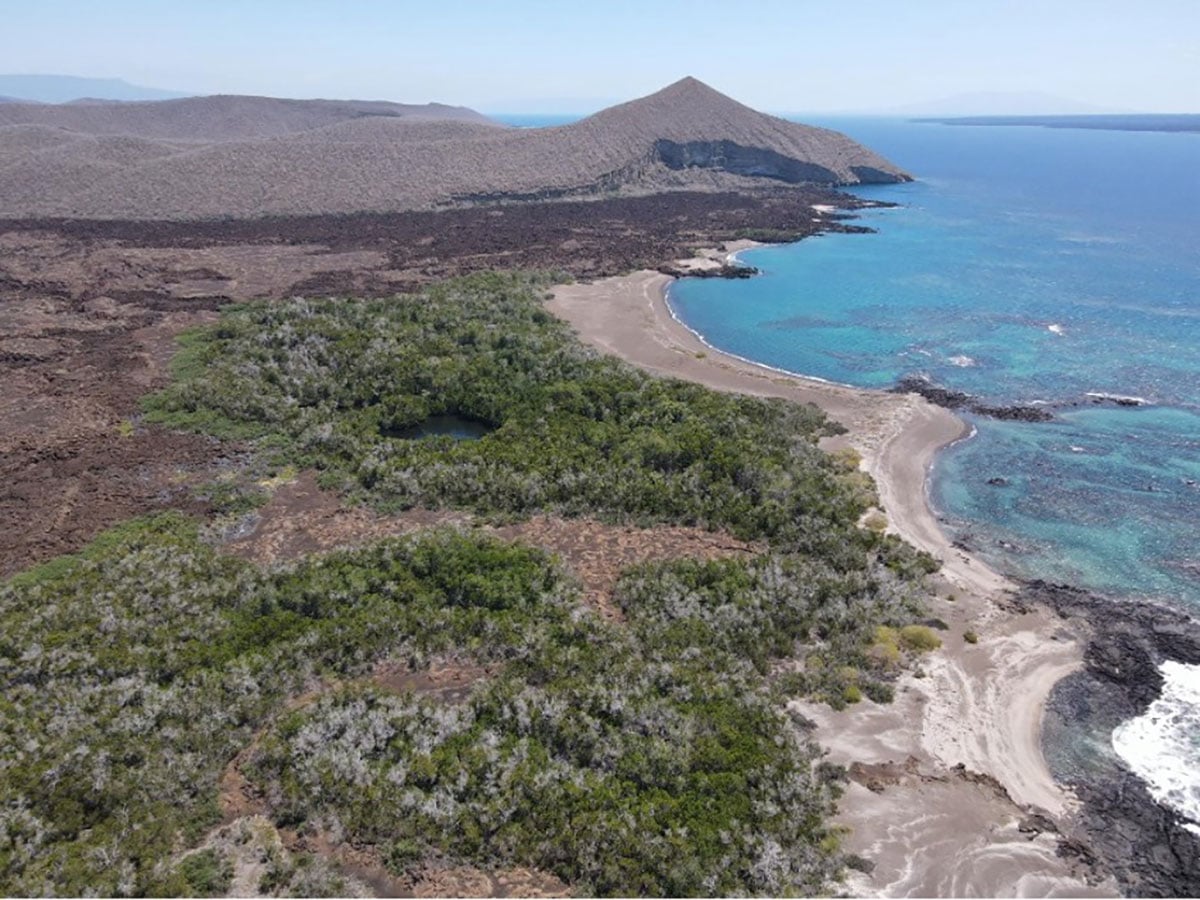
The Galápagos snapdragon, once close to disappearing, is showing encouraging signs of recovery through a long-term partnership between the Charles Darwin Foundation and the Galápagos National Park Directorate.
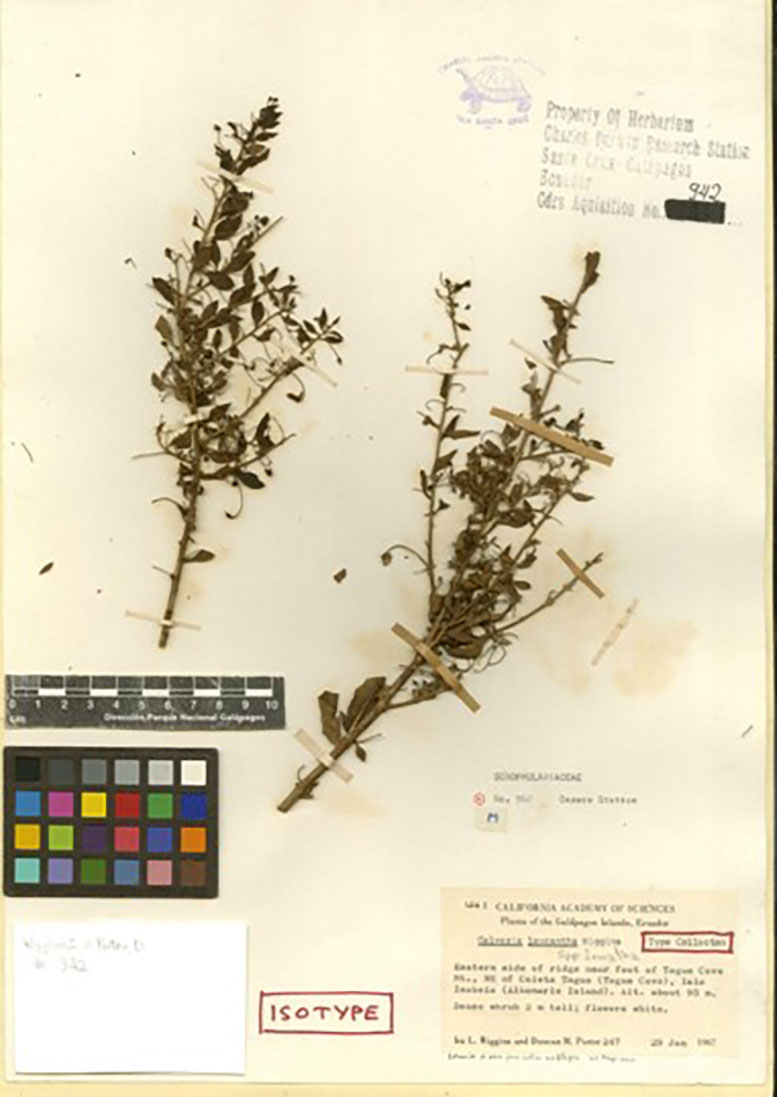
For decades, the Galápagos snapdragon was known from little more than a specimen pressed into an herbarium collection. It had been gathered near Caleta Tagus in 1962, and Patricia Jaramillo Díaz, a senior researcher at the Charles Darwin Research Station, repeatedly returned to the specimen with a basic question: was the plant still alive somewhere in the wild?
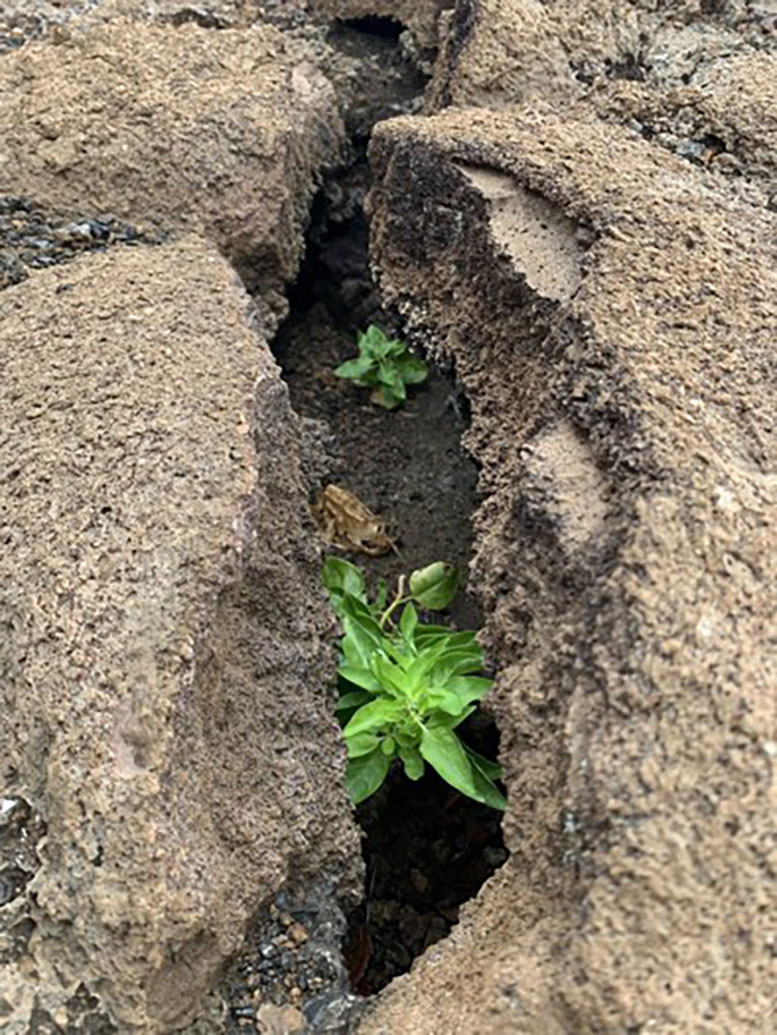
That question led to a search in 1998 across the remote, rugged lava fields of northern Isabela Island. What researchers eventually found was alarming. By 2007, only six individuals remained, surviving in narrow fissures among the young volcanic flows of Darwin Volcano. Historical grazing by introduced herbivores had left the species extraordinarily vulnerable and close to extinction.
“Standing beside those plants, it became clear that we were looking at much more than a rare shrub. Losing them would mean losing an irreplaceable part of the Galápagos’ botanical heritage,” says Jaramillo Díaz, the lead author of the study.
Nursery propagation rebuilt the wild population
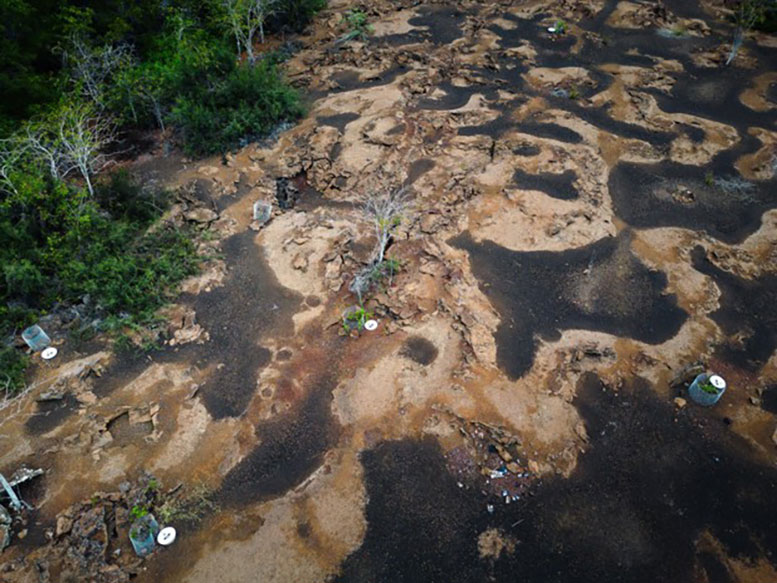
The Galápagos Verde 2050 (GV2050) program responded by raising plants in nurseries and carefully returning them to the wild. Between 2017 – 2024, the program successfully outplanted 94 nursery-grown shrubs across the difficult volcanic terrain of Isabela.
Getting those young plants established in such an arid landscape required researchers to test ways of conserving limited water. The Groasis Waterboxx proved particularly successful, with 100% survival among the transplants tested with the system.
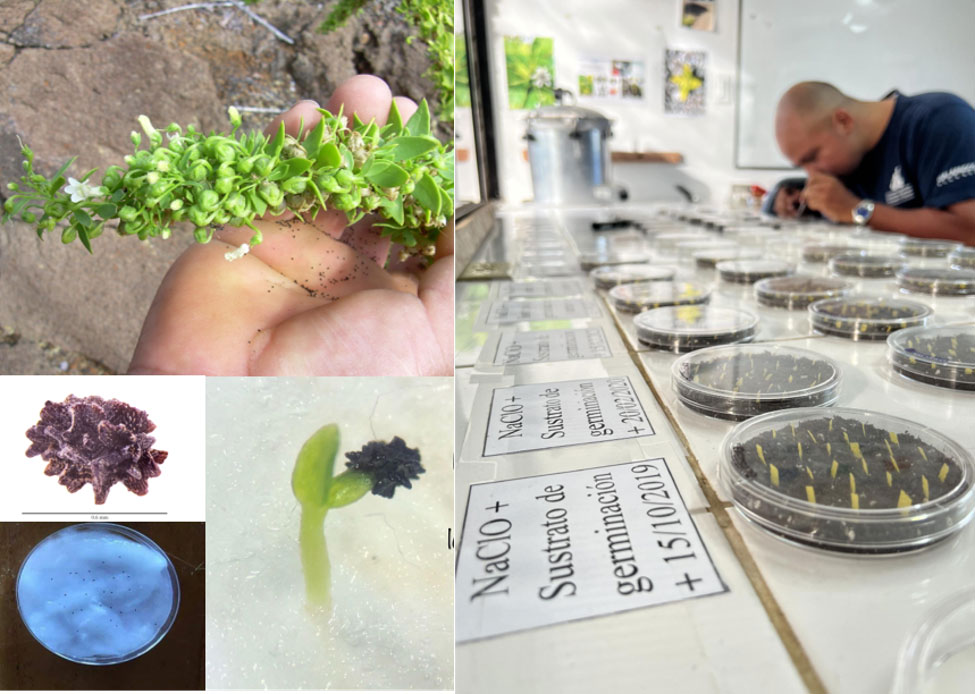
The work also revealed that young snapdragons initially devote much of their energy to developing strong root systems before producing substantial growth above ground. That insight helped researchers judge when plants were sufficiently developed to move from the nursery into the wild, improving their prospects for survival.
Wild seedlings exposed the next challenge
A major sign of progress appeared at Playa Tortuga Negra in 2021, when researchers found four seedlings that had emerged naturally from cracks in the lava. Their presence demonstrated that the restored plants were flowering, producing viable seed, and reproducing on their own in the wild.
The seedlings, however, died during the drought that followed. Their loss revealed the next obstacle to a self sustaining population: future generations must be able to establish themselves under increasingly dry conditions. As Patricia Jaramillo Díaz says “True restoration begins when nature no longer depends on us.”
The snapdragon returned to its historic home
Another milestone came in 2024 when conservationists returned the Galápagos snapdragon to Caleta Tagus, where the original herbarium specimen had been collected in 1962. More than six decades after that plant was preserved and stored, the species was once again growing at its historical site. Today, 8 plants thrive at this site.
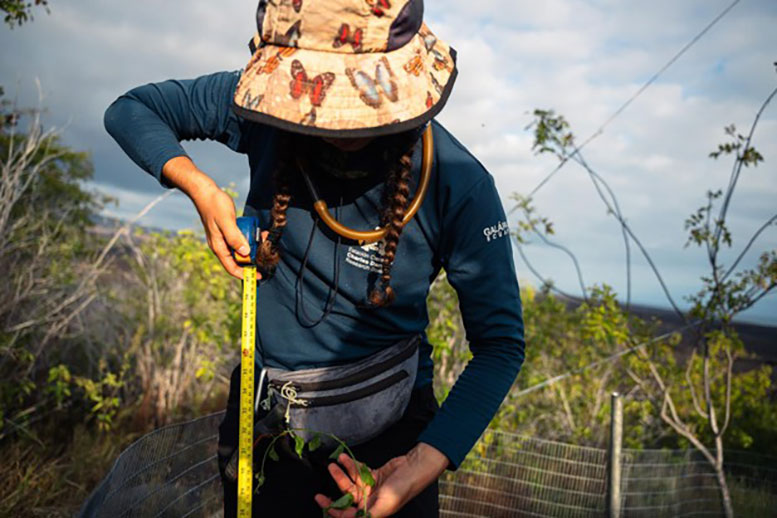
“Looking back today, I do not think first about the number of seedlings we planted or the kilometers we walked across lava fields. I think about the people: the park rangers who protected restoration sites, field assistants who carried plants across difficult terrain, nursery staff who cared for thousands of seedlings, researchers who designed experiments, and students and volunteers whose enthusiasm sustained this project over the years,” Jaramillo Díaz reflects.
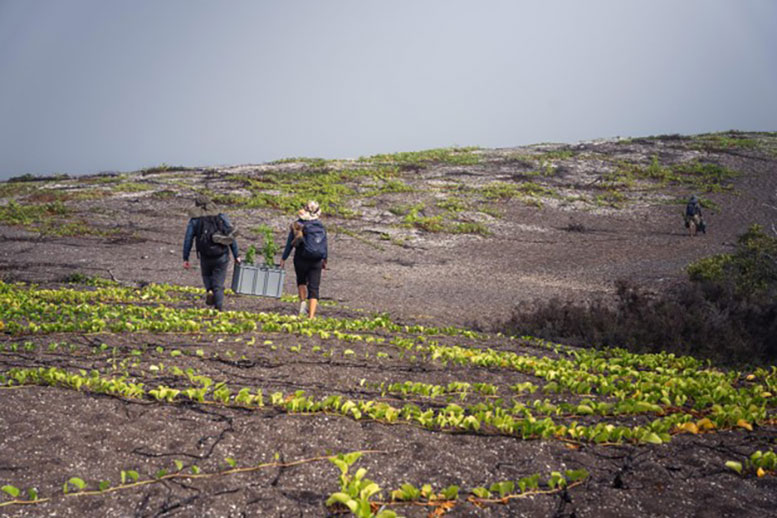
The researchers present the work as a model that could be adapted to restore other endangered island endemic species living in comparable environments. The project shows how information preserved in historical botanical collections can be combined with modern adaptive management to guide the recovery of species facing extinction.
“Conservation begins with curiosity, advances through science, and succeeds through collaboration,” concludes Jaramillo Díaz.
There are now 28 adult plants established across the two restoration sites — 20 at Playa Tortuga Negra and 8 at Caleta Tagus. Water scarcity remains the principal obstacle to long-term recovery, especially because young seedlings must survive long enough to establish themselves. Years of research have provided practical knowledge for propagating, establishing, and caring for the species more effectively.
The next challenge is maintaining that work through sustained conservation efforts, supported by the long-standing collaboration between the Charles Darwin Foundation and the Galápagos National Park Directorate, so that propagation, monitoring, and long-term management can continue supporting recovery. The methods have also been compiled in the recently published Flora Nativa y Endémica de las Islas Galápagos: Guía de propagación (Jaramillo et al., 2025), offering a practical resource for continuing the work.
Reference: “Advances in the recovery of Galvezia leucantha subsp. leucantha (Plantaginaceae): restoring a critically endangered species on northern Isabela Island, Galápagos” by Patricia Jaramillo Díaz, Celine Charette, Anna Calle-Loor, Nelson Espinosa-Ortega, Paúl Mayorga, Danyer Zambrano, Rafael Chango and Nicolás Velasco, 22 July 2026, Nature Conservation.
DOI: 10.3897/natureconservation.64.177895
The authors sincerely acknowledge the financial support of the COmON Foundation, which made this research possible.
Never miss a breakthrough: Join the SciTechDaily newsletter.
Follow us on Google and Google News.