
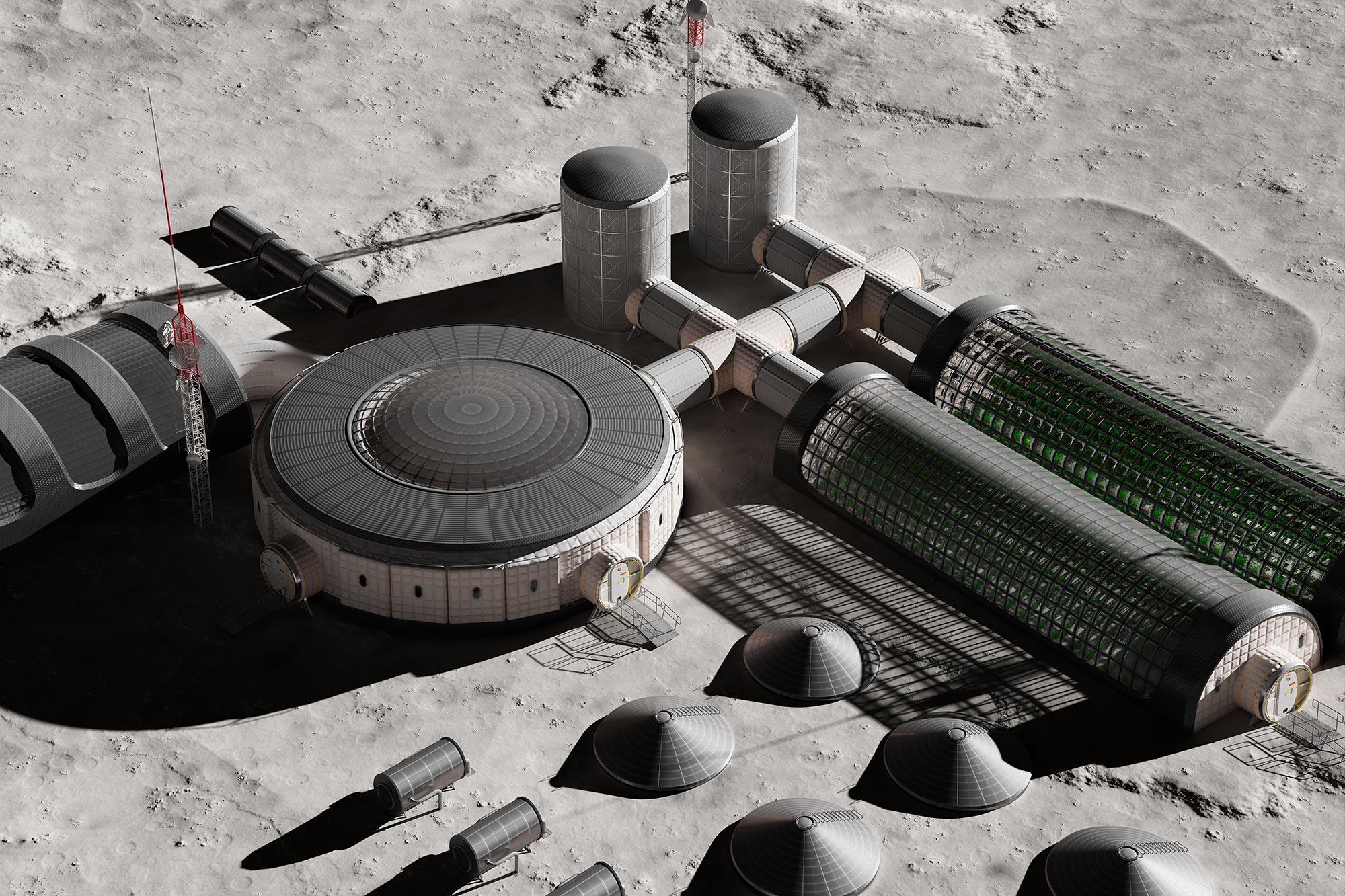
Water ice could sustain small lunar communities for centuries, but supporting cities may require additional supplies or more efficient water use.
Water ice in the Moon’s polar craters has given people planning lunar settlements a reason to think beyond short visits. With water available locally, residents could grow food, take showers, and use toilets without having every necessity delivered from Earth. Whether that supply could keep a growing community going for generations is a harder question.
An initial feasibility estimate examined how much water and electricity lunar cities of 100,000 or 1 million people would need. Even with a generous starting reserve of 1 billion tons of water, a city that did not recycle its supply would exhaust it in just a few years.
Matching the International Space Station’s ability to recycle 98% of its water would extend that lifetime considerably. Under those conditions, a million residents could make the billion-ton reserve last just over a century. Recycling would recover most of the water after each use, but the small fraction lost would keep adding up.
Current estimates put the Moon’s water supply at roughly one-thirtieth of that generous starting amount, shortening the time before it runs out by the same factor. Even a small city could then exhaust its supply in about a decade. Spread among a village of 1,000 people or a town of 10,000, however, the water could last several centuries or more.
That puts a question of scale at the heart of ambitions that now stretch from lunar bases to heavy industry and entire cities. Jeff Bezos has envisioned moving heavy industry to the Moon, while Elon Musk has proposed “self-growing cities” there. Supporting that growth would require finding more water or making the known reserves go much further.
Frozen craters, sunlit rims
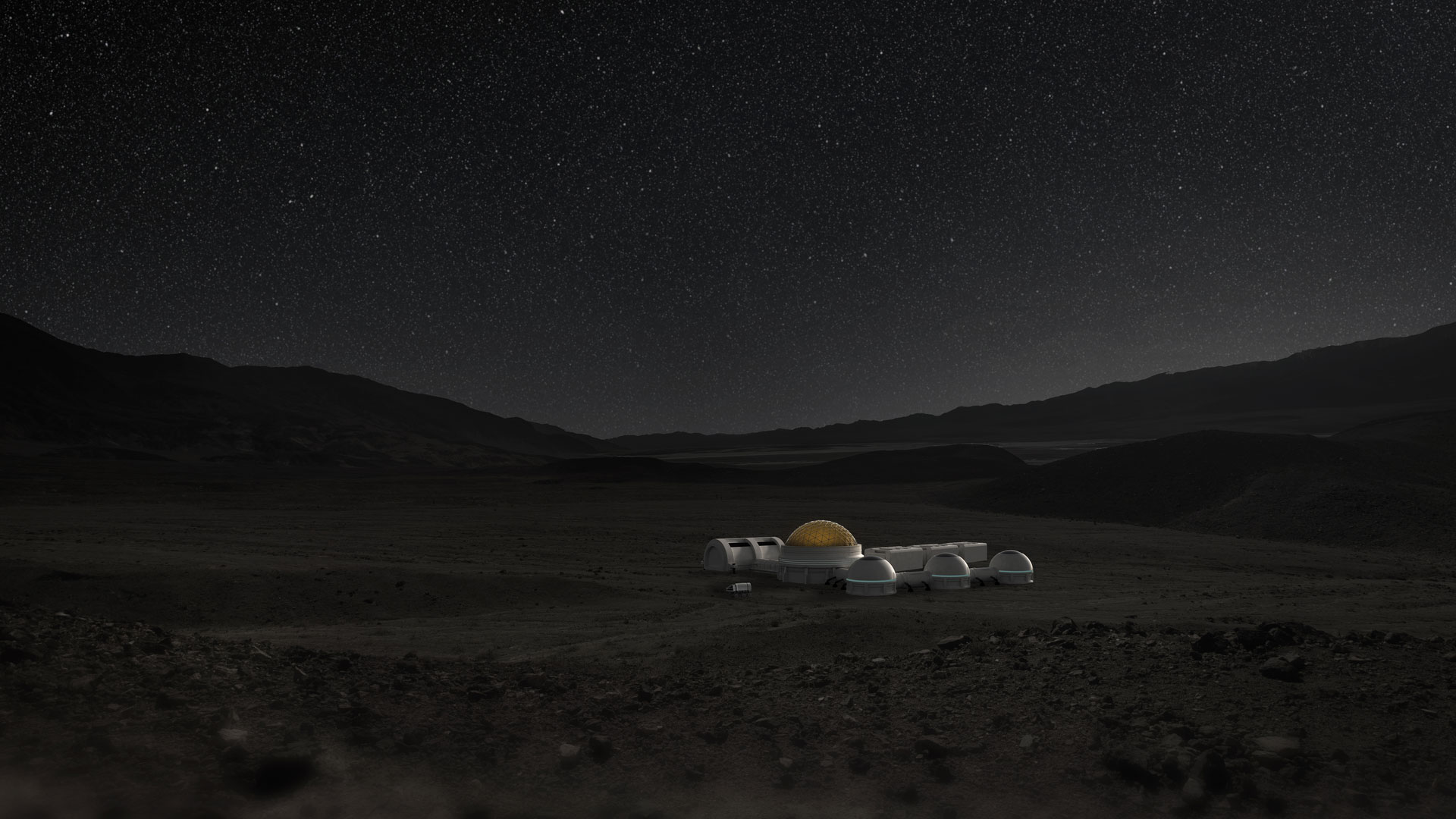
The attraction of the poles is that they bring water and a potential source of electricity close together. Deep inside some craters, ice remains protected from sunlight, while the rims above receive sunlight almost continuously. A settlement could potentially draw on the frozen resource below and generate solar power above.
This arrangement owes much to the asteroid bombardment that marked the Moon’s early history. Impacts soon after its formation left the surface covered in craters, and some of those asteroids also delivered water. Near the poles, dozens of crater floors have now gone about 4 billion years without direct sunlight.
Many of these “pits of eternal darkness” stay below 110 kelvin, about minus 262 degrees Fahrenheit or minus 163 degrees Celsius. At such low temperatures, they act as cold traps. Ice there would lose no more than about a millimeter, or 0.04 inch, of thickness in a billion years through sublimation, the process of turning directly from ice into vapor, even in the vacuum at the lunar surface.
Since 2013, a succession of missions orbiting the Moon has established that water remains in these polar regions and mapped its likely locations in increasing detail. The prospect of using that water helped set off the rush to establish settlements nearby.
The sunlit crater rims offer a way to power those settlements without necessarily needing nuclear reactors. Sometimes called “peaks of eternal light,” they receive nearly continuous illumination, although the nickname overstates it slightly. Towers a kilometer, or about 3,300 feet, tall and covered in solar arrays could generate three gigawatts of electricity along these bright rims.
With plenty of silicon available on the Moon, manufacturing solar panels locally may also be possible. Electricity from the illuminated peaks could potentially support AI data centers nearby, creating an economic activity alongside the settlements. In the feasibility estimate, supplying power appears more manageable than keeping a large population supplied with water.
More lunar water may lie deeper
Stretching the water reserve could involve reducing losses during recycling by a factor of five or more, or lowering demand through techniques such as vertical farming, which grows crops in stacked layers. Importing water, probably from accessible asteroids, is another possibility.
Finding more water may offer the most promising route because existing surveys reach only a few meters below the surface. The Moon’s regolith, the loose, rubble-like rock covering its surface, typically extends tens of meters down. Within the cold traps, that deeper material may hold water beyond the reach of current measurements.
Reference: “No cities on the Moon: a billion tons of water is not enough for sustainability” by Martin Elvis and Jonathan C. McDowell, 13 September 2026, Frontiers in Space Technologies.
DOI: 10.3389/frspt.2026.1894104
Never miss a breakthrough: Join the SciTechDaily newsletter.
Follow us on Google and Google News.