
Close Menu
    Facebook X (Twitter) Instagram
    SciTechDaily
    • Biology
    • Chemistry
    • Earth
    • Health
    • Physics
    • Science
    • Space
    • Technology
    Facebook X (Twitter) Pinterest YouTube RSS
    SciTechDaily
    Home»Space»Catalog of Moon’s Craters May Reveal Ice Beyond Moon’s Poles
    Space

    Catalog of Moon’s Craters May Reveal Ice Beyond Moon’s Poles

    By SciTechDailyOctober 1, 20121 Comment2 Mins Read
    Facebook Twitter Pinterest Telegram LinkedIn WhatsApp Email Reddit
    Share
    Facebook Twitter LinkedIn Pinterest Telegram Email Reddit
    best-guess-possible-volatiles
    Yellow spots indicate best guesses for volatiles

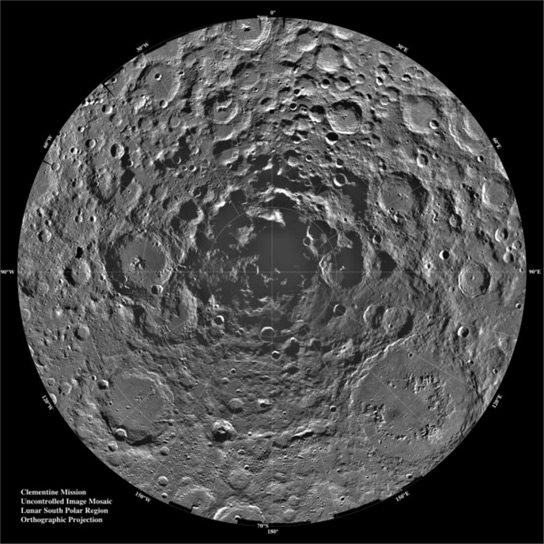
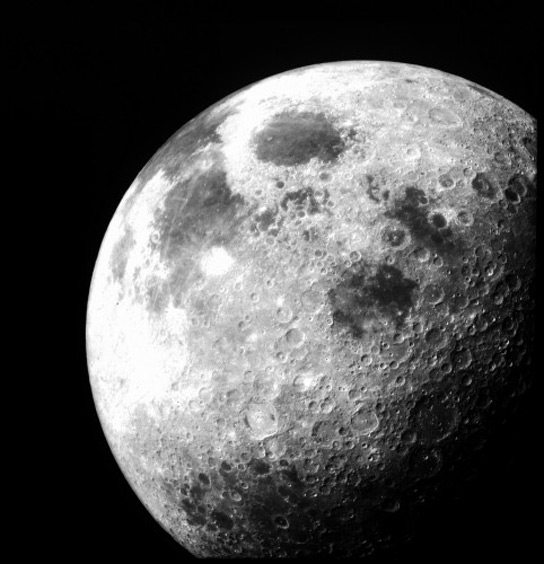
    There might be more ice on the Moon than was previously thought. There are permanent shadows far from the lunar poles, which has expanded the number of sites that would be good candidates for exploration by robotic rovers or even possible locations of future moon bases.

    Scientists published their findings in the journal Nature. Astronomers have known for decades that the Moon’s poles host craters with lofty rims, which shield their floors from sunlight, making searches difficult. Over the past few months, astronomers have built a catalog of other permanently shadowed regions on the Moon.
    crater-map-mooon

    The team used software they developed, called LunarShader, to simulate the lighting conditions on the moon throughout its solar cycles. Once topographical models were inputted, the software identified 100 craters that could contain permanent shadows. Some of them are located as many as 58 degrees of latitude from the pole in both hemispheres.

    The findings open a much larger area where permanently manned stations could be established. Although any mission sent to study water ice on the Moon will still need detailed maps of its distribution.

    The craters are only half the temperature of their better-lit surroundings, about 175 °K (-98 °K or -145 °F), but still hot enough to boil water in the Moon’s thin atmosphere, so any ice must be insulated beneath the surface.

    These non-polar areas offer unique environments that could harbor volatiles. The team is currently characterizing other potential sites that are permanently shadowed. Even with the use radar instruments on orbiting spacecraft, close-up observations are needed to confirm any findings. This could be limited to rovers, which would need some technology that would allow them to function in darkness. It’s been proposed to use solar masts, at least 10 meters (33 feet) in height, to act like a solar snorkel to soak up the sun in order to power these rovers.
    moon-crater-ice

    Reference: “Constraints on the volatile distribution within Shackleton crater at the lunar south pole” by Maria T. Zuber, James W. Head, David E. Smith, Gregory A. Neumann, Erwan Mazarico, Mark H. Torrence, Oded Aharonson, Alexander R. Tye, Caleb I. Fassett, Margaret A. Rosenburg and H. Jay Melosh, 20 June 2012, Nature.
    DOI: 10.1038/nature11216

    Never miss a breakthrough: Join the SciTechDaily newsletter.
    Follow us on Google and Google News.

    Astronomy Crater Ice Moon Planetary Science
    Share. Facebook Twitter Pinterest LinkedIn Email Reddit

    Related Articles

    Lunar Far Side Mystery Linked to Massive Ancient Impact

    The Moon Was Hit Again: NASA Scientists Discover a Newly Formed Crater

    Study Suggests Earth and Moon Have Common Water Source

    Io’s Volcanoes Are Not Located Where Scientists Expected

    Pre-existing Mineral Deposits on the Moon Can Survive Lunar Impacts

    Presence of Water in the Primary Crust Indicates That the Early Moon Was Wet

    Saturn-Like Rings May Have Formed Solar System’s Moons

    New Theoretical Models Salvage Moon-Forming Impact Theory

    Simulation May Explain Saturnian System

    1 Comment

    1. bennet on October 1, 2012 10:10 am

      amazing foto’s hats off

      Reply
    Leave A Reply Cancel Reply

    • Facebook
    • Twitter
    • Pinterest
    • YouTube

    Don't Miss a Discovery

    Subscribe for the Latest in Science & Tech!

    Trending News

    The Universe Is Expanding Too Fast and Scientists Can’t Explain Why

    “Like Liquid Metal”: Scientists Create Strange Shape-Shifting Material

    Early Warning Signals of Esophageal Cancer May Be Hiding in Plain Sight

    Common Blood Pressure Drug Shows Surprising Power Against Deadly Antibiotic-Resistant Superbug

    Scientists Uncover Dangerous Connection Between Serotonin and Heart Valve Disease

    Scientists Discover a “Protector” Protein That Could Help Reverse Hair Loss

    Bone-Strengthening Discovery Could Reverse Osteoporosis

    Scientists Uncover Hidden Trigger Behind Stem Cell Aging

    Follow SciTechDaily
    • Facebook
    • Twitter
    • YouTube
    • Pinterest
    • Newsletter
    • RSS
    SciTech News
    • Biology News
    • Chemistry News
    • Earth News
    • Health News
    • Physics News
    • Science News
    • Space News
    • Technology News
    Recent Posts
    • Scientists Create Improved Insulin Cells That Reverse Diabetes in Mice
    • Scientists Stunned After Finding Plant Thought Extinct for 60 Years
    • A Common Diabetes Drug May Hold the Key to Stopping HIV From Coming Back
    • Ancient “Syphilis-Like” Disease in Vietnam Challenges Key Scientific Assumptions
    • Drinking Alcohol To Cope in Your 20s Could Damage Your Brain for Life
    Copyright © 1998 - 2026 SciTechDaily. All Rights Reserved.
    • Science News
    • About
    • Contact
    • Editorial Board
    • Privacy Policy
    • Terms of Use

    Type above and press Enter to search. Press Esc to cancel.