
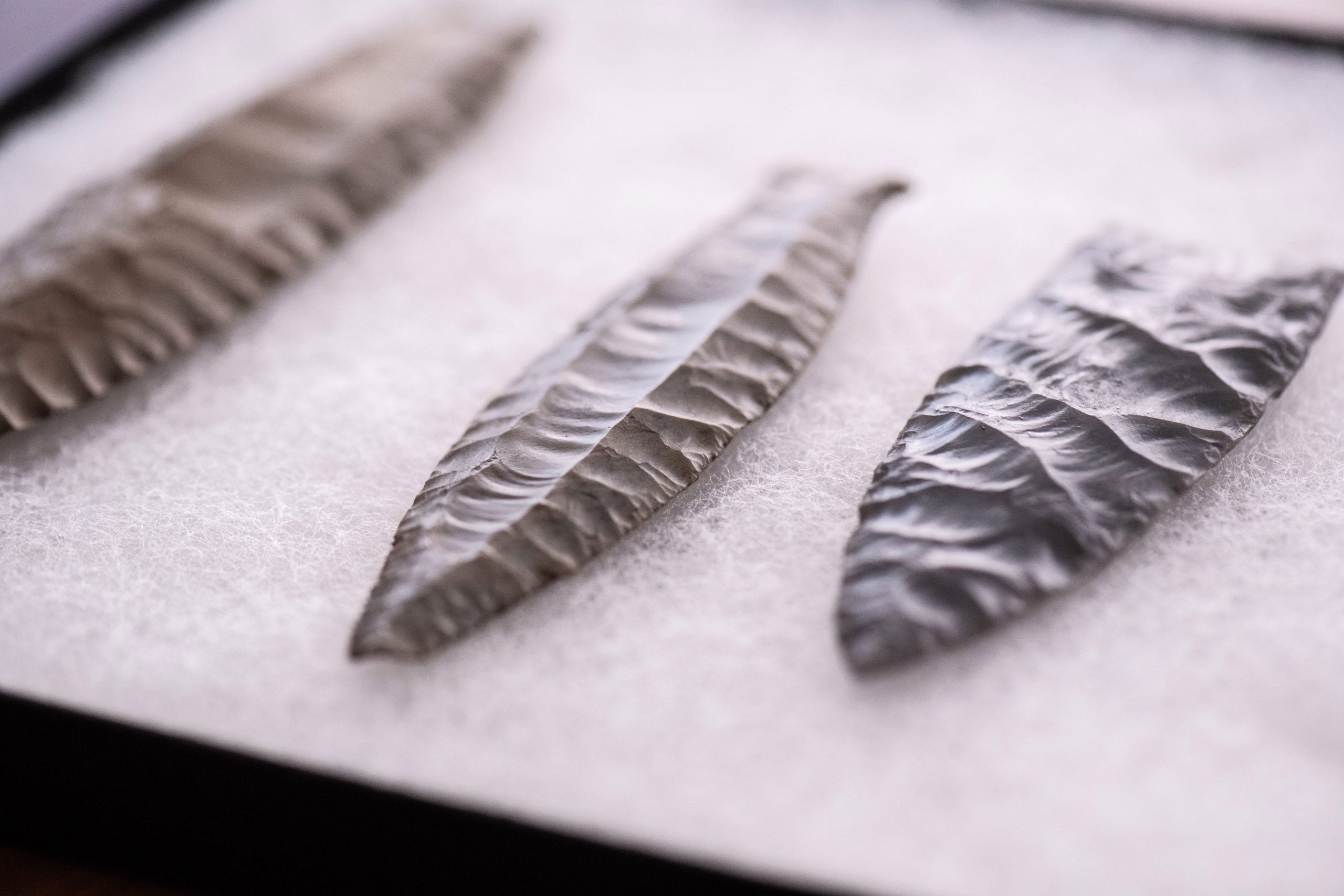
An analysis of roughly 500 spear points suggests that inherited knowledge of stone deposits helped Ice Age hunters decide which tools were worth carrying.
Ice Age hunters in the Tennessee River Valley sometimes threw away stone spearheads that were still usable. Leaving a point behind lightened the load, but replacing it required suitable rock, something people entering unfamiliar territory could not necessarily count on finding.
“When you think about a people who are moving around a lot, understand that they didn’t have any pack animals,” said Shane Miller, an assistant professor of anthropology at the University of Alabama. “That puts limitations on what tools you discard and what you carry around.
“You really don’t want to be carrying around a bag of rocks, and so you’re going to be judicious about balancing what you need versus what you can carry.”
Miller and Jesse Tune, an associate professor of anthropology at the University of Mississippi and director of its Center for Archaeological Research, examined roughly 500 spear points recovered from the Tennessee River Valley. Their study, published in the Journal of Archaeological Method and Theory, compared tools left by Clovis and Cumberland groups to investigate how knowledge of local resources might have influenced what their owners kept.
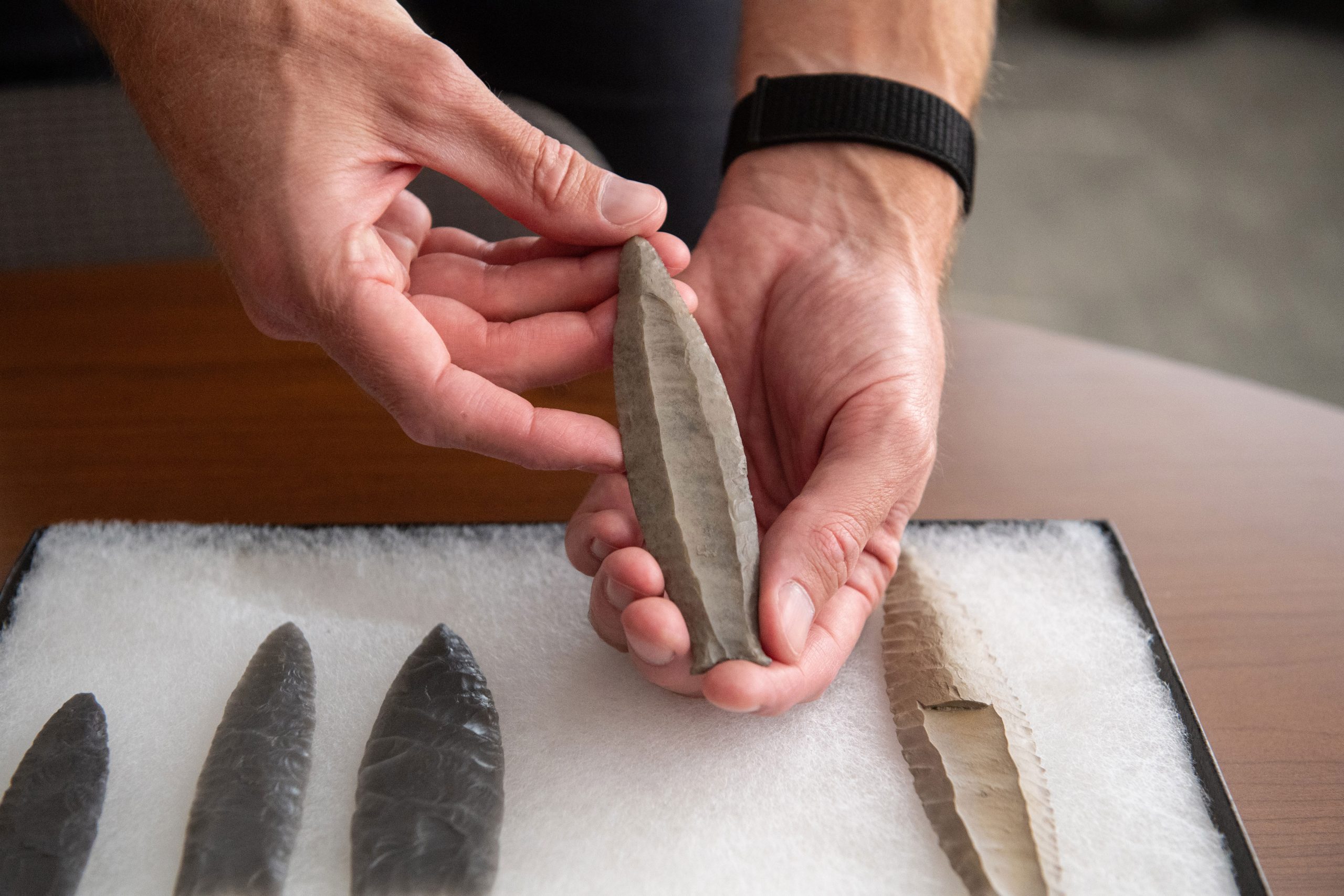
“How did they adapt to a place no one has ever been before?” Miller said. “We can’t interview these people, so we have to look at the things they left behind.
“There aren’t that many archaeological sites for these people that we can dig, but what we have instead are lots and lots of points that people have found in this region.”

Unfamiliar ground, uncertain stone supplies
Clovis groups were living in the Tennessee River Valley around 13,200 years ago, placing them among its earliest known inhabitants. Entering unfamiliar terrain meant having to locate the materials needed for daily life, including chert, a sedimentary rock well suited to making stone weapons. Skill at shaping a spearhead could only go so far without knowing where to obtain the stone.
“Think about space exploration,” Tune said. “There really is no difference between Ice Age hunter-gatherers and the people sending missions and rovers to Mars. We’re moving into an area, deciding what to take with us, learning the resources, and slowly expanding. It’s the exact same process.
“What we learn and how we pass on that knowledge are the same things that we’re still dealing with today. The only thing that’s changed is the technology.”
Clovis hunters kept disposable spearheads working
Tune and Miller found that Clovis hunters were more likely to resharpen their spearheads than the later Cumberland groups. Keeping an existing point in use postponed the need to replace it, a pattern the researchers interpret as a possible way of conserving resources when hunters were less certain where to find more stone.
“We hang on to stuff today, but when we’re talking about mobile hunter-gatherers, they had a different understanding and worldview when it came to personal possessions,” Tune said. “Spear points were designed to be disposable objects, and that makes what the Clovis were doing interesting.”
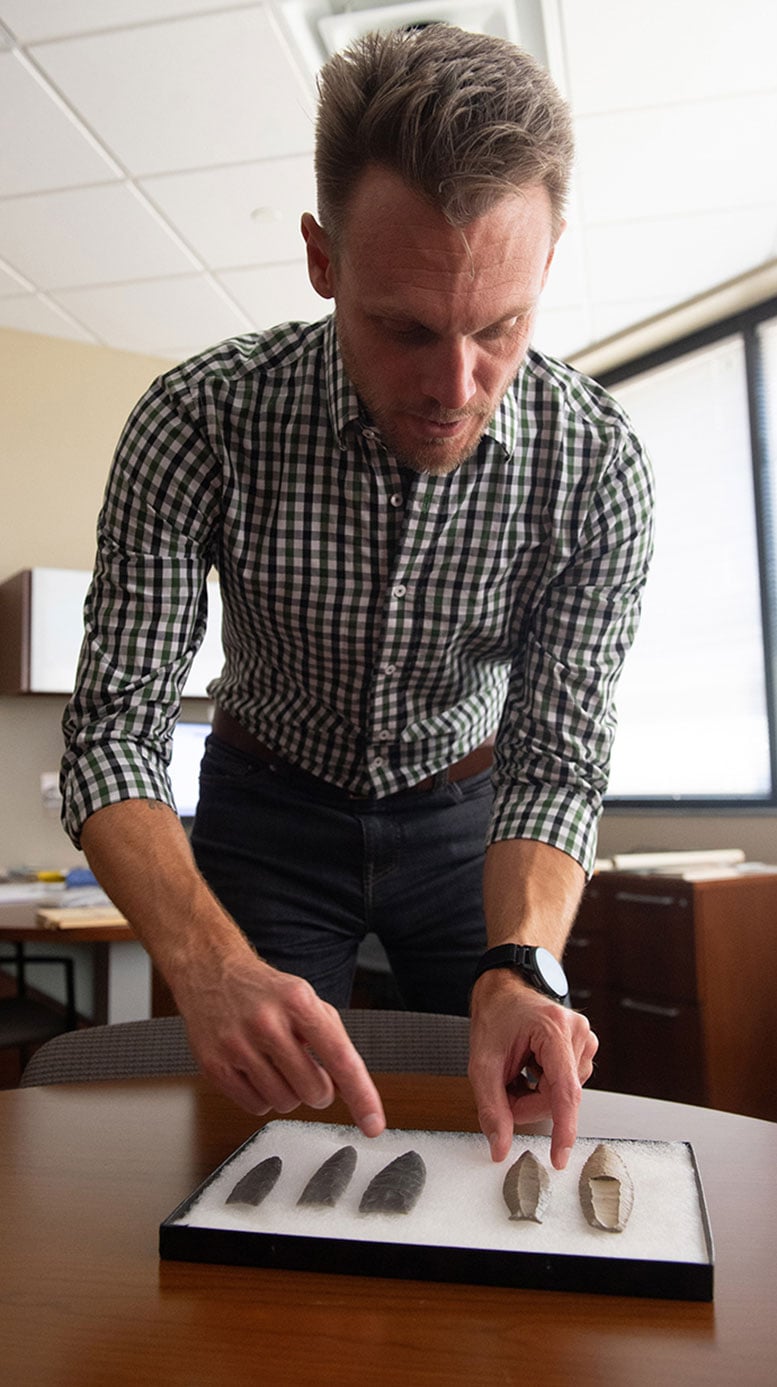
Hunters followed seasons, rivers, and game across the Americas, carrying tools that now survive as some of the few traces of their daily lives. The researchers are using those objects to reconstruct decisions made in surroundings very different from the valley today.
“We’re talking about Ice Age hunter-gatherers, people that looked and acted just like us and had the same needs that we do,” Tune said. “But they’re living in a world that is dominated by mastodons, mammoths, giant sloths – all these animals that are totally unfamiliar to us today.
“What we’re looking at – the points – is a tiny part of their life, but we’re trying to see the rest of their behaviors through the lens of these spear points because that’s what we have.”
Discarded spearheads hint at inherited knowledge
Cumberland hunters followed the Clovis groups several hundred years later, leaving behind tools that gave Tune and Miller a different set of choices to examine.
“When we look at the Cumberland points, we can see where they got the raw material, roughly the time period that they lived and that they’ve used the point multiple times,” Tune said. “But (the point) was rarely completely broken to the point that it couldn’t be used anymore.
“So how did it end up in what was essentially the trash, and then in the archaeological record?”
Cumberland hunters, the researchers suggest, inherited their predecessors’ knowledge of chert deposits and other resources. A usable spearhead left behind in the Tennessee River Valley may record the practical value of that inheritance: knowing where to find fresh stone made an old point easier to let go.
Reference: “Foraging Theory and the Colonization of Unfamiliar Landscapes: Assessing Late Pleistocene Projectile Point Reduction Strategies” by Jesse W. Tune, and D. Shane Miller, 27 August 2026, Journal of Archaeological Method and Theory.
DOI: 10.1007/s10816-026-09825-w
Never miss a breakthrough: Join the SciTechDaily newsletter.
Follow us on Google and Google News.