
Close Menu
    Facebook X (Twitter) Instagram
    SciTechDaily
    • Biology
    • Chemistry
    • Earth
    • Health
    • Physics
    • Science
    • Space
    • Technology
    Facebook X (Twitter) Pinterest YouTube RSS
    SciTechDaily
    Home»Health»New Triple-Action Drug Helps People With Diabetes Lose Up to 15% of Their Body Weight
    Health

    New Triple-Action Drug Helps People With Diabetes Lose Up to 15% of Their Body Weight

    By The LancetOctober 19, 2026No Comments3 Mins Read
    Facebook Twitter Pinterest Telegram LinkedIn WhatsApp Email Reddit
    Share
    Facebook Twitter LinkedIn Pinterest Telegram Email Reddit
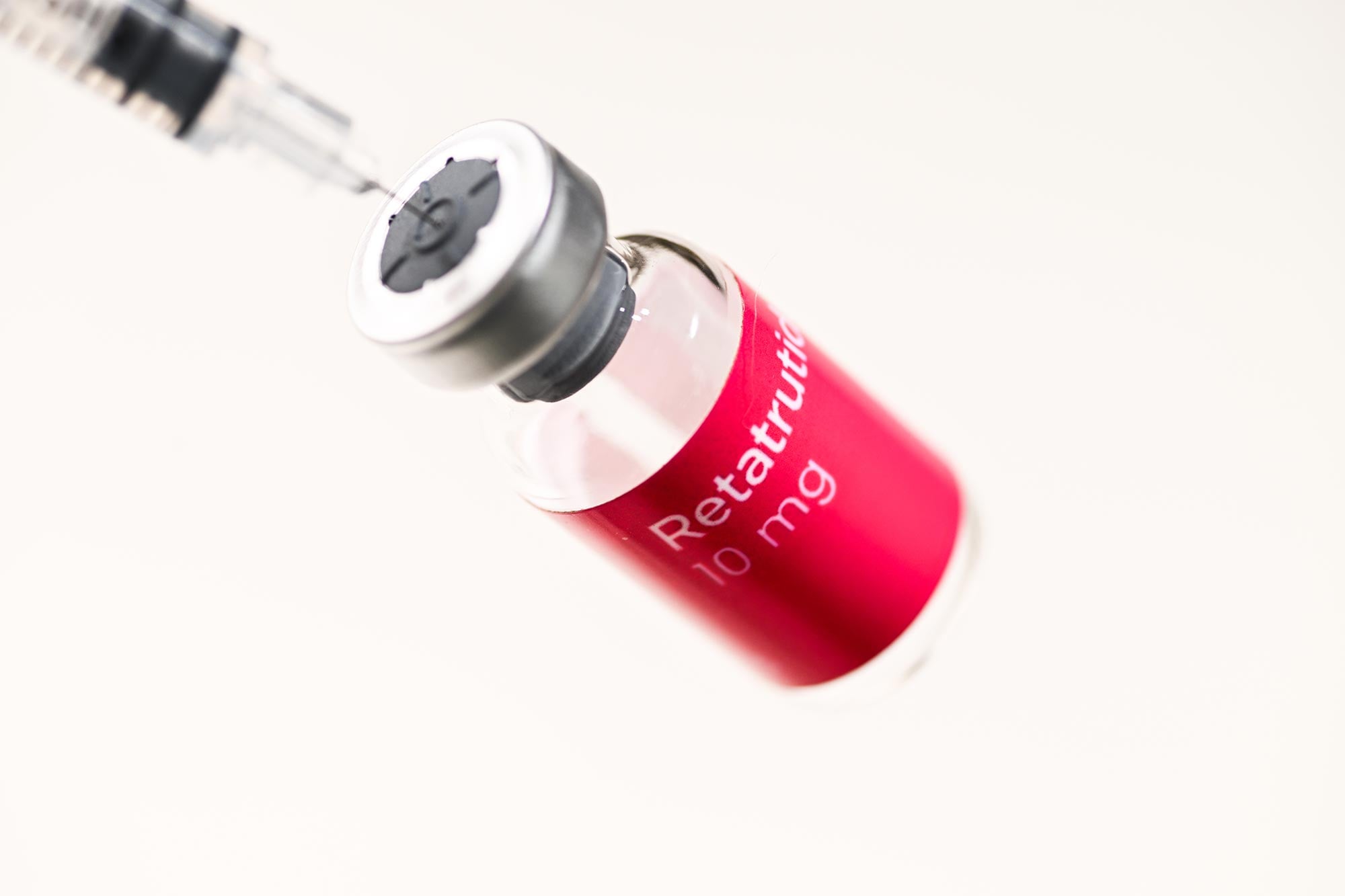
    Weight Loss Drug Retatrutide Vial Syringe
    Retatrutide is an experimental once-weekly injectable drug being developed to treat type 2 diabetes and obesity. Unlike existing medications such as Ozempic and Mounjaro, it targets three hormone receptors involved in blood sugar regulation, appetite, and metabolism: GLP-1, GIP, and glucagon. Credit: Shutterstock

    An experimental drug that targets three metabolic pathways has shown promising results in people with type 2 diabetes.

    An experimental drug that targets three metabolic pathways has produced substantial improvements in blood sugar control and weight loss in people with type 2 diabetes. In a phase 3 clinical trial published in The Lancet, participants receiving the once-weekly injection lost an average of up to 15.3% of their body weight over 40 weeks, alongside significant reductions in long-term blood sugar levels.

    The drug, called retatrutide, belongs to an emerging generation of treatments designed to influence several hormones involved in metabolism. Unlike existing medications that activate one or two hormone receptors, retatrutide acts on three, potentially offering a different approach to treating diabetes and obesity.

    Significant Improvements in Blood Sugar and Weight

    The trial found that retatrutide reduced HbA1c, a measure of average blood sugar over approximately three months, by 1.69 to 1.94 percentage points, depending on the dose. Participants receiving a placebo experienced a smaller reduction of 0.81 percentage points.

    Weight loss also increased with the dose. Participants receiving 4 mg, 9 mg, or 12 mg of retatrutide lost an average of 11.5%, 13.9%, and 15.3% of their body weight, respectively. Those given a placebo lost an average of 2.6%.

    How Retatrutide Differs From Ozempic and Mounjaro

    Retatrutide activates three hormone receptors involved in regulating blood sugar, appetite, and energy metabolism: GIP, GLP-1, and glucagon. By comparison, Ozempic targets GLP-1, while Mounjaro activates both GLP-1 and GIP.

    The addition of glucagon receptor activity could help explain retatrutide’s effects on body weight. Although glucagon normally helps raise blood sugar, it also influences how the body uses and expends energy. Combining its activity with GLP-1 and GIP signaling may support weight loss while maintaining improved glucose control. However, the trial did not directly establish how much each pathway contributed to the observed benefits.

    Promising Results, but Longer-Term Safety Remains Under Study

    Researchers conducted the 40-week trial at 48 sites across the United States, Mexico, and India. Of 930 adults screened, 537 were randomly assigned to receive one of three retatrutide doses or a placebo. All participants had type 2 diabetes that was inadequately controlled through diet and exercise alone and were not taking diabetes medications.

    The most common side effects were gastrointestinal problems, generally mild to moderate, that tended to improve over time. Between 2% and 5% of participants receiving retatrutide discontinued treatment because of adverse events. No severe hypoglycemia was reported. Two participants died during the study, but both deaths were assessed as unrelated to the treatment.

    Although the results support retatrutide’s potential as a diabetes treatment, the study did not compare it directly with currently available drugs such as Ozempic or Mounjaro. Additional clinical trials and longer-term follow-up are needed to determine whether its benefits persist and to better establish its safety profile.

    Reference: “Efficacy and safety of retatrutide, a GIP, GLP-1, and glucagon receptor agonist, in people with type 2 diabetes and inadequate glycaemic control with diet and exercise (TRANSCEND-T2D-1): a double-blind, randomised, phase 3 trial” by Harpreet S Bajaj, Michelle Welch, Parag Shah, Eduardo Luna, Fatima-Zahra Jaouimaa, Bing Liu, Rong Liu, Yanyun Chen, Hiren Patel and Amy Bartee, 6 June 2026, The Lancet.
    DOI: 10.1016/S0140-6736(26)00967-0

    Funding: Eli Lilly and Company

    Never miss a breakthrough: Join the SciTechDaily newsletter.
    Follow us on Google and Google News.

    Diabetes Public Health The Lancet Weight Loss
    Share. Facebook Twitter Pinterest LinkedIn Email Reddit

    Related Articles

    Nearly 20% Weight Loss Achieved With Higher Dose of Semaglutide, Study Finds

    Mounjaro Mania: New Diabetes Drug Takes Over As Old Treatments Fade

    Popular Weight Loss Drugs Could Affect Your Behavior: Scientists Conduct Genetic Investigation

    Safe Weight Loss: Obesity Medication Liraglutide Proves Safe for Children in Landmark Study

    An Improved Ozempic: Scientists Discover Method To Reduce Side Effects of Popular Weight Loss Drugs

    Revolutionary Weight Loss: Largest Ever Obesity Study Showcases Semaglutide’s Promise

    Alarming Trend – Young Adults’ Use of Popular Weight Loss Drugs Wegovy and Ozempic Skyrockets by 594%

    Can Type 2 Diabetes Be Reversed for Good? Experts Weigh In

    Does Intermittent Fasting Actually Work? Study Finds Meal Frequency Matters More Than Timing

    Leave A Reply Cancel Reply

    • Facebook
    • Twitter
    • Pinterest
    • YouTube

    Don't Miss a Discovery

    Subscribe for the Latest in Science & Tech!

    Trending News

    Scientists Discover an Unexpected Problem With a Cancer Drug Already in Human Trials

    NASA Is About to Investigate What Lies Beneath a Giant Hole on the Moon

    NASA Captures a Strange Formation on Earth With a Surprising Lunar Connection

    Scientists Discover a Surprising Shortcut to Nuclear Fusion

    Scientists Discover a Surprising New Way To Fight High Blood Pressure – Through the Ear

    Scientists Say That a Honey Bee Colony May Actually Be a Single Living Organism

    Zimbabwe’s Ancient Dinosaurs Were Nothing Like Scientists Expected

    Scientists Discover Why Eating Fat Before Carbs Reduces Blood Sugar Spikes

    Follow SciTechDaily
    • Facebook
    • Twitter
    • YouTube
    • Pinterest
    • Newsletter
    • RSS
    SciTech News
    • Biology News
    • Chemistry News
    • Earth News
    • Health News
    • Physics News
    • Science News
    • Space News
    • Technology News
    Recent Posts
    • New Triple-Action Drug Helps People With Diabetes Lose Up to 15% of Their Body Weight
    • Not Getting Enough Daylight Could Be Linked to a Higher Risk of Dementia
    • Researchers Unleash Record-Breaking X-Ray Flashes in Just 300 Attoseconds
    • NASA’s James Webb Telescope Reveals a Giant Alien Planet That’s Not Quite Round
    • What Kills Schrödinger’s Cat? Scientists Just Ruled Out a 60-Year-Old Theory
    Copyright © 1998 - 2026 SciTechDaily. All Rights Reserved.
    • Science News
    • About
    • Contact
    • Editorial Board
    • Privacy Policy
    • Terms of Use

    Type above and press Enter to search. Press Esc to cancel.