
Nearly identical butterflies share the same tropical forests, yet scientists still cannot fully explain how they recognize their own kind.
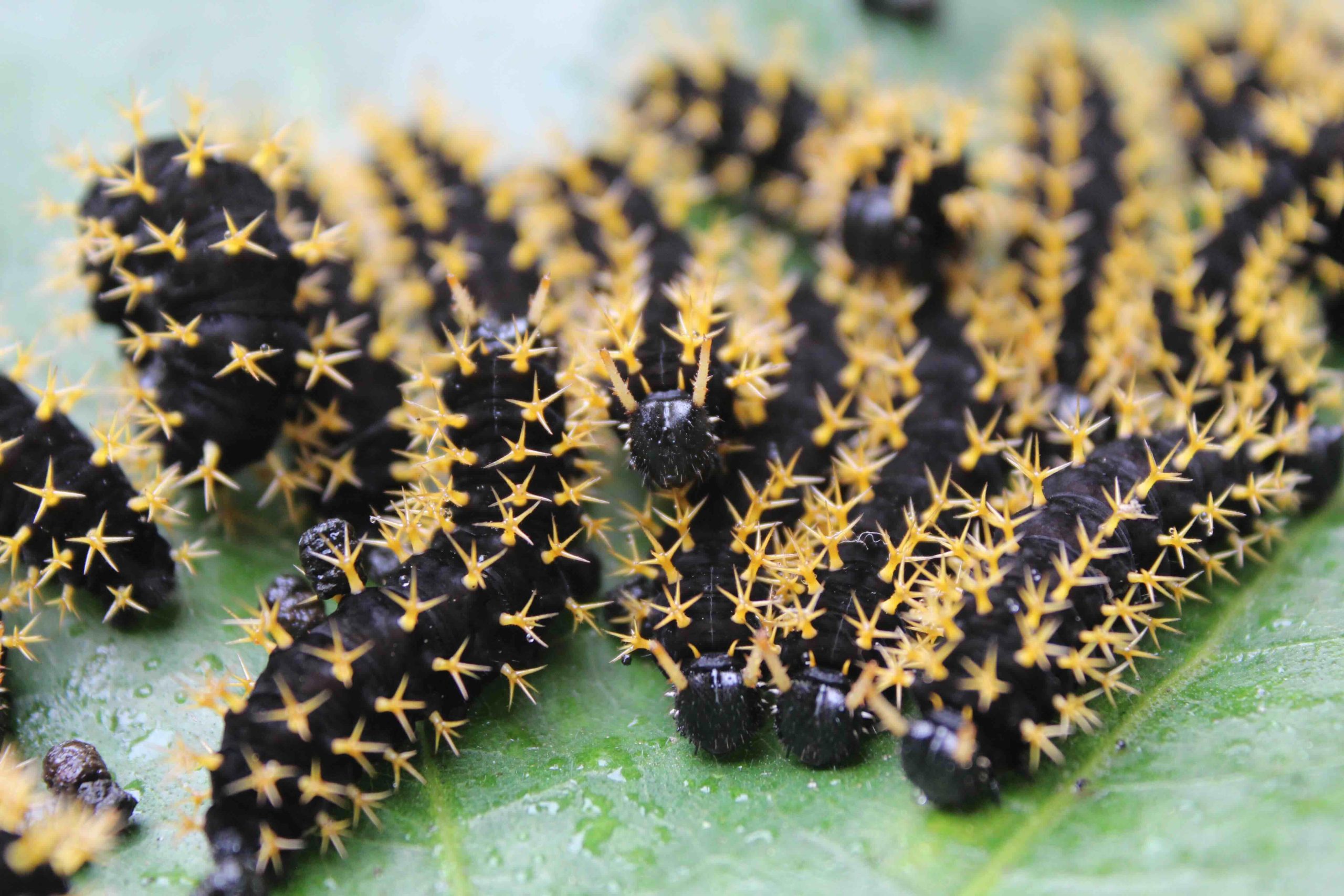
When Andrés Orellana found caterpillars stripping the leaves from a Cecropia sapling in Venezuela, they had the familiar black bodies and yellow spines of Colobura butterflies. None, however, had the cream-colored markings seen in the two known species.
That missing detail helped lead researchers to a third species, Colobura cryptica. Anisha Sapkota, a doctoral student at the Florida Museum of Natural History, and her colleagues described the species in Zootaxa, drawing on genetic evidence and subtle differences in the insects’ appearance. Their work also raised an unresolved question about how these nearly identical butterflies remain separate species while sharing much of the same territory.
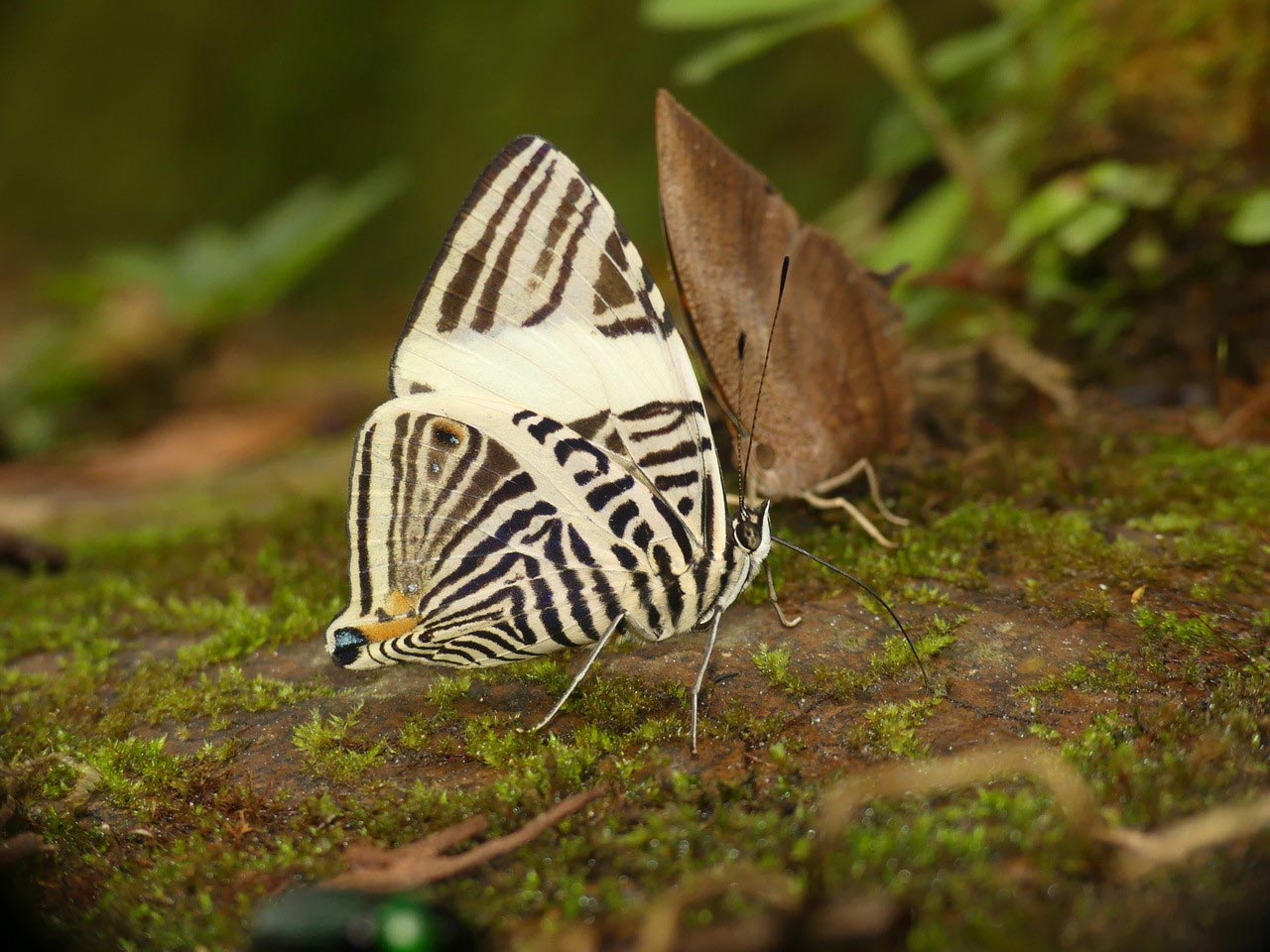
Colobura is a familiar presence in the tropical Americas, or neotropics. These rainforests are among the most biodiverse places on Earth. Costa Rica alone supports half a million species, five times as many as Canada on roughly one two-hundredth of its land area.
“If you go to the neotropics, Colobura is one of the first butterflies you see,” Sapkota said.
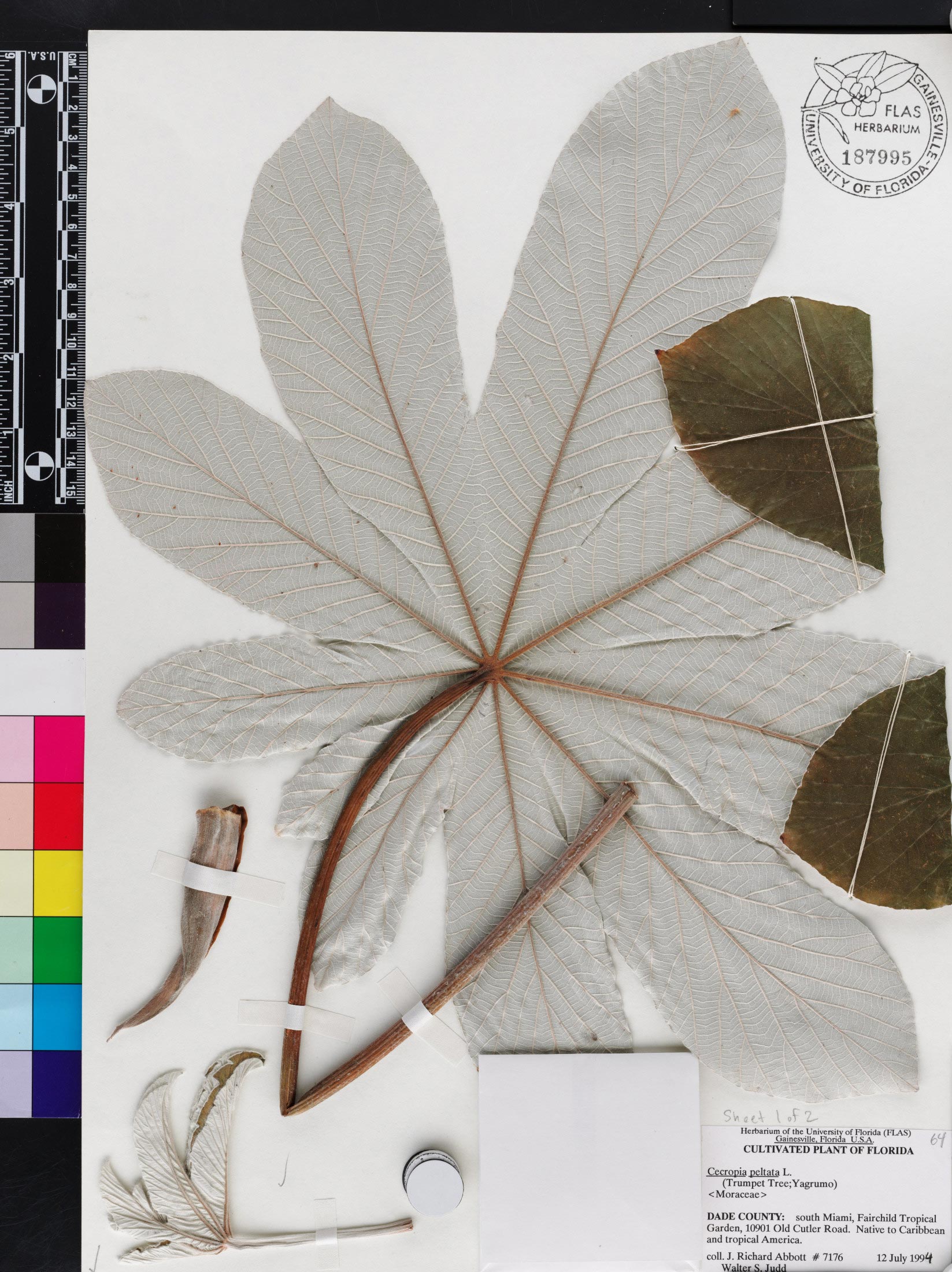
Their caterpillars feed on Cecropia, trees as characteristic of these tropical forests as balsam firs are of boreal forests in parts of Canada. In 1888, German botanist Andreas Schimper wrote, “Every naturalist who has been in tropical America will remember Cecropia, belonging to the most conspicuous trees of those countries.”
Both the butterflies and their host trees occur across a broad area that includes parts of the Andes, the Brazilian Amazon, the Atlantic Rainforest in Brazil and Paraguay, and much of Central America and the Caribbean. Most of the 61 Cecropia species occupy only part of that territory, with some restricted to the Andes and others to the Caribbean. For more than two centuries after Carl Linnaeus’s 1758 description, however, scientists recognized just one widespread species of Colobura, called C. dirce.
Caterpillar clues dismissed for 150 years
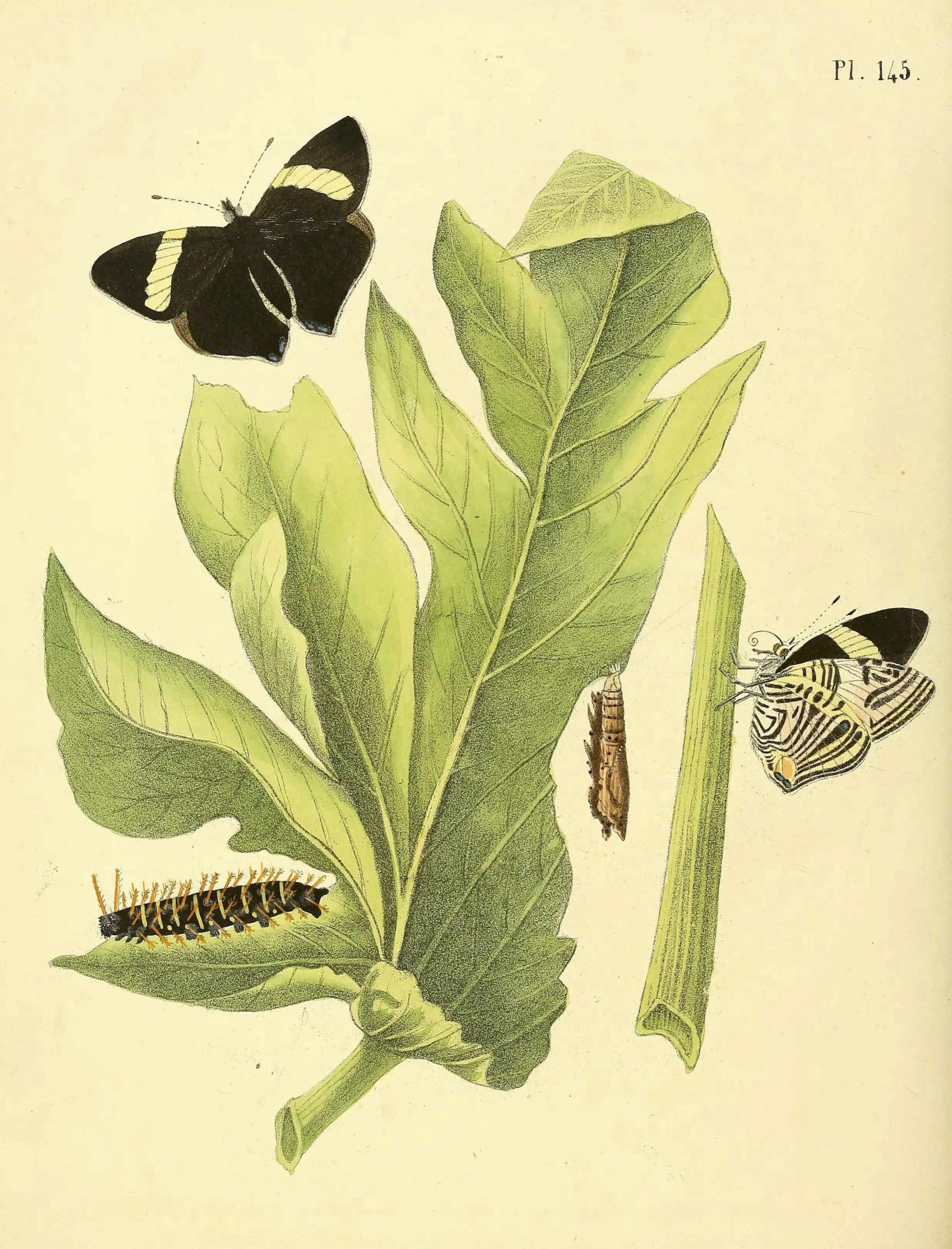
The caterpillars offered an early reason to question that classification. Their velvety black bodies carry bright yellow stalks tipped with sharp, angled barbs, a warning that roughly translates to “leave me alone, or there will be unpleasant consequences.” Beneath the spines, some have cream-colored teardrops, while others have rings. In 1852, Dutch entomologist Jan Sepp argued that these different markings distinguished two species. His peers dismissed the idea, and for roughly the next 150 years, naturalists attributed the differences to variation between males and females or among individuals of the same species.
Keith Willmott, now a curator at the Florida Museum’s McGuire Center for Lepidoptera and Biodiversity, later helped revisit that interpretation. He explained why even recognizing a second species had seemed difficult to accept.
“It’s a very distinctive butterfly. It’s hard to imagine there being two species in the same area that look alike because they’re so different from anything else.”
In 2001, Willmott and several colleagues revived Sepp’s idea and formally described Colobura annulata. “We assumed that was the problem solved,” Willmott said. He moved on to other projects.
About a quarter century later, Orellana’s photographs of the unmarked Venezuelan caterpillars gave Willmott enough evidence to reopen the investigation. Orellana was one of his colleagues, and the photographs brought him back to a possibility he had previously set aside. “I had a few indications that there was a third species, but I thought it was too implausible.”
DNA confirms three nearly identical species
Sapkota had just joined the Florida Museum’s Shirey lab and expressed interest in leading the work. To investigate the butterflies’ genetic relationships, she analyzed highly variable stretches of DNA known as barcodes. These sequences had been collected and curated through a long-term survey of Lepidoptera, the group that includes butterflies and moths, in Costa Rica. Study co-authors Daniel Janzen and Winnie Hallwachs led that survey.
Building on the barcode results, Sapkota sent older museum specimens collected throughout the neotropics to Nick Grishin at the University of Texas Southwestern Medical Center. Grishin sequenced their mitochondrial and nuclear genomes. Together, the DNA analyses identified three distinct lineages that matched the physical differences the researchers documented.
Finding those physical differences in adult butterflies required close inspection. A gray band on the underside of the forewings varied slightly in width and in whether it reached a perpendicular yellow band. After examining preserved specimens for hours, Sapkota also noticed a faint violet glimmer beneath the wings, with a slightly different sheen among some individuals. It made her think of ultraviolet light, which many butterflies can see but humans cannot.
“I checked it with a spectrometer and found that even though the butterflies didn’t look violet to me, it reflected UV light,” she said.
All three species reflected ultraviolet light at different wavelengths. Beyond the subtle wing-band differences, Sapkota found no other anatomical features that separated the adults. Even their male genitalia were alike, although these structures often provide the most useful anatomical clues for distinguishing moth and butterfly species.
The researchers’ findings provide a simplified guide to telling the three species apart:
- Colobura dirce
- Adult
- Gray wing band broadens slightly and does not touch the yellow transverse band
- Average UV reflectance at 376 nanometers (nm)
- Larvae
- Cream-colored teardrops on abdominal segments
- Adult
- Colobura annulata
- Adult
- Gray wing band is uniform in width and touches the yellow transverse band
- Average UV reflectance at 370 nm
- Larvae
- Cream-colored rings on abdominal segments
- Adult
- Colobura cryptica
- Adult
- Gray wing band is uniform in width and does not touch the yellow transverse band
- Average UV reflectance at 344 nm
- Larvae
- No cream-colored markings
- Adult
Those small physical differences might not have justified naming a new species on their own. Their agreement with the three genetic lineages made the case much stronger. The nuclear DNA examined in the study also showed no signs of hybridization, or interbreeding between the species.
Shared forests, separate species
How the butterflies recognize suitable mates remains unclear. They lack the scent glands that some butterflies and many moths use to release distinctive chemical signals called pheromones, suggesting that visual cues probably play some role. Sapkota is investigating whether the differences in ultraviolet coloration help them choose partners.
Other butterflies and moths, including garden whites, sulfur butterflies, and wood tiger moths, have UV-reflecting scales thought to contribute to mate selection. Whether Colobura uses those signals in the same way is still uncertain. Sapkota’s ongoing study has so far produced inconclusive results.
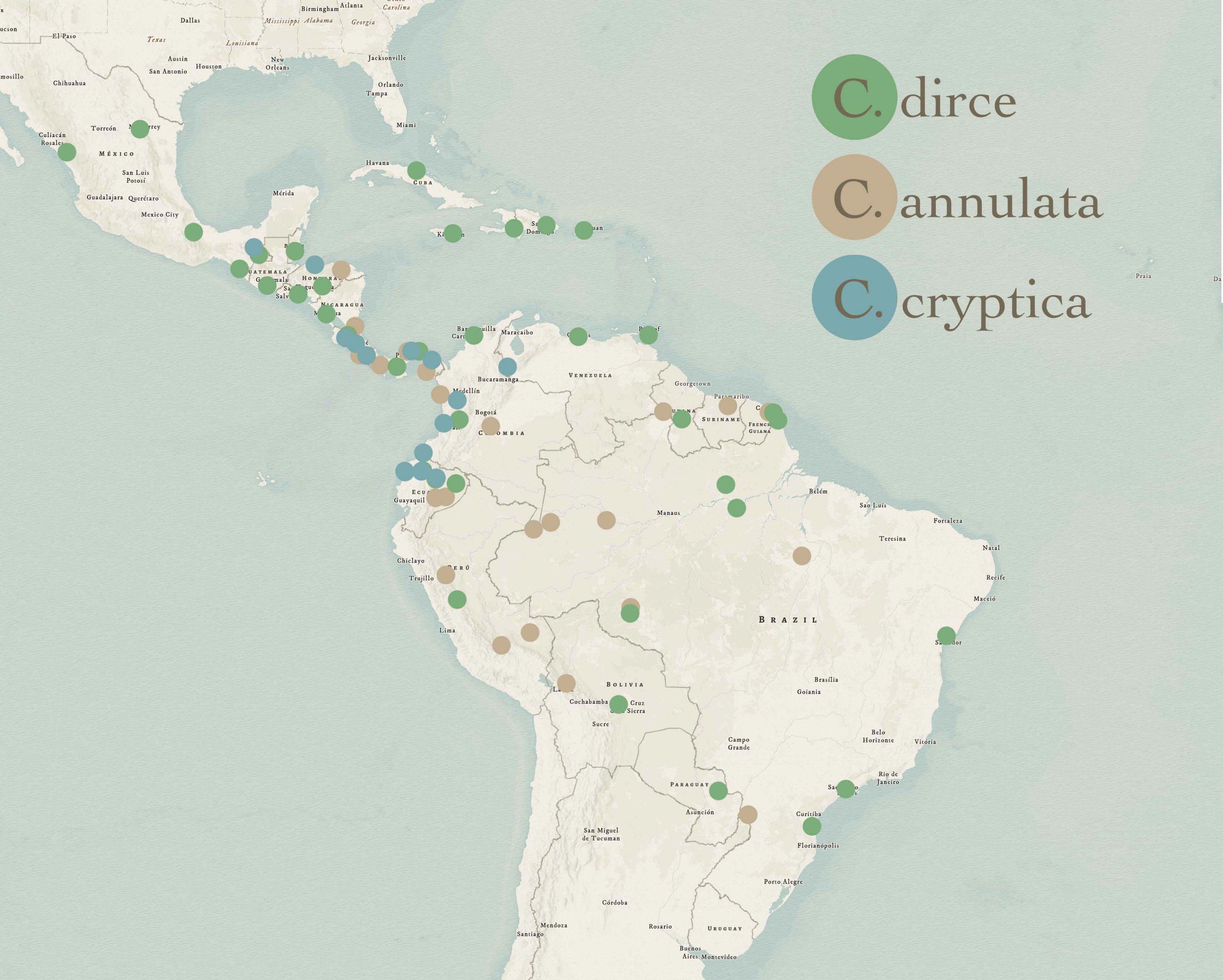
The butterflies’ overlapping ranges make their separation especially puzzling. C. dirce occupies the largest area, stretching from Mexico to southeastern Brazil and including both sides of the Andes and the Caribbean archipelago. C. annulata is similarly widespread but absent from the Greater Antilles. C. cryptica has the smallest known range, extending from southern Mexico to the foothills of the Andes.
Sapkota said, “It’s crazy to think about. These butterflies look almost exactly the same and are found in the exact same place at the same time.”
For new species to form, some kind of isolation must limit interbreeding between populations. Biologists think that geographic separation is often responsible. A mountain range, for example, can divide a population into groups that accumulate different traits over time. If they eventually become unable to interbreed even after coming back into contact, they would be considered separate species.
The Colobura researchers suspect that the butterflies may instead gain some separation by occupying different heights within the same forest.
“There could be vertical stratification between these butterflies,” Sapkota said. “Colobura dirce is typically found in the undergrowth and C. cryptica and C. annulata are usually found in the canopy, but we do not know for sure because there have been mixed signals coming from different studies.”
Some of those conflicting observations may reflect the difficulty of identifying the species, even for experienced butterfly taxonomists. Establishing where each species spends its time will require observations in the forests they share. As Sapkota put it, “Someone has to go to the field to find it out themselves.”
Reference: “Revisiting Colobura (Lepidoptera: Nymphalidae): Using integrative taxonomy to identify a new species, C. cryptica sp. nov., and revise geographic boundaries” by Anisha Sapkota, Andrés Orellana, Nick V. Grishin, Isidro Chacón, Daniel H. Janzen, Winnie Hallwachs, Leina Song, Sajan KC and Keith R. Willmott, 4 May 2026, Zootaxa.
DOI: 10.11646/zootaxa.5802.2.4
Funding for the study was provided in part by the National Institutes of Health, the Welch Foundation, Canada’s New Frontiers in Research Fund (NFRFt-2020- 00073), the Canada Foundation for Innovation’s Major Science Infrastructure program (MSI 42450), BioAlfa and Project UNET (Universidad Nacional Experimental del Táchira).
Never miss a breakthrough: Join the SciTechDaily newsletter.
Follow us on Google and Google News.