
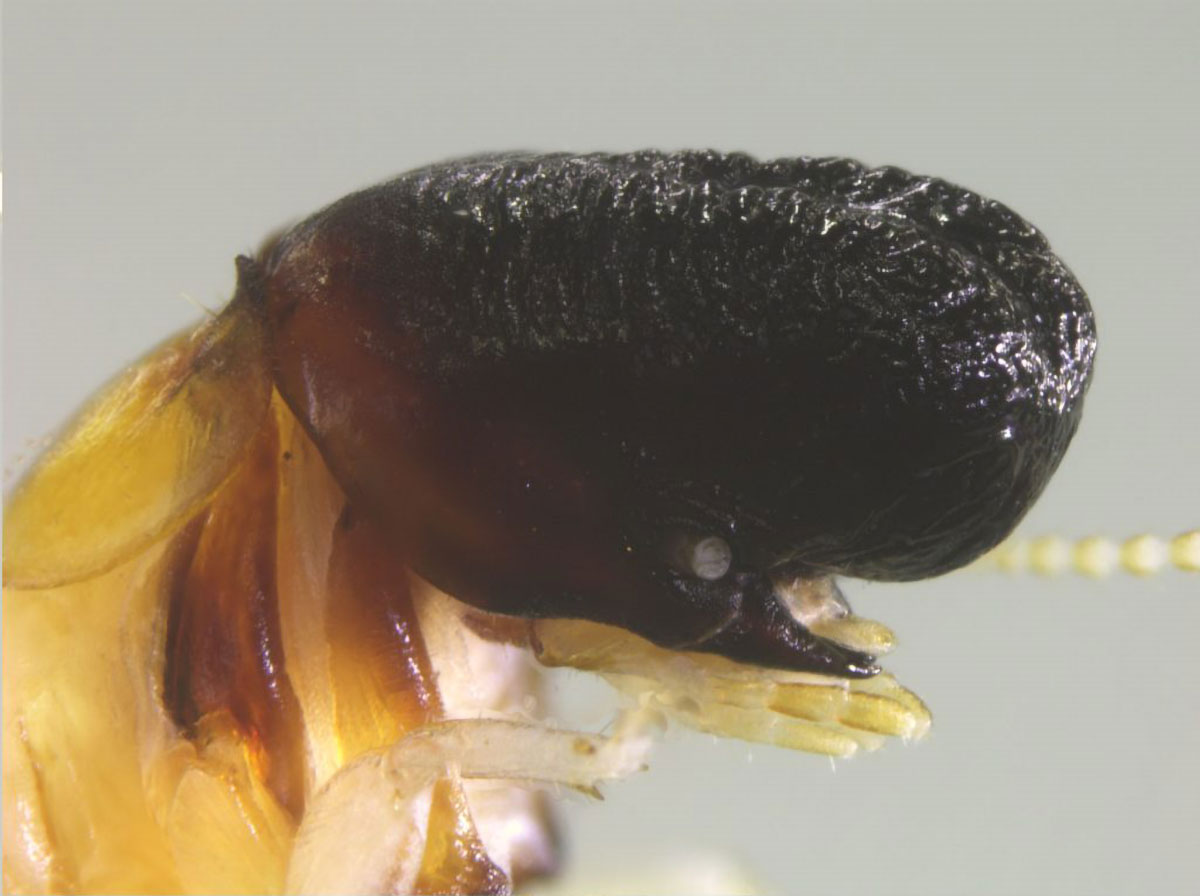
A newly identified termite species with a whale-like head reveals unexpected diversity within the Cryptotermes genus.
In the canopies of a South American rainforest, a tiny soldier termite has stunned a team of international scientists with its whale-like features.
Cryptotermes mobydicki, the name given to the termite by the international research team — led by a University of Florida scientist — boasts features of an elongated head and hidden mandibles. It resembles the iconic sperm whale from Herman Melville’s classic novel — hence its name.
“This termite is unlike anything we’ve ever seen,” said Rudolf Scheffrahn, professor of entomology at the UF Institute of Food and Agricultural Sciences (UF/IFAS).
A whale-like termite discovered
The specimen was so distinctive that the team of international entomologists thought it was looking at specimens of an entirely new genus, said Scheffrahn, whose taxonomic research is based at the UF/IFAS Fort Lauderdale Research and Education Center.
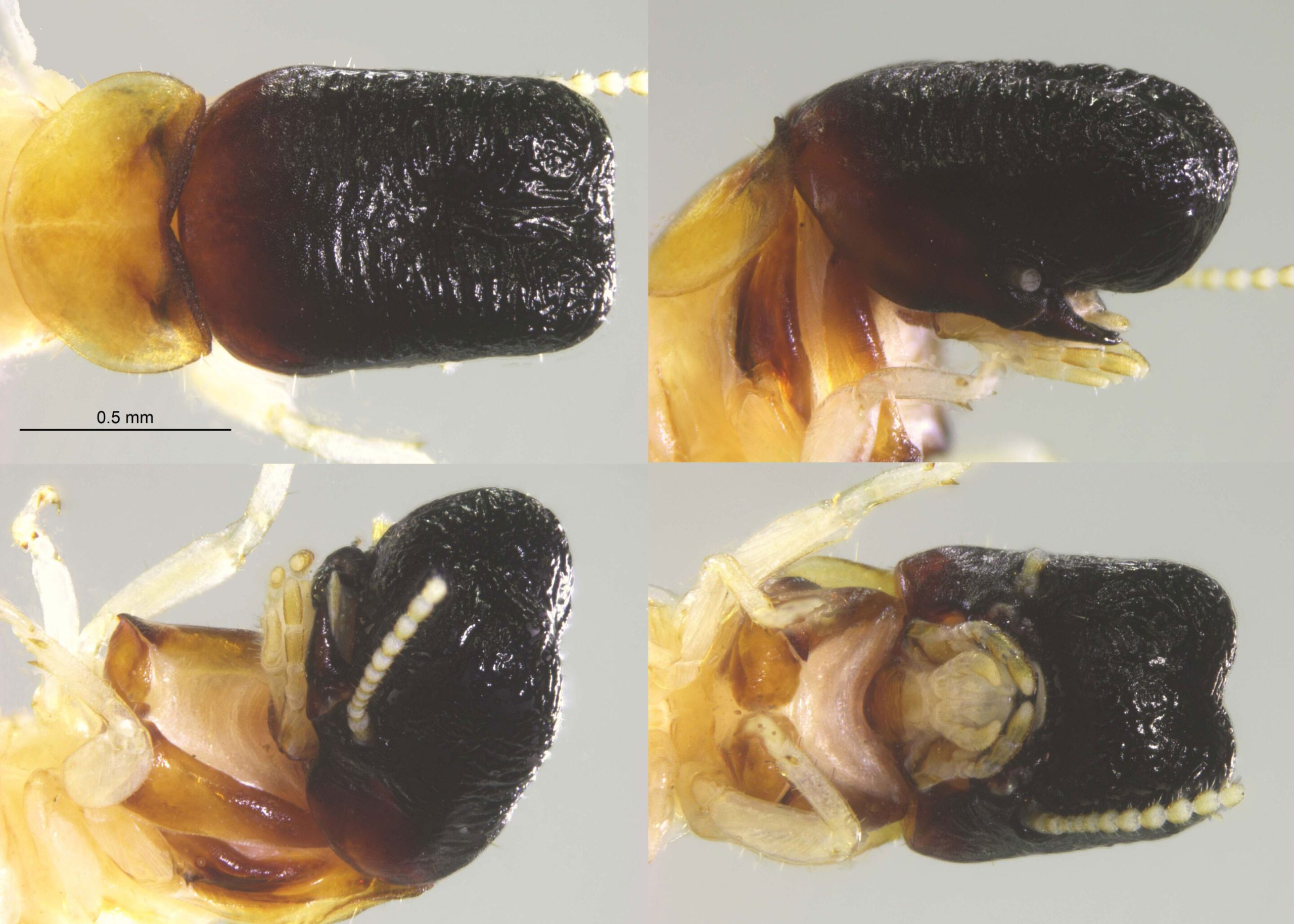
“The lateral view of the soldier’s frontal prominence and elongated head resembles the head of a sperm whale, and in both organisms, the mandibles are eclipsed by the head,” he said. “The whale’s eye and soldier’s antennal socket are comparatively positioned. After I noticed the resemblance to a sperm whale, my coauthors thought the name to be appropriate and whimsical, much like ‘ghost orchid’ or ‘Dumbo octopus.’”
A new species expands the genus
The discovery adds a 16th species to the South American roster of Cryptotermes termites. A genetic family tree analysis shows that Cryptotermes mobydicki is closely related to other neotropical species found in Colombia, Trinidad, and the Dominican Republic, giving scientists a new clue into the evolutionary story of this globally distributed genus.
Researchers found the colony in a dead, standing tree about eight meters off the forest floor. It’s unusual anatomy highlights the diversity of termite evolution and the surprises still waiting in tropical ecosystems.
Biodiversity still largely undiscovered
“The discovery of this distinctive new termite species underscores the vast number of unnamed organisms yet to be discovered on our planet,” said Scheffrahn.
To scientists, discovery is also a win for biodiversity. Every new species discovered adds to scientific understanding of life on earth, especially in a group as small as termites, with only about 3,000 species worldwide.
Harmless species limited to the rainforest
There is also good news for Florida property owners. As a newly described drywood termite species, Cryptotermes mobydicki is no threat to homes or trade. Unlike other invasive termites that cause costly damage in parts of the southeastern United States, this species is found only in its rainforest habitat and does not spread beyond it.
Reference: “Cryptotermes mobydicki (Isoptera, Kalotermitidae), an extraordinary new termite species from French Guiana” by Rudolf H. Scheffrahn, Aleš Buček, David Sillam-Dussès and Jan Šobotník, 6 November 2025, ZooKeys.
DOI: 10.3897/zookeys.1258.166021
JŠ was supported by the Faculty of Tropical AgriSciences, Czech University of Life Sciences Prague, project No. 20253134.
Never miss a breakthrough: Join the SciTechDaily newsletter.
Follow us on Google and Google News.
11 Comments
I defy you to find a single scientist who was truly stunned by this.
I guess specialists in termites have been stunned by this discovery of a Cryptotermes species with such an unusual head shape. I am not a specialist in termites, so I do not know how other Cryptotermes species look like. Still, I know enough to know that termites are interesting. They are eusocial insect species, which evolved from ancient cockroaches. So I found that interesting. Even though I am not actually a specialist in biology, but in historical linguistics. But when I was a little child, my first interest was in zoology, I was reading two interesting zoology books and I learned a lot from them, some of which I forgot since that time.
It resembles the xenomorph from Aliens movie..strange.
Amazing and horrifying!! The dedication to discover and study is necessary we see to protect and save lives but how do we help with funding and maintain our sanity of life?
It’s a Spermite 🐳
It’s a Mitey Whale.
Spermite!!! You ,J, are so funny! Way to create such a great and funny word!! Yay, ” J “!!
Imagine that all those beached whales had an actual purpose they were just a host for these to hatch from after growing inside the whales and then the whales beach themselves for them to eat their way out and thrive or maybe they cocoon themselves after a season and evolve into something else
It’s the END of the world.
This is a Soldier Termite.
He is the offspring of a normal soldier that mated with a sperm Whale while on leave in the Virgin Islands last spring.
I like your take on this newly found species…
Zero words on the interesting part.. Why? What do scientists think is the significance of the head shape? What evolutionary pressure is at work? Does it have a function? Is there a giant termite brain in there? What makes it more amazing than a termite with a spot on its back or an ability to digest iPhones (or whatever)? The whole article was just a long headline.