
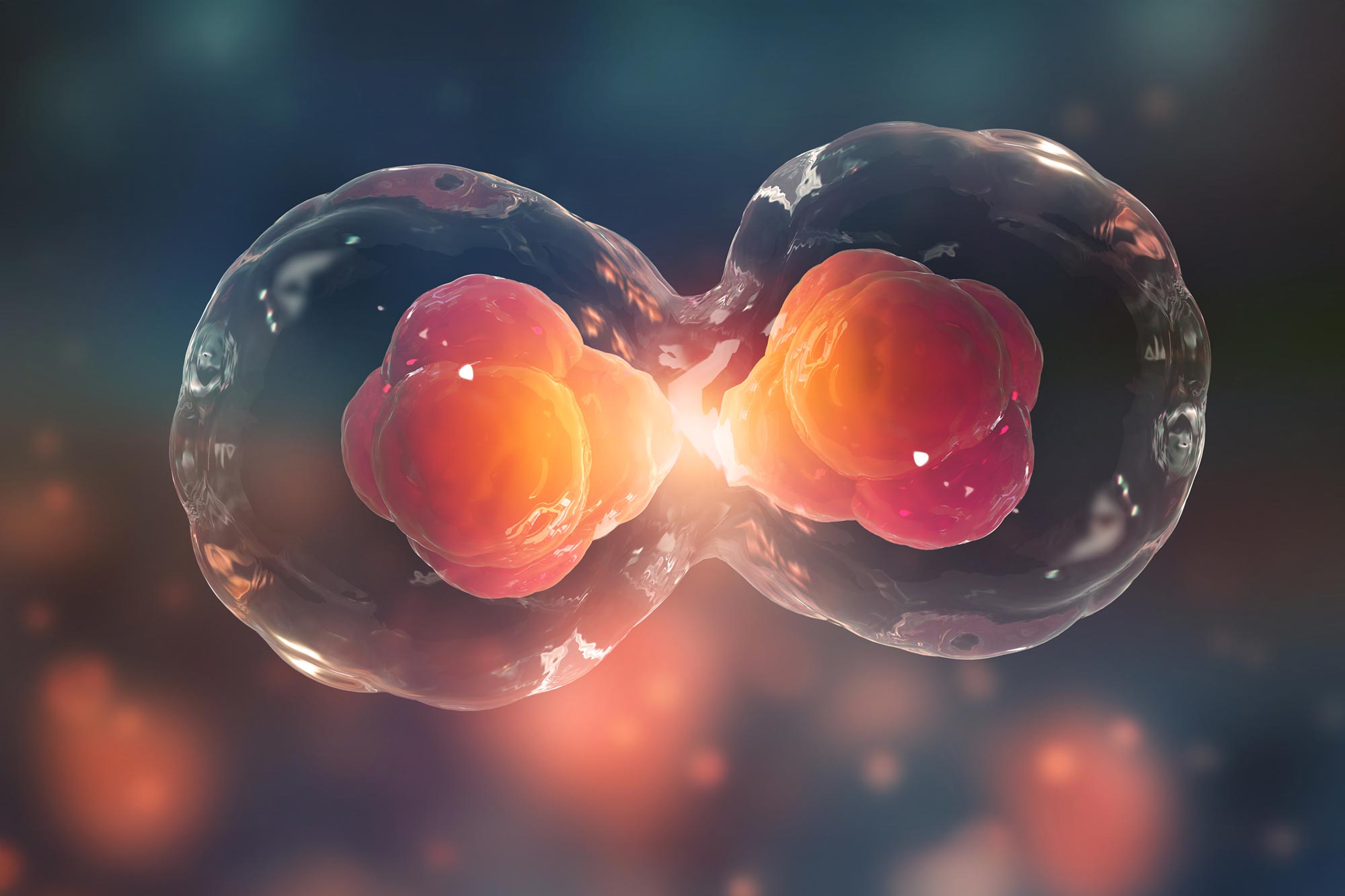
A subtle failure during cell division can set off dramatically different outcomes, according to new research exploring whole genome duplication.
A new study finds that the way a cell fails to divide after copying its DNA can shape what happens to it next.
Cell division is a core process of life, requiring thousands of molecules in human cells to act in tightly coordinated steps within fractions of a second. Still, errors can occur.
Before splitting into two, a cell must duplicate its DNA so each new cell receives a full set. In some cases, the DNA is copied correctly, but the cell does not complete division. As a result, it retains two full sets of DNA, a state known as whole genome duplication (WGD).
This can be compared to making two photocopies of a document, but placing both copies into the same folder instead of separating them.
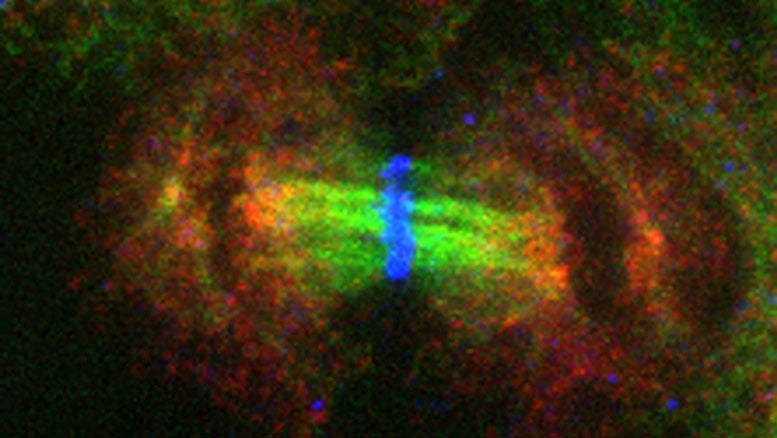
Whole genome duplication is not a trivial mistake. It can affect whether a cell keeps functioning, becomes inactive or dies, changes its role, accumulates age-related damage, or contributes to diseases such as cancer.
Researchers at Hokkaido University investigated two main ways cells fail to divide and enter this duplicated state: cytokinesis failure and mitotic slippage.
Two Distinct Failure Pathways
In cytokinesis failure, the cell completes most steps of division but does not physically split because of a problem in the cytoplasm. In mitotic slippage, the cell begins dividing but exits the process too early, without properly separating its chromosomes.
“While whole genome duplication occurs through multiple cellular processes, it has been unclear whether differences in the route affect the characteristics of the resulting cells,” says Associate Professor Ryota Uehara, the study’s corresponding author.
Although both routes produce cells with duplicated genomes, their outcomes differ significantly.
Using live cell imaging and chromosome specific labeling, the researchers tracked how cells behaved after duplication. Cells formed through cytokinesis failure were more stable and had higher survival rates. In contrast, cells produced by mitotic slippage showed uneven chromosome distribution and were less likely to survive.
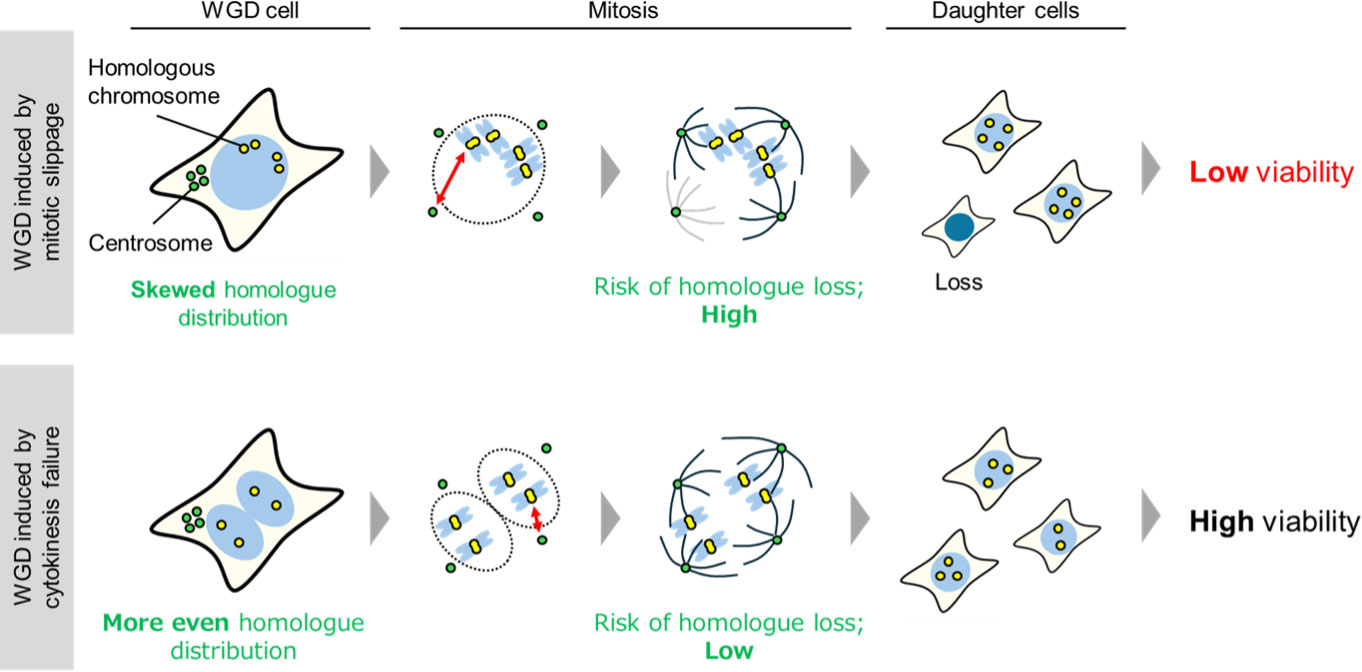
The team linked this difference to how chromosomes are arranged during division. Mitotic slippage often leads to uneven chromosome separation, which reduces cell viability. Cytokinesis failure tends to preserve a more balanced distribution, supporting survival.
When researchers experimentally improved chromosome separation in cells undergoing mitotic slippage, those cells showed a marked recovery in viability.
Implications for Cancer Research
These results have important implications for cancer. Whole genome duplication is common in cancer cells, and some cancer treatments may unintentionally trigger it. Cells that survive after duplication can continue growing and may contribute to tumor recurrence.
The findings suggest that targeting chromosome separation mechanisms could help reduce the survival of these abnormal cells.
“There are different mechanisms through which whole genome duplication can occur, but their distinct impacts have largely been overlooked,” says Uehara. “We challenged this conventional view by comparing cells formed through different mechanisms and found that these differences can influence cell behavior over the long term.”
Reference: “Sister chromatid separation determines the proliferative properties upon whole-genome duplication via homologous chromosome arrangement” by Masaya Inoko, Guang Yang, Yuki Tsukada and Ryota Uehara, 15 April 2026, Proceedings of the National Academy of Sciences.
DOI: 10.1073/pnas.2524135123
Funding: Japan Society for the Promotion of Science, Princess Takamatsu Cancer Research Fund, Kato Memorial Bioscience Foundation, The Orange Foundation, Smoking Research Foundation, Daiichi Sankyo Foundation of Life Science, Akiyama Life Science Foundation, Hoansha Foundation, Sumitomo Electric Group CSR Foundation, Terumo Life Science Foundation
Never miss a breakthrough: Join the SciTechDaily newsletter.
Follow us on Google and Google News.