
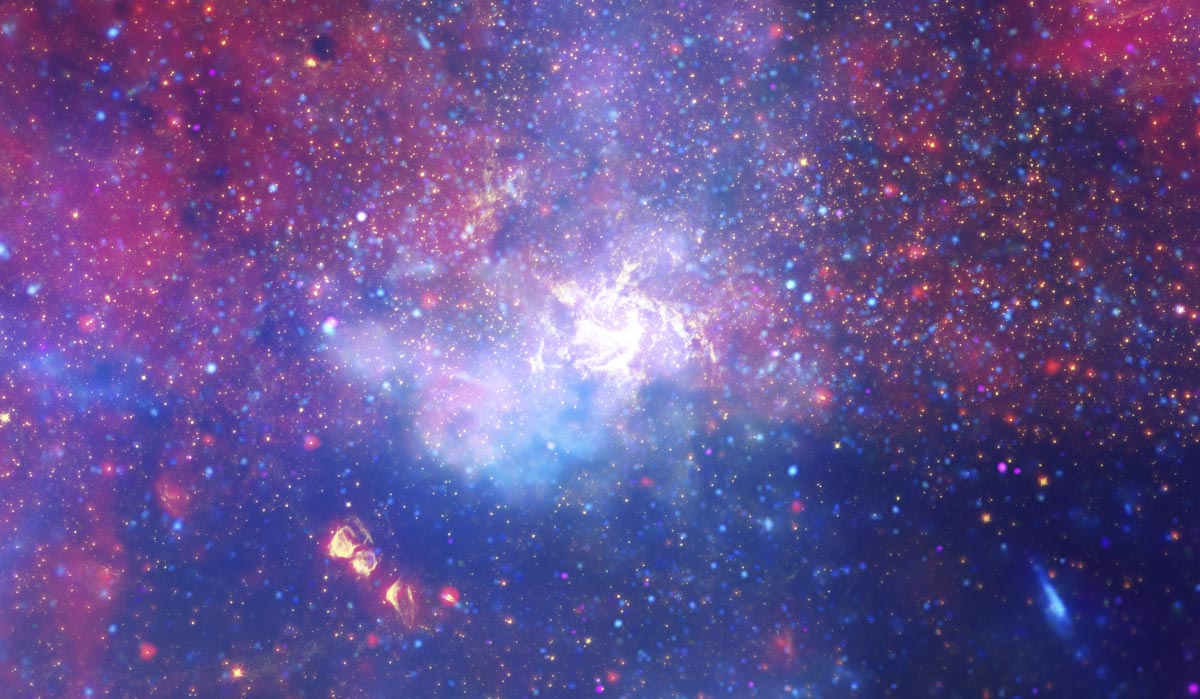
Webb’s measurements of metal-rich gas offer clues to the processes that fuel our galaxy’s supermassive black hole, which consumes material more slowly than others.
The gas circling the Milky Way’s central black hole is rich in metals, probably supplied by stars that exploded and released material into its surroundings over time. Researchers at McGill University’s Trottier Space Institute uncovered chemical enrichment around Sagittarius A* (Sgr A*), offering clues to the origins of the material available for the black hole to consume.
For astronomers, “metals” means every element heavier than hydrogen and helium. The category includes carbon and oxygen as well as iron and gold.
Gas and stars may share an origin
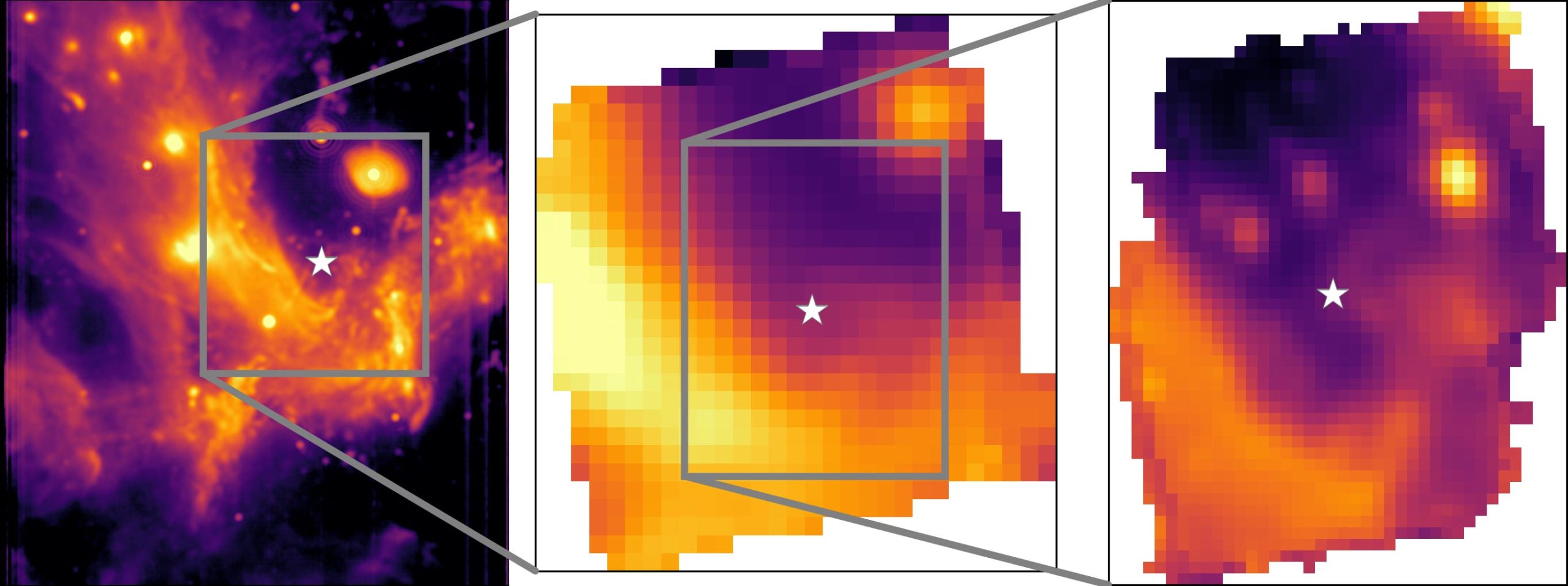
Sgr A* is closer to Earth than any other supermassive black hole, making it easier to observe. The team studied its surroundings using data from the James Webb Space Telescope (JWST), launched five years ago. The telescope measures infrared light across a wide range of wavelengths with unprecedented spectral and spatial resolution. Those capabilities allowed the researchers to distinguish the heat signatures of multiple gas clouds orbiting near the black hole and precisely measure each cloud’s metal composition.
The gas also turned out to have a composition similar to that of many stars orbiting Sgr A*. That resemblance suggests the gas and stars may have formed together. The researchers said the findings could help explain how metals are distributed around supermassive black holes in more distant galaxies, as well as the processes that supplied Earth with many of these elements.
Metals influence how black holes feed
Chemical composition also affects what happens to the gas. Metals influence how quickly it cools, which in turn influences how readily the black hole can draw it in.
“We know there’s a black hole at the center of our galaxy pulling material into itself, but we see that it’s eating a lot less material than other supermassive black holes, and more slowly,” said Nicole Ford, the study’s lead author and a PhD student in Professor Daryl Haggard’s research group in McGill’s Department of Physics. “Part of understanding why this is happening means looking at the properties of the materials available for it to consume, including gas, dust and the stars orbiting around it.”

Gas offers no reliable record of outbursts
The findings complement a recent study led by Banting Postdoctoral Fellow Mayura Balakrishnan, which examined whether the surrounding gas retained evidence of earlier bursts of energy from the black hole. That study found that local conditions shape the light emitted by the gas, making the black hole’s influence difficult to isolate. The results do not rule out past outbursts. They show that the surrounding gas cannot provide a reliable history of the black hole’s activity.
Ford said understanding how Sgr A* attracts material will require comparing these observations with simulations of how gas evolves over longer timescales.
References: “Ionization Structure and Metal Enrichment of the Galactic Center Minispiral Observed with JWST” by Nicole M. Ford, Mayura Balakrishnan, Sebastiano D. von Fellenberg, Daryl Haggard, Joseph M. Michail, Yuzhu Cui, Joseph L. Hora, Joey Neilsen, Giacomo Principe, Tamojeet Roychowdhury, Nadeen B. Sabha, Howard A. Smith, Zach Sumners and S. P. Willner, 19 October 2026, The Astronomical Journal.
DOI: 10.3847/1538-3881/ae994d
“Isolating Sgr A East: The First Uncontaminated X-Ray Maps of a Galactic Center Supernova Remnant” by Mayura Balakrishnan, Adrien Picquenot, Lia Corrales, Q. Daniel Wang, Fabio Acero and Rodolfo Montez, 20 May 2026, The Astrophysical Journal.
DOI: 10.3847/1538-4357/ae5dbe
Both studies were funded by the Natural Sciences and Engineering Research Council of Canada, the Canadian Space Agency, the Canada Research Chairs program, Fonds de recherche du Québec – Nature et technologies, Centre de recherche en astrophysique du Québec and the Trottier Space Institute of McGill University, and the International Space Science Institute (ISSI).
Never miss a breakthrough: Join the SciTechDaily newsletter.
Follow us on Google and Google News.