
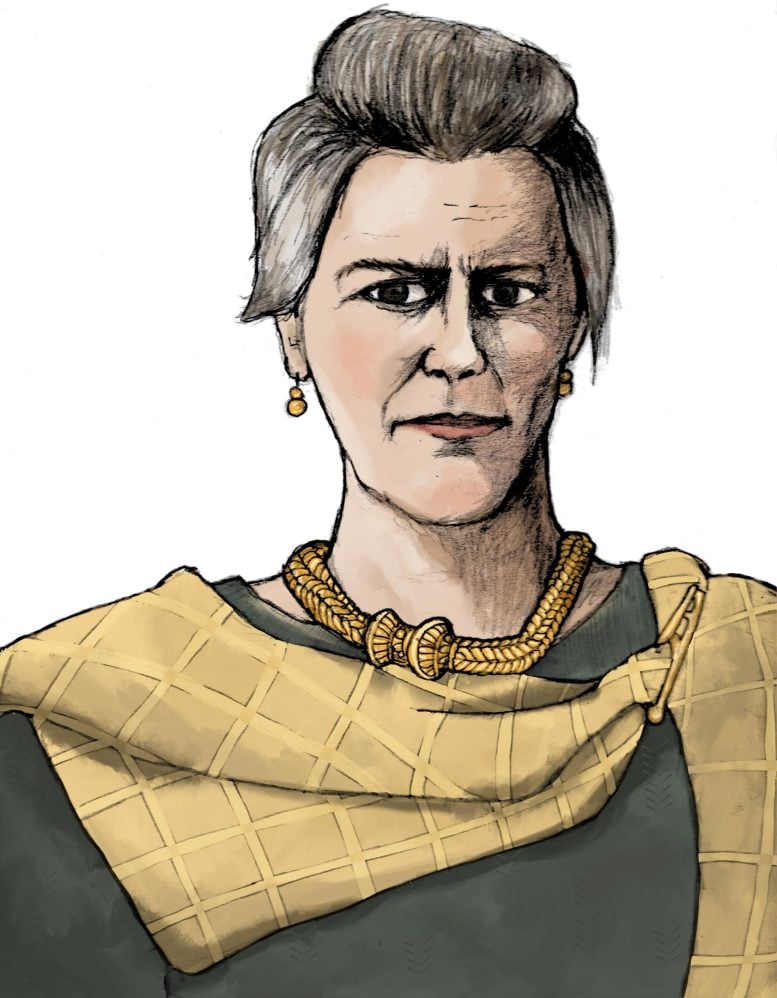
A ruler whose exile helped trigger Rome’s invasion of Britain may have been a woman, challenging centuries of assumptions about a pivotal figure in British history.
Research led by Dr. Miles Russell at Bournemouth University (BU) challenges the traditional identification of Verica as a male king. Drawing on the ruler’s name and coin imagery, Russell argues that a woman held a central role in the events leading to Rome’s invasion of Britain in AD 43.
Verica ruled the Atrebates, whose lands covered much of modern-day Hampshire and West Sussex. Driven from power around AD 40, the ruler fled to Emperor Claudius in Rome, seeking support. That appeal gave Claudius an opportunity to intervene in Britain and claim a military triumph.
The Clues On Verica’s Coins
Russell, BU’s Director of Archaeological Fieldwork, argues that Verica’s identity has been filtered through assumptions made by earlier historians. “Verica is assumed to have been male because of the patriarchal mindset of 19th-century classical historians. Verica was not only critical to the special relationship between Britain and Rome in the early first century AD but was indisputably female.”
One clue, he suggests, is the name itself. Its “a” ending also appears in the names of female rulers from the same period, including Cartimandua of the Brigantes (in Yorkshire) and Boudica of the Iceni (in Norfolk). Boudica’s revolt against Roman rule in AD 60 made her the most famous of the three, but Russell considers Verica the more powerful and influential figure.
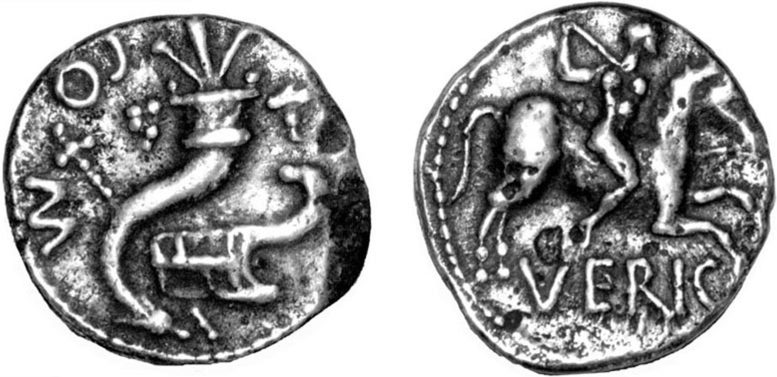
The title on Verica’s coins has also shaped how the ruler is remembered. “People also assume she was a ‘he’ because of the term ‘rex’ on coins, but ‘rex’ is a non-gender-specific title; both male and female kings were recognized by Rome, Cleopatra of Egypt being the most famous,” Russell said. “The use of the Latin title ‘rex’ on coins shows that Verica ruled with the full authorization of the emperor.”
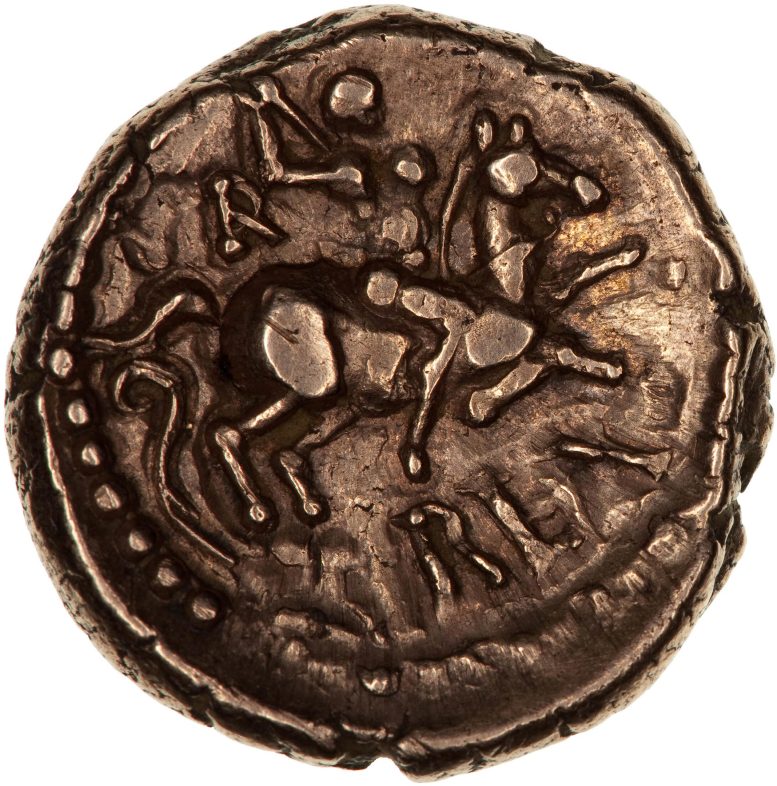
For Russell, the images offer another important clue: “Whilst other coin-producing British Iron Age leaders portray obviously male warriors, Verica is depicted as a slender, feminine, bare-breasted figure riding on horseback.”
A British Exile And Rome’s Invasion
Verica’s identity also changes how Russell interprets the Roman account of the invasion. Historian Cassius Dio claimed that Claudius crossed the Channel because Verica persuaded him to do so. That story fits a broader pattern in Roman writing, which portrayed Claudius as weak-minded and ineffective, with women and freed slaves directing his decisions.
“The story of Claudius committing to something only because a woman told him to fits the trope of this emperor as being submissive and henpecked,” Russell said. “In effect, Dio was saying that the campaign was undertaken solely because of the whisperings of a barbarian femme fatale. Verica’s role was rather more central to the British expedition. Having her onboard ensured the project was a success as she provided tactical information and support on the ground.”
In this interpretation, Verica offered both a political justification for invasion and practical help in carrying it out. As Russell put it, “The invasion was Claudius’ great triumph, it being the only chance he had to prove he was a successful military leader. Verica provided the excuse for regime change, and the emperor seized it.”
Rethinking Women’s Power in Iron Age Britain
Russell argues that Verica deserves recognition among Britain’s earliest influential female leaders. “We should take the archaeological evidence at face value,” he said, “and remember Verica as a female king and one of the earliest and most important of British female leaders. Had she not been deposed and fled to Claudius for military support, Rome may never have invaded Britain in the first place.”
The work follows earlier BU research into women’s place in Iron Age society. Published last year, that research involved Russell and university colleagues and found evidence of communities centered on women, where husbands moved to live with their wives’ communities.
The argument about Verica is presented in Caratacus: Great King of Britain, published by Bloomsbury in January (ISBN 9781350477902), and discussed in the latest edition of Current Archaeology.
Never miss a breakthrough: Join the SciTechDaily newsletter.
Follow us on Google and Google News.