
Close Menu
    Facebook X (Twitter) Instagram
    SciTechDaily
    • Biology
    • Chemistry
    • Earth
    • Health
    • Physics
    • Science
    • Space
    • Technology
    Facebook X (Twitter) Pinterest YouTube RSS
    SciTechDaily
    Home»Science»29,000 Years of Aboriginal History: Uncovering New Layers of River Murray Occupation
    Science

    29,000 Years of Aboriginal History: Uncovering New Layers of River Murray Occupation

    By Flinders UniversityJuly 14, 20201 Comment4 Mins Read
    Facebook Twitter Pinterest Telegram LinkedIn WhatsApp Email Reddit
    Share
    Facebook Twitter LinkedIn Pinterest Telegram Email Reddit
    River Murray Aerial View
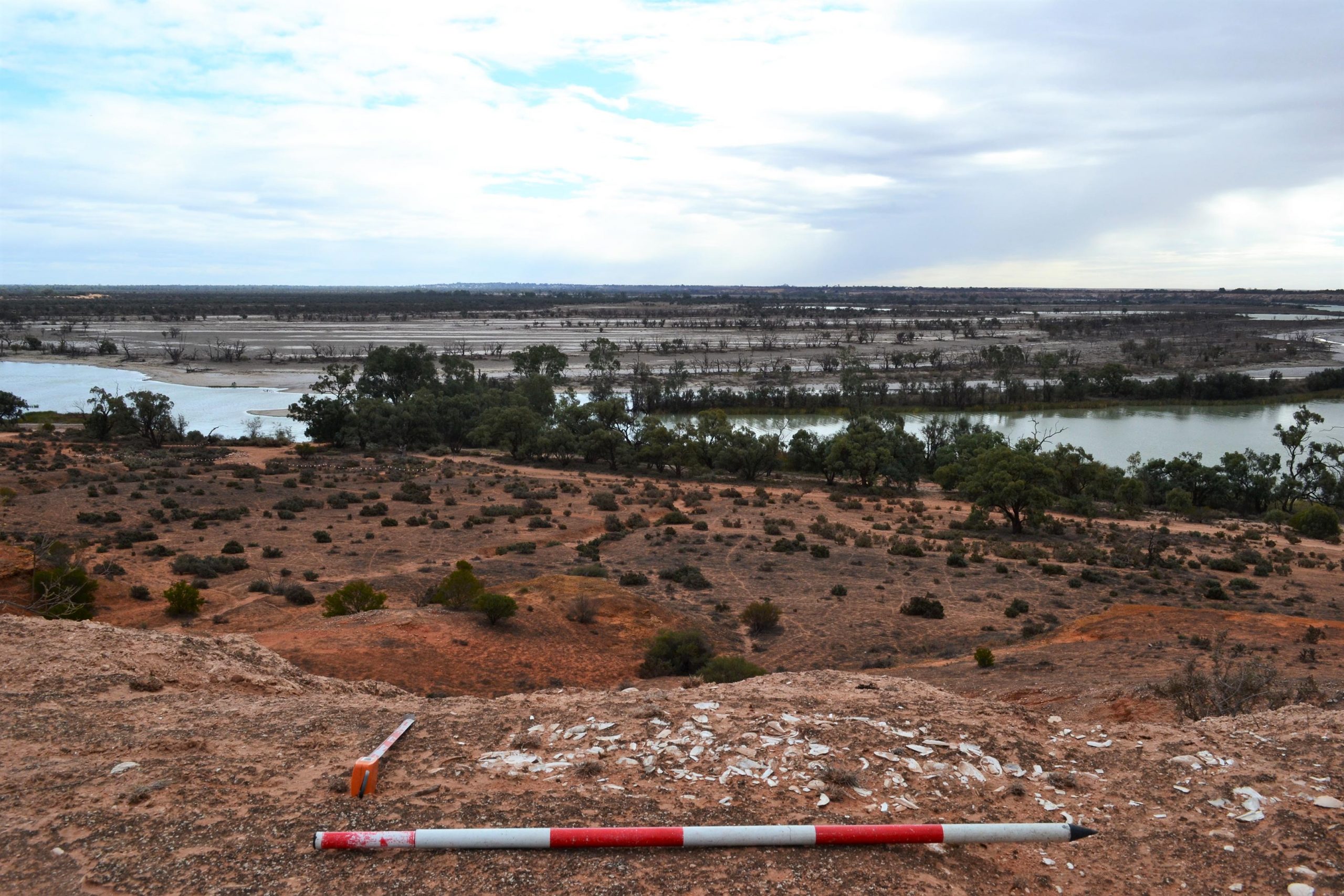
    Midden shell exposed on the Pike cliff line on the River Murray. Credit: Flinders University

    The known timeline of the Aboriginal occupation of South Australia’s Riverland region has been vastly extended by new research led by Flinders University in collaboration with the River Murray and Mallee Aboriginal Corporation (RMMAC).

    Radiocarbon dating of shell middens — remnants of meals eaten long ago — capture a record of Aboriginal occupation that extends to around 29,000 years, confirming the location as one of the oldest sites along the 2,500km (1,550mi) river to become the oldest River Murray Indigenous site in South Australia.
    Katarapko Riverland Floodplains
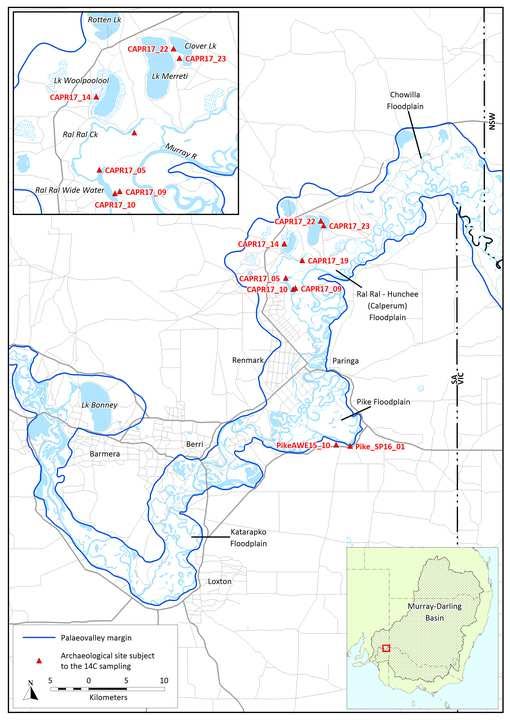
    Location map shows the areas studied by archaeologists and the River Murray and Mallee Aboriginal community in South Australia. Credit: Flinders University

    In the first comprehensive survey of the region, one of the oldest Indigenous sites along Australia’s longest river system has been discovered. The results, published in Australian Archaeology, used radiocarbon dating methods to analyze river mussel shells from a midden site overlooking the Pike River floodplain downstream of Renmark.

    “These results include the first pre-Last Glacial Maximum ages returned on the River Murray in South Australia and extend the known Aboriginal occupation of the Riverland by approximately 22,000 years,” says Flinders University archaeologist and Ph.D. candidate Craig Westell.

    More than 30 additional radiocarbon dates were collected in the region, spanning the period from 15,000 years ago to the recent present. Together, the results relate Aboriginal people to an ever-changing river landscape, and provide deeper insights into how they responded to these challenges.

    The period represented by the radiocarbon results brackets the Last Glacial Maximum (commonly known as the Last Ice Age) when climatic conditions were colder and drier and when the arid zone extended over much of the Murray-Darling Basin. The river and lake systems of the basin were under stress during this time.

    In the Riverland, dunes were advancing into the Murray floodplains, river flows were unpredictable, and salt was accumulating in the valley.
    Timothy Johnson Craig Westall
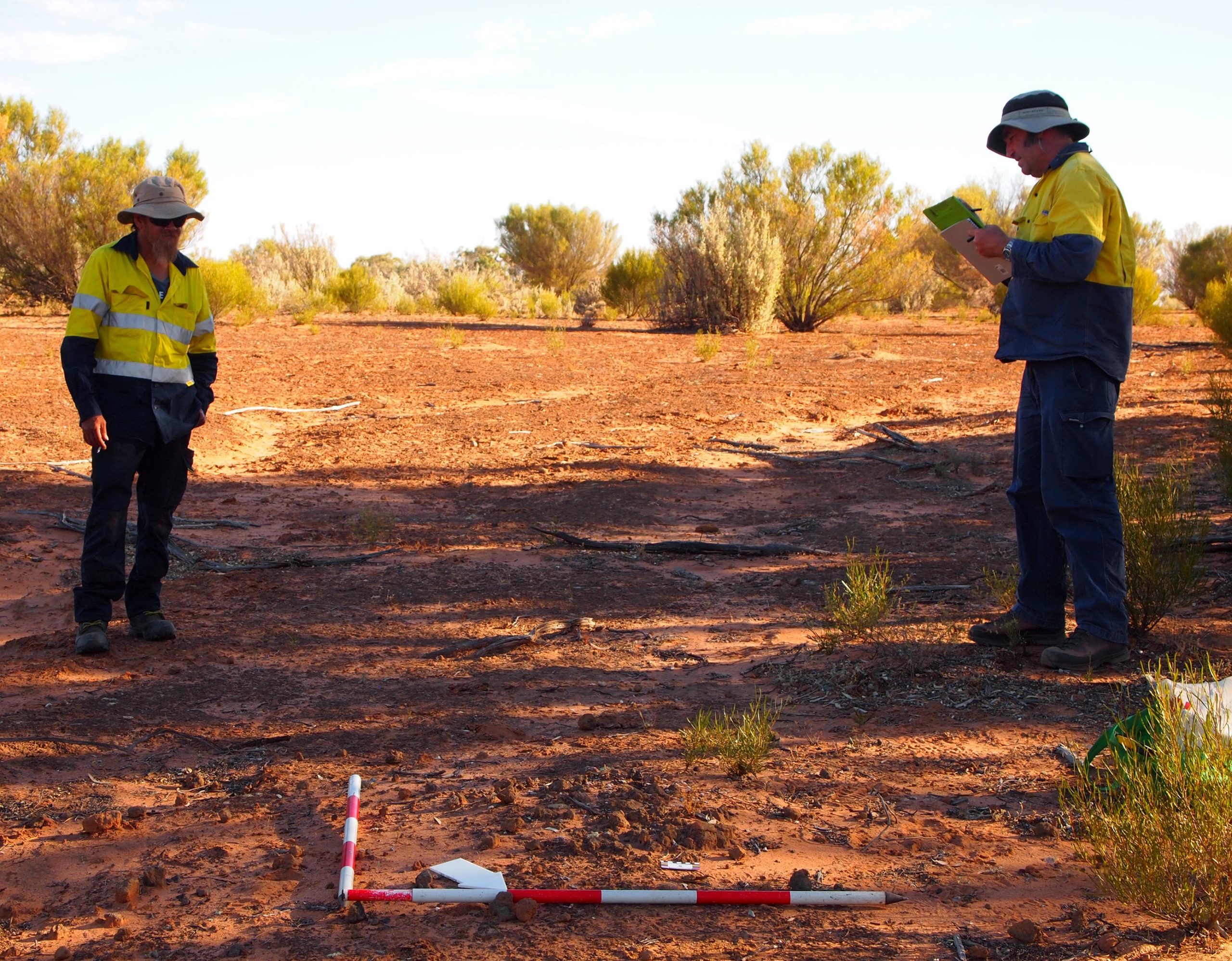
    Timothy Johnson (River Murray and Mallee Aboriginal Corporation), left, and Craig Westall recording a hearth feature at Calperum Station. Credit: Flinders University

    The ecological impacts witnessed during one of the worst droughts on record, the so-called Millennium Drought (from late 1996 extending to mid-2010), provides an idea of the challenges Aboriginal people may have faced along the river during the Last Glacial Maximum, and other periods of climate stress, researchers conclude.

    “These studies show how our ancestors have lived over many thousands of years in the Riverland region and how they managed to survive during times of hardship and plenty,” says RMMAC spokesperson Fiona Giles.

    “This new research, published in Australian Archaeology, fills in a significant geographic gap in our understanding of the Aboriginal occupation chronologies for the Murray-Darling Basin,” adds co-author Associate Professor Amy Roberts.

    The dating, which was undertaken at the Australian Nuclear Science and Technology Organisation (ANSTO) and Waikato University, forms part of a much larger and ongoing research program led by Associate Professor Amy Roberts which is undertaking a broad-ranging investigation of past and contemporary Aboriginal connections to the Riverland region.

    Reference: “Initial results and observations on a radiocarbon dating program in the Riverland region of South Australia” by C Westell, A Roberts, M Morrison, G Jacobsen and the River Murray and Mallee Aboriginal Corporation, 14 July 2020, Australian Archaeology.
    DOI: 10.1080/03122417.2020.1787928

    The Last Glacial Maximum is the most significant climatic event to face modern humans since their arrival in Australia some 40,000-50,000 years ago. Recent studies have demonstrated that the Last Glacial Maximum (LGM) in Australia was a period of significant cooling and increased aridity, starting around 30,000 years ago (ka) and reaching its peak between 23,000 and 18,000 years ago (ka).

    Never miss a breakthrough: Join the SciTechDaily newsletter.
    Follow us on Google and Google News.

    Anthropology Archaeology Evolution Flinders University History
    Share. Facebook Twitter Pinterest LinkedIn Email Reddit

    Related Articles

    Ancient Tooth From Young Girl Discovered in Cave Unlocks Mystery of Denisovans, a Sister Species of Modern Humans

    New Fossil Discovery of a Distinct, Ancient Human Species Points to Complicated Evolutionary Process

    Archaeologists Make Dramatic Discovery: A Prehistoric Human Type Previously Unknown to Science

    Defining Moment in Human Evolution: Turbulent Era Sparked Leap in Human Behavior, Technology 320,000 Years Ago

    Hidden Murray River Rockshelter Reveals Aboriginal Art, Frontier Conflict and a Swastika

    New View of Human Evolution Unearthed by Rare 10 Million-Year-Old Fossil [Video]

    Scientists Reveal the Complex Story Behind the Beaker Phenomenon

    400,000 Year Old Fossil Helps Shed New Light on Human Evolution

    Million-Year-Old Ash in South African Cave Yields Evidence of Cooking

    1 Comment

    1. Jan Crawford on July 14, 2020 7:41 am

      Interesting reading articles, for the brain

      Reply
    Leave A Reply Cancel Reply

    • Facebook
    • Twitter
    • Pinterest
    • YouTube

    Don't Miss a Discovery

    Subscribe for the Latest in Science & Tech!

    Trending News

    Scientists Uncover Promising New Strategy To Stop Parkinson’s in Its Tracks

    Experts Reveal the Surprising Cancer Link Behind a Common Vitamin

    This Strange “Golden Orb” Found 2 Miles Deep Stumped Scientists for Years

    Giant “Last Titan” Dinosaur Discovered in Thailand Was Bigger Than 9 Elephants

    This “Longevity Gene” May Protect the Brain From Aging and Dementia

    Common Cleaning Chemical Could Triple Your Risk of a Dangerous Liver Disease

    Scientists Discover Bizarre 100-Million-Year-Old Insect With Giant Claws

    Scientists Discover “Good” Gut Microbes That Could Protect Against Autism and ADHD

    Follow SciTechDaily
    • Facebook
    • Twitter
    • YouTube
    • Pinterest
    • Newsletter
    • RSS
    SciTech News
    • Biology News
    • Chemistry News
    • Earth News
    • Health News
    • Physics News
    • Science News
    • Space News
    • Technology News
    Recent Posts
    • The Human Body Isn’t Perfect – It Was Improvised by Evolution
    • Scientists Rewire Donor Stem Cells To Outsmart Aggressive Blood Cancers
    • Scientists Discover Hidden Sleep Switch That Boosts Brainpower, Builds Muscle, and Burns Fat
    • Scientists Turn Wool Into Bone-Healing Material in Medical Breakthrough
    • NASA’s Roman Space Telescope Nears Launch for Epic Hunt Across the Universe
    Copyright © 1998 - 2026 SciTechDaily. All Rights Reserved.
    • Science News
    • About
    • Contact
    • Editorial Board
    • Privacy Policy
    • Terms of Use

    Type above and press Enter to search. Press Esc to cancel.